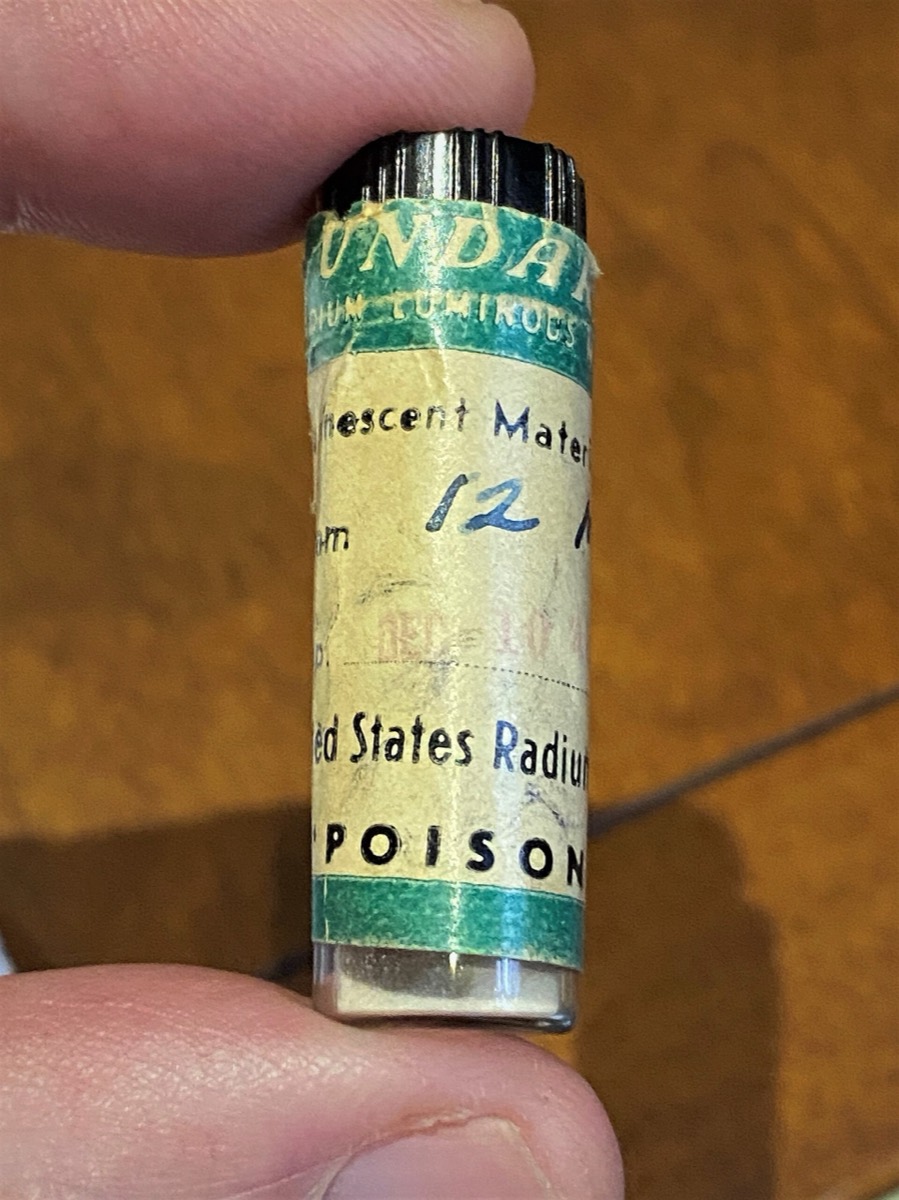
arrived with the discovery of radioactivity, made by combining radium with a phosphorescent material and an adhesive. Painting it onto dials and instruments was fine work, and the painters were primarily women. Until the mid to late nineteen twenties they shaped the brush by drawing it between their lips. What did that do?
It put radium inside them, repeatedly. Pointing the brush with the lips resulted in high intakes, which is the mechanism behind what the authors call the tragic experience of the . That experience changed industrial safety standards, including protection measures taken during the Manhattan Project, and the dial workers study became the basis for radiation protection standards governing intakes of radionuclides by workers and the public.
The discoveries of radiation and radioactivity moved quickly into medical and commercial use at the turn of the twentieth century. One product was radioluminescent paint, radium combined with a phosphorescent material and an adhesive, applied by hand to dials and instruments so they could be read in the dark.
The work was detailed and the brush needed a fine point. Until the mid to late nineteen twenties, dial painters, who were primarily women, would use their lips to shape it, which resulted in high intakes of radium. The consequences for them changed industrial safety practice, including the protection measures taken during the Manhattan Project. The dial workers study became the basis for radiation protection standards governing intakes of radionuclides by workers and the public.
The cohort is being studied again. The mortality experience of three thousand two hundred and seventy-six radium dial painters and handlers employed between nineteen thirteen and nineteen forty-nine is being determined through two thousand nineteen. The last epidemiologic follow-up was thirty years ago, when most of these workers were still alive. Nearly sixty-five percent were born before nineteen twenty, and almost half were hired before nineteen thirty.
What has changed is the method. Comprehensive techniques are being applied to estimate organ doses for each worker, from their intake of radium isotopes and associated photon exposures. Time-dependent analyses will then estimate lifetime risks for specific causes of death. The radium dial workers are part of the of low-dose health effects. Despite being one of the most influential radiation effects studies ever conducted, the radium program was terminated in the early nineteen nineties as responsibilities shifted and funding declined.
wat. The brush had to come to a fine point, and the quickest way to do that was with the mouth.
wat wat
The limits that govern how much radioactive material a worker or a member of the public may take in were derived from what happened to these women.
How do we know?
Martinez and colleagues review the history of the radium dial workers in the United States and report the current effort to update the epidemiologic cohort with new dosimetric models.
What is still unknown
A review of a study still in progress. The updated mortality follow-up and the time-dependent dose-response analyses were under way at publication, so the lifetime risk estimates are an aim rather than a result.
Learn something?
Where to next
 What happened to the dogs left behind at Chernobyl?radiation
 Why does the water in a reactor glow blue?radiation