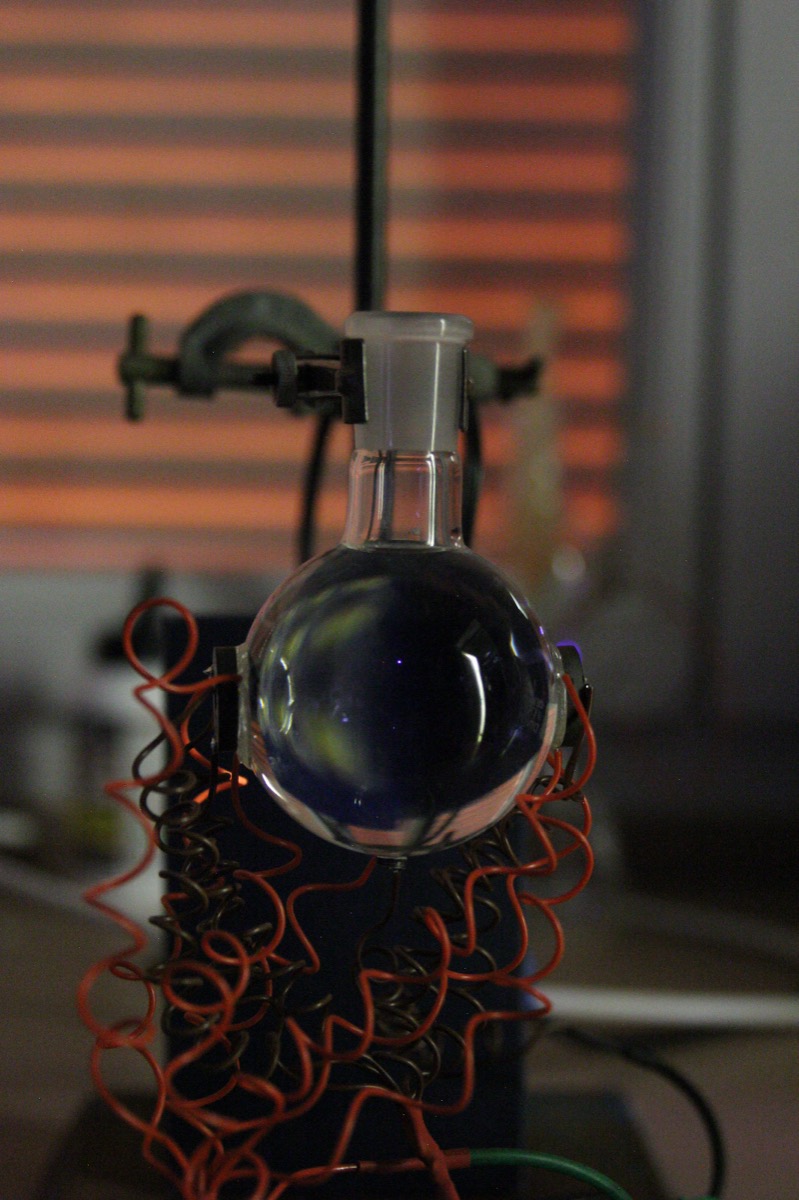
It can, and the light is strange. Hold a gas bubble in place with sound, drive it hard enough, and each collapse focuses so much energy that the bubble emits light. The spectrum tends to peak in the ultraviolet, and it depends strongly on which gas is dissolved in the liquid. Traces of noble gas can change the brightness dramatically.
Brenner, Hilgenfeldt and Lohse reviewed what experiment and theory had settled by 2002. The available information favors an account in which the gas is heated adiabatically as the bubble collapses, which partly ionizes it and produces thermal emission such as . The sensitivity is extreme: small changes in forcing pressure, dissolved gas concentration or liquid temperature all alter the light.
Single-bubble happens when an and periodically driven gas bubble collapses so strongly that the energy focusing at collapse leads to light emission. Every part of that sentence is doing work. The bubble is held by sound, driven by the same sound, and the light comes from the concentration of energy at the instant the collapse finishes.
Detailed experiments have established some unusual properties. The spectrum of the emitted light tends to peak in the ultraviolet, and it depends strongly on the type of gas dissolved in the liquid. Small amounts of trace noble gases or other impurities can dramatically change how much light appears, as can small changes in forcing pressure, dissolved gas concentration and liquid temperature.
Brenner, Hilgenfeldt and Lohse review the experimental and theoretical efforts to account for this. The information available at the time favors a description in which the gas is heated adiabatically as the bubble collapses, which partially ionizes it and leads to thermal emission such as bremsstrahlung. Ionization is the headline: the conditions in the bubble reach plasma territory.
The review is organized around the pieces of the problem. One section covers the classical theory of bubble dynamics as developed by Rayleigh, Plesset, Prosperetti and others. Another covers the gas dynamics inside the bubble. One caution about how settled any of it is. The authors describe the evidence as favoring rather than establishing it, and a phenomenon this sensitive to trace impurities is hard to reproduce between laboratories.
wat. Sound can squeeze a bubble hard enough to tear electrons off the gas inside it.
wat wat
The energy concentration is the remarkable part. An ordinary sound field in ordinary liquid delivers, at one point and for an instant, conditions extreme enough to ionize gas.
How do we know?
A review in Reviews of Modern Physics surveys the experimental results and the theoretical work, covering classical bubble dynamics, the gas dynamics inside the bubble, and the proposed emission mechanisms.
What is still unknown
A review rather than a settled account. The authors say the available information favors adiabatic heating, which is a judgement about weight of evidence, and the strong dependence on trace impurities means results vary between laboratories.
Learn something?
Where to next
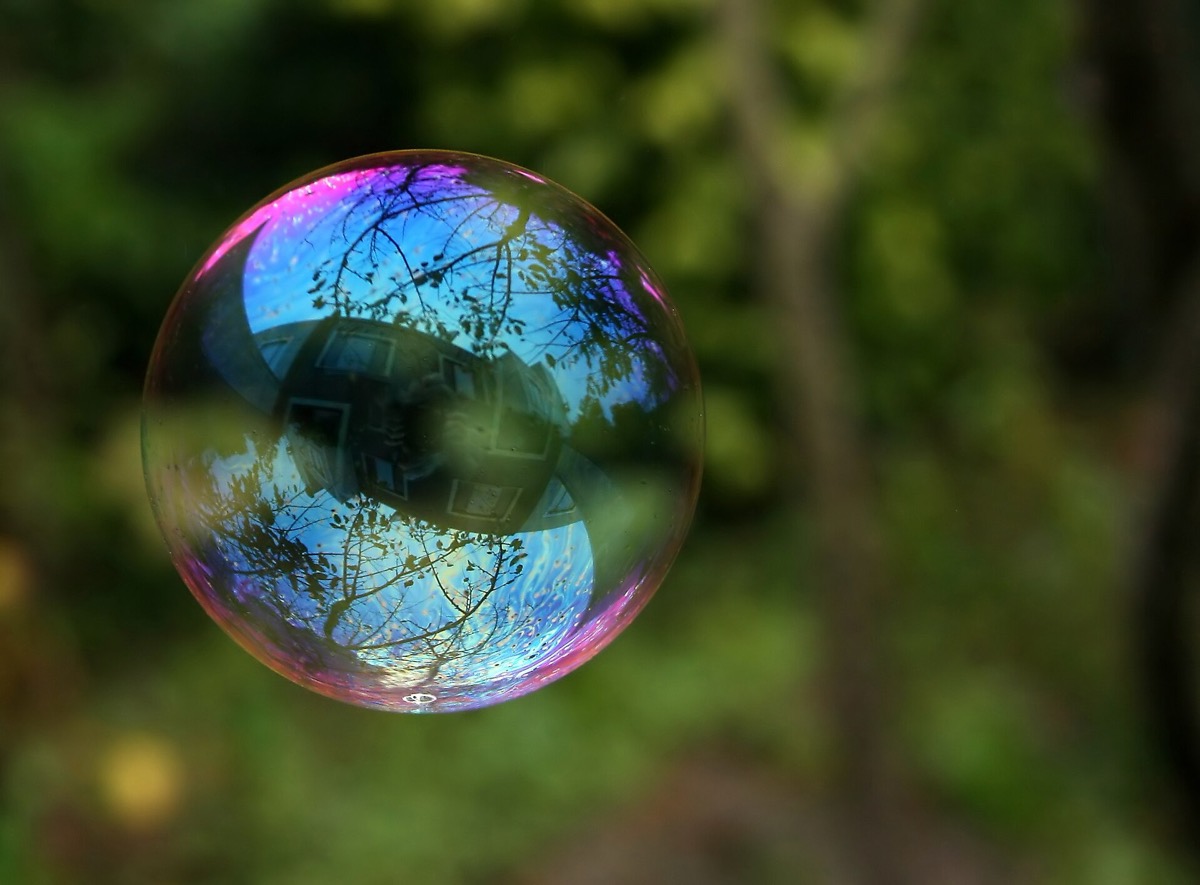 What does the color of a soap bubble know about its own thickness?light
 They had an alligator bellow in helium. Which part of its voice changed?sound
 What had to change before glass could carry a phone call?light