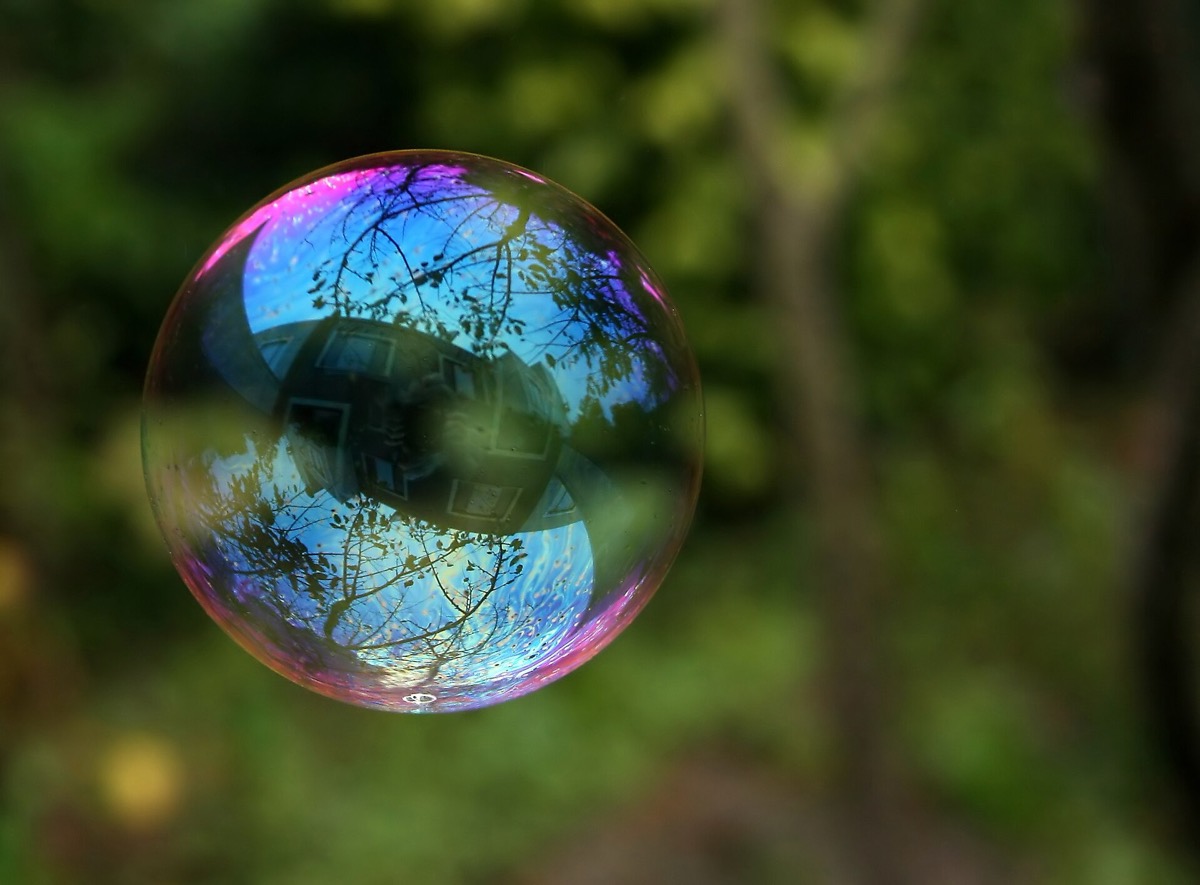
The wall of a soap bubble is thinner than the wavelength of some of the light hitting it, so light reflects twice, once from the outer surface and once from the inner. The two reflections travel different distances before they meet again. What does that do to the color?
It decides which colors survive. Where the extra distance matches a wavelength, those reflections reinforce; where it does not, they cancel. As the water drains downward and the film thins, the bands shift color and position. Just before it bursts, a film can look black, because almost everything reflected is cancelling out.
A soap film is transparent, and it is also two surfaces very close together. Light reflects off both, and the ray that went through the film and back has traveled further than the one that bounced off the front.
That extra distance is the whole mechanism of . When it matches a wavelength the two reflections return in phase and reinforce that color; when it does not, they cancel. Since the film is thinner than the wavelength of visible light, different thicknesses pick out different colors.
Then gravity joins in. carries water downward through the film, so the top thins fastest and the bands of color drift and change. The pattern is a live readout of thickness rather than a fixed decoration.
The end state is the elegant part. When the film becomes far , the reflections cancel across the whole visible spectrum and a appears at the top, moments before it bursts. The same interference measures coatings and membranes in a laboratory, with the caveat that color depends on angle and illumination, so it needs calibration to become a number.
wat. The colors of a bubble are a ruler, since each shade comes from the path difference between light returning off the two faces of the film.
wat wat
The same principle measures thin layers without touching them, from industrial coatings to biological membranes, which is why a bubble is a usable instrument and not only a pretty one.
How do we know?
Princen and Mason worked out the optical interference in curved soap films, comparing the colors seen in white light against optical models and independent measurements of film thickness.
What is still unknown
Color depends on viewing angle and on the light source, so a photograph alone does not give a thickness without calibration.
Learn something?
Where to next
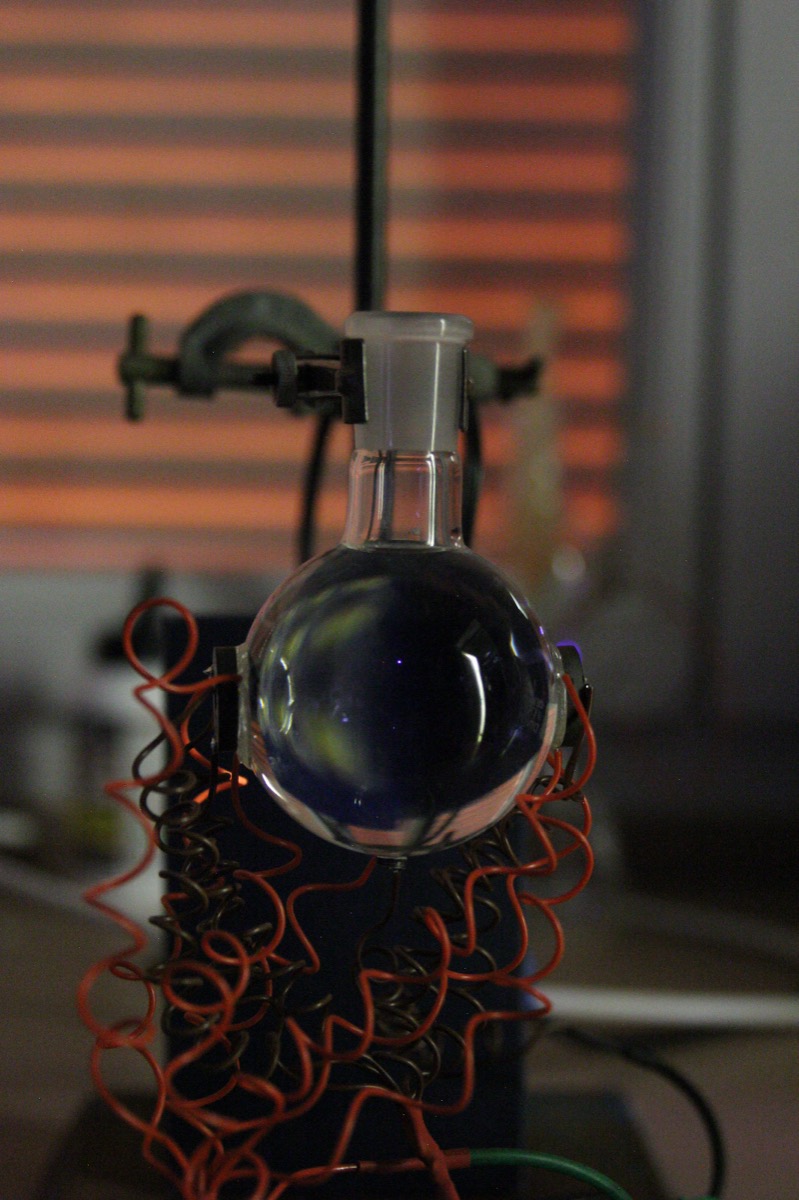 Can a sound wave make a bubble glow?bubbles
 How small a difference in height can a clock feel?measurement
 What had to change before glass could carry a phone call?light