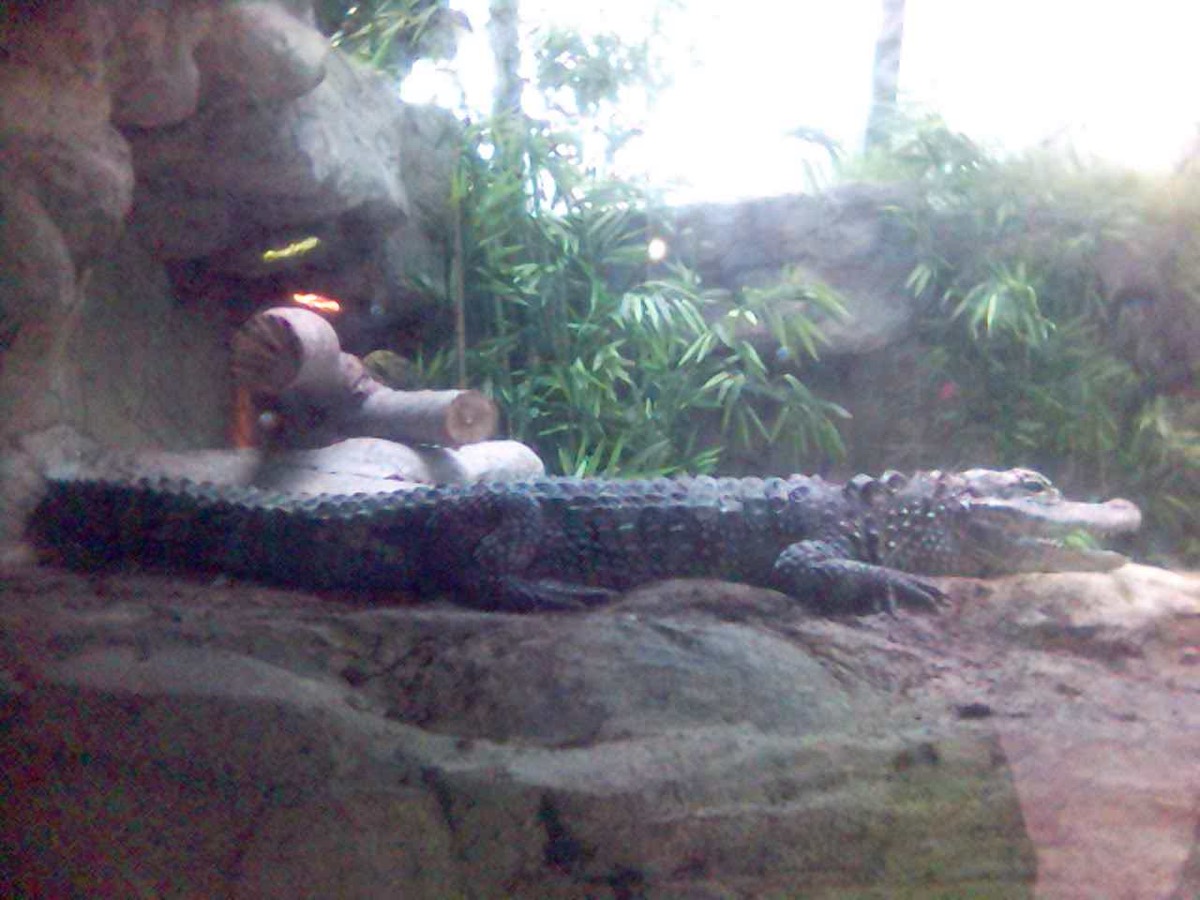
A voice is made in two stages: the vocal folds vibrate, and the cavity of the mouth and throat filters the result. Out of the two comes one sound, and separating them is hard without dissecting the animal. So a female alligator was put in a chamber with helium. What changed?
The , and not the fundamental. Sound travels faster in helium, so the resonances of the mouth and throat should rise while the vibration rate of the vocal folds barely moves. That is exactly what the bellows showed. Which separates the source of the sound from the filter above it, with no dissection, and it is the same principle that explains human speech.
A bellow sounds like one noise, and it is built from two parts: a source that makes a tone, and a cavity that shapes it. The same source and filter principle explains human speech.
separates them without dissecting the animal. A female was put in a sealed chamber holding a safe mixture of oxygen and helium.
Sound travels faster in helium, so the resonances of the mouth and throat should rise while the vibration rate of the vocal folds barely changes. That is just what the bellows showed: part of the sound shifted, and the fundamental stayed.
Which means alligators too tune a sound using the cavities of the vocal tract, and because a large cavity amplifies low frequencies, the resonances can carry information about body size. The experiment ran on one female in captivity, and it showed the mechanism of production rather than how other alligators interpret the resonances.
wat. Helium raised the resonances of an alligator’s bellow without moving the vibration rate of its vocal folds to the same degree.
wat wat
Resonances can carry information about body size in reptiles too, which brings the study of their calls closer to that of birds and mammals.
How do we know?
The bellows were recorded in ordinary air and in a helium and oxygen mixture, and the researchers compared the fundamental frequency against the resonance bands in the spectrum.
What is still unknown
The experiment ran on one female in captivity. It showed the mechanism of production, not how other alligators interpret the resonances.
Learn something?
Where to next
 Can a sound wave make a bubble glow?sound
 What happens to helium below two degrees above absolute zero?helium
 What does a dust devil on Mars sound like passing right over a microphone?sound