
Through a gap in cloud, sunlight sometimes arrives as distinct slanted bands, alternating with shadow. They are , named from the Latin for , when they show most clearly. They appear to spread outward from a single point behind the cloud, which would mean the sun is close enough for its light to diverge noticeably. It is not. So what is going on?
, the same as with railway tracks. The rays are not going off in crooked directions at all; they are shining in straight, effectively parallel lines. Because the sun is so far away, our viewpoint makes them look as though they narrow toward it, exactly as parallel lines appear to converge at a vanishing point. What makes them visible is particles, and what gives them edges is shadow.
Sometimes you find yourself in a spotlight of sunlight streaming out of the clouds at slanted angles. The alternating bands of light and shadow are crepuscular rays, and their name comes from the Latin word for twilight, when they are most easily seen.
Two ingredients make them visible. The first is particles: dust, moisture and pollutants in the atmosphere. When sunlight hits them it into a beam we can see from the side, which light passing through clean air would not do.
The second is contrast. The clouds surrounding the opening need to be darker and shadowy, so the strip of light has edges to be seen against. Together those give a concentrated band of light rather than a general brightening, and depending on where the sun is the band can carry tinges of color beyond its usual yellow.
The fanning is the part that misleads. The rays are not actually going off in crooked directions; they are shining in straight lines. Because we are so far from the sun, perspective makes it look as though all the rays narrow toward it, the way parallel lines appear to meet in the distance. The vanishing point is simply where the sun is.
wat. The beams are parallel. They only look like a fan because the thing they come from is ninety-three million miles behind them.
wat wat
The illusion is strong enough that the rays have been read as evidence of something radiating from a nearby point for as long as people have looked up at them.
How do we know?
The National Weather Service explains crepuscular rays in its guide to unusual atmospheric phenomena, covering what makes the beams visible, what gives them their edges, and why they appear to fan out.
What is still unknown
A short educational entry. It states that the rays are parallel and that perspective accounts for the apparent spread, without going into the geometry or the viewing angles where the effect is strongest.
Learn something?
Where to next
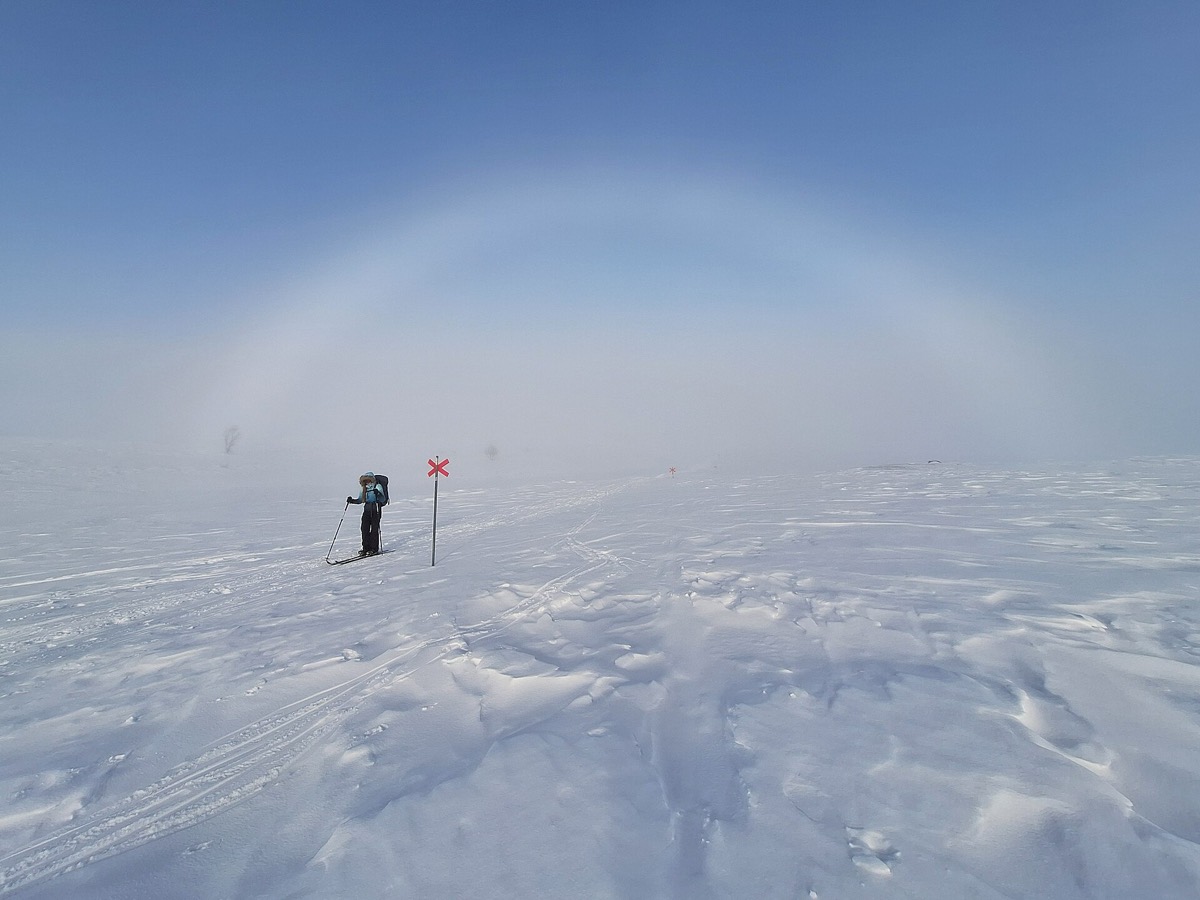 Why is a rainbow in fog white?optics
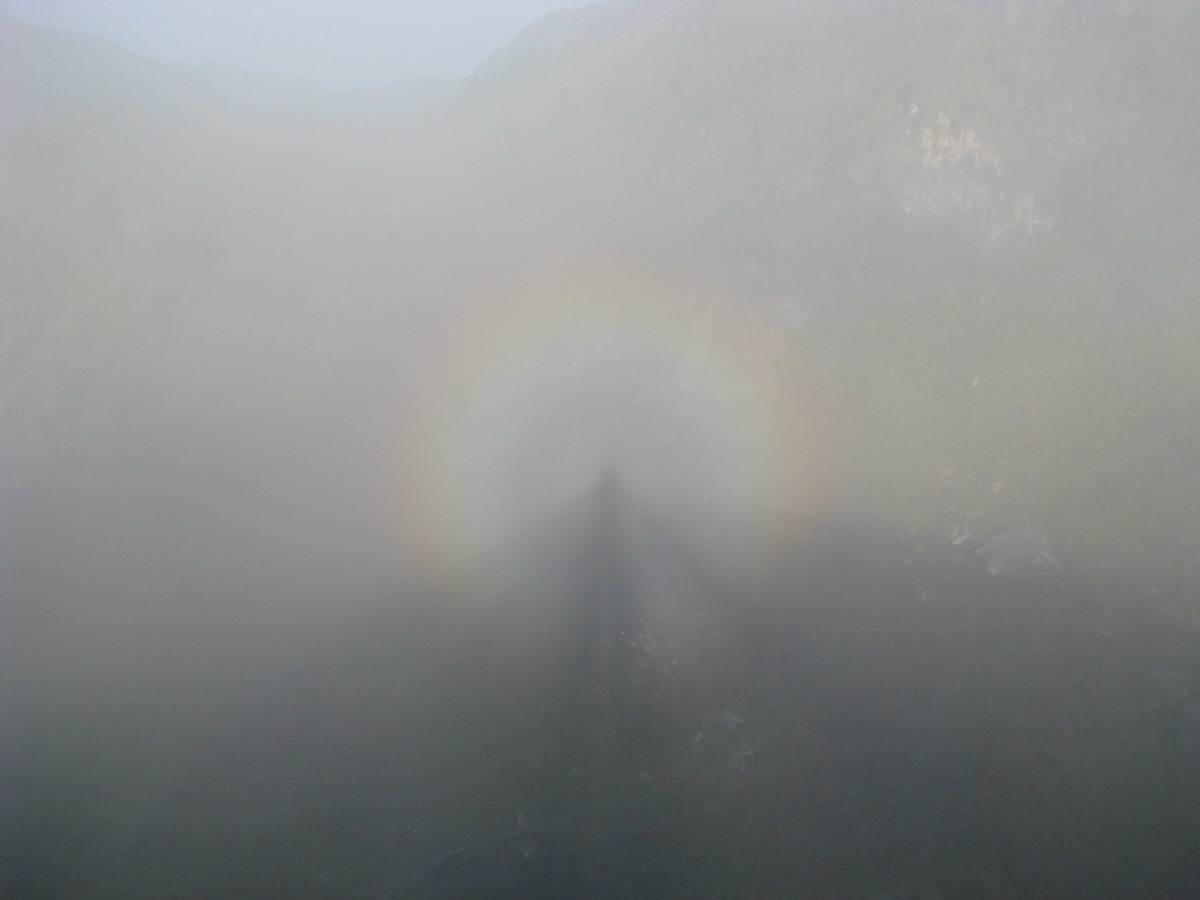 Why do the colored rings follow your own shadow and nobody else’s?optics
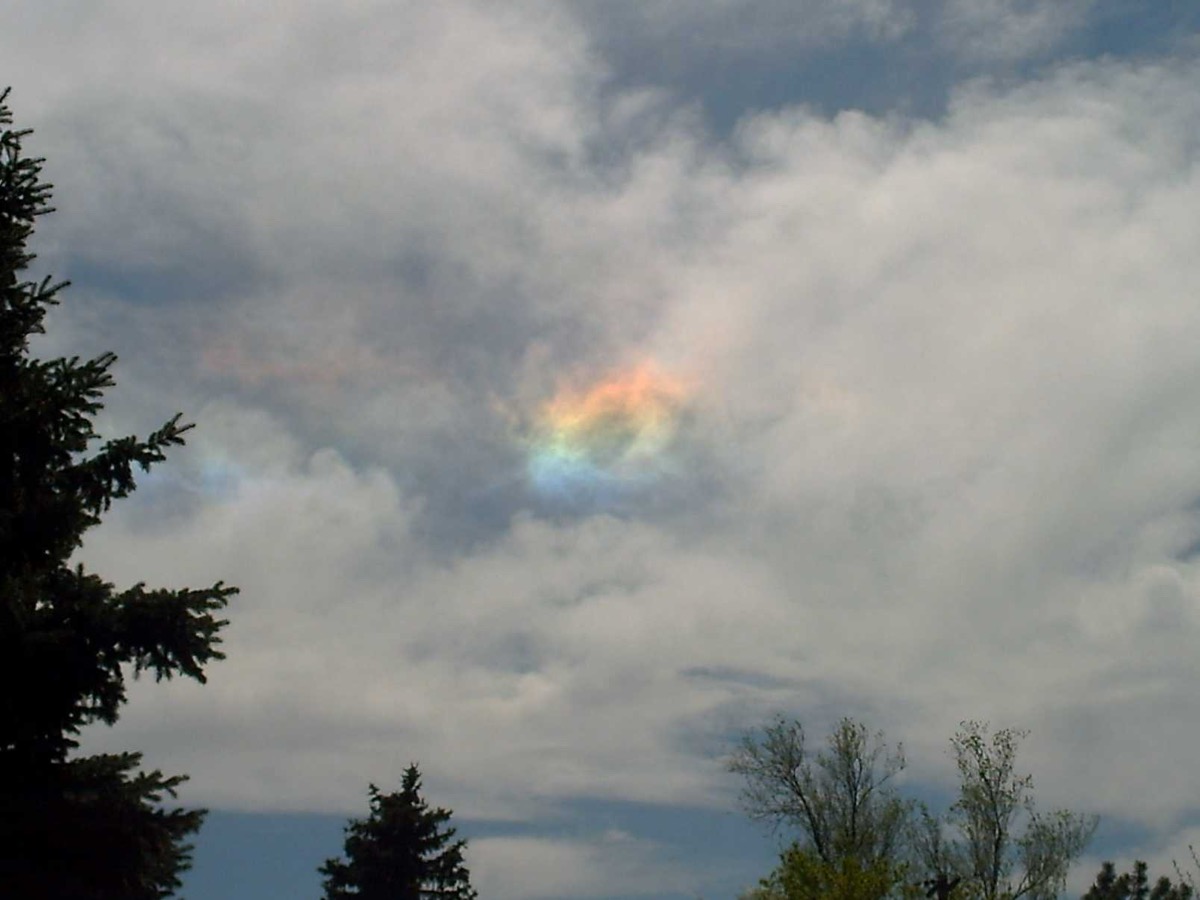 What was the band of rainbow colors over Spokane with no rain anywhere?light