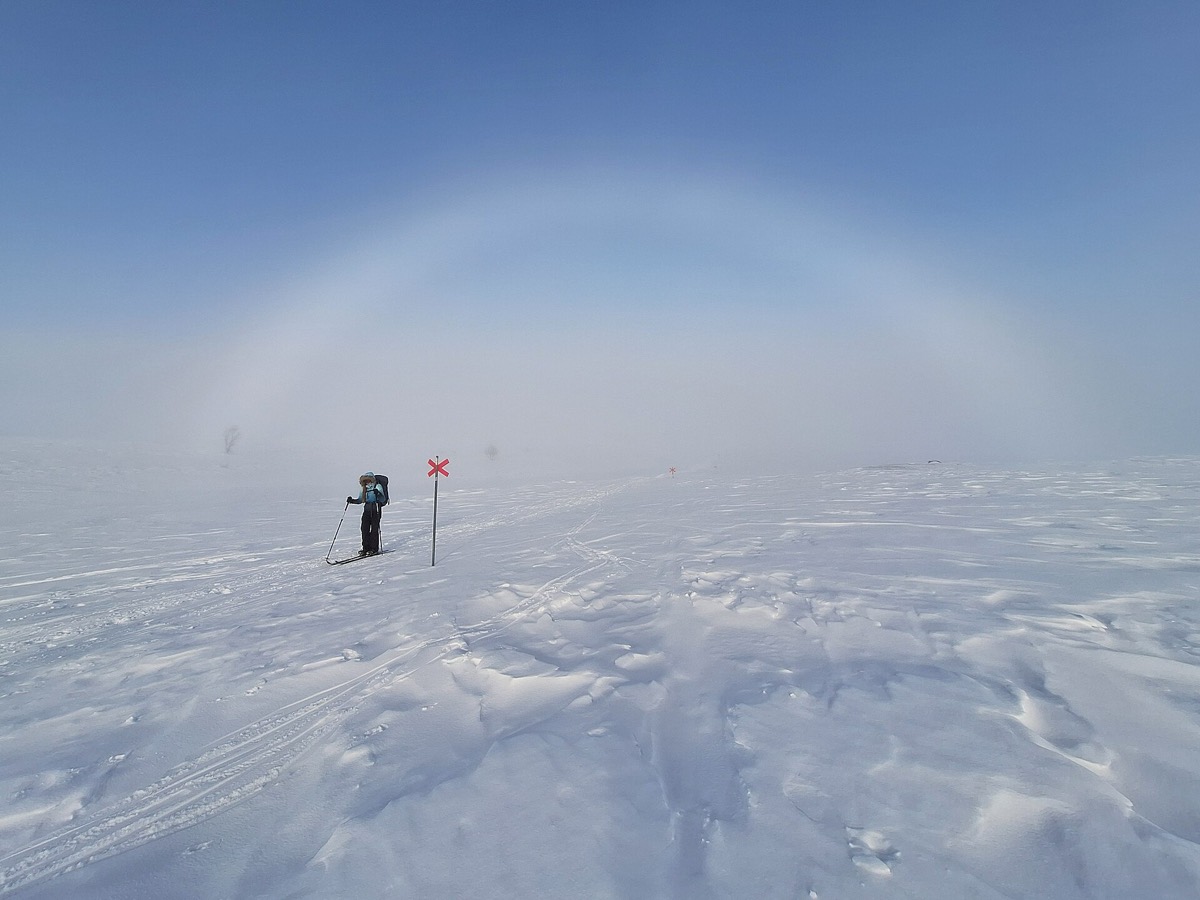
A rainbow forms when sunlight enters a water droplet, slows and bends, reflects off the inside surface and bends again on the way out. What comes back is a , aimed at an observer who has the sun behind them. Fog is water droplets too, and the geometry still works. What comes out is pale and almost colorless. What changed?
The droplets got too small. In fog, mist or cloud the water droplets are much smaller than raindrops, so the light and the colors smear into each other instead of separating cleanly. The result is a , sometimes called a white rainbow: pale or nearly colorless, and broader than an ordinary rainbow. The same arc, drawn with a blunter pencil.
A rainbow is an arc-shaped spectrum created by and reflection. Sunlight entering a raindrop slows and bends, splitting into its component colors. Some of that light reflects off the inside surface of the droplet, then exits and bends again, sending the spectrum toward an observer. For any of it to be visible the sun has to be behind you and the water droplets in front.
How much of the arc appears depends on where the sun is. With the sun high, only a small arc clears the horizon. From a mountain or an aircraft you can see the whole circle, because rainbows are full circles and it is normally the ground that hides the lower half.
Fog runs the same process with different ingredients. The water droplets in fog, mist or cloud are much smaller than raindrops, and at that size the light diffracts, which smears the colors into one another rather than letting them separate. A fogbow is the result: pale or nearly colorless, and broader than a typical rainbow.
It rarely comes alone. Fogbows are often accompanied by a glory, a series of colored rings centered on the observer’s shadow. Both depend on being positioned between the light and the droplets, which is why the pair tends to show up in the same places and at the same moments.
wat. Same sun, same water, same geometry. Shrink the droplets and the spectrum blurs back into white.
wat wat
The color in a rainbow is not a property of water or of sunlight alone. It depends on the size of the drop, which is why the same physics gives a different result in fog.
How do we know?
The Met Office explains how rainbows form through refraction and reflection in water droplets, and describes the varieties that arise under different atmospheric conditions, fogbows among them.
What is still unknown
A general explanatory page rather than an optical study. It states that small droplets diffract the light and smear the colors without quantifying the droplet sizes at which that happens.
Learn something?
Where to next
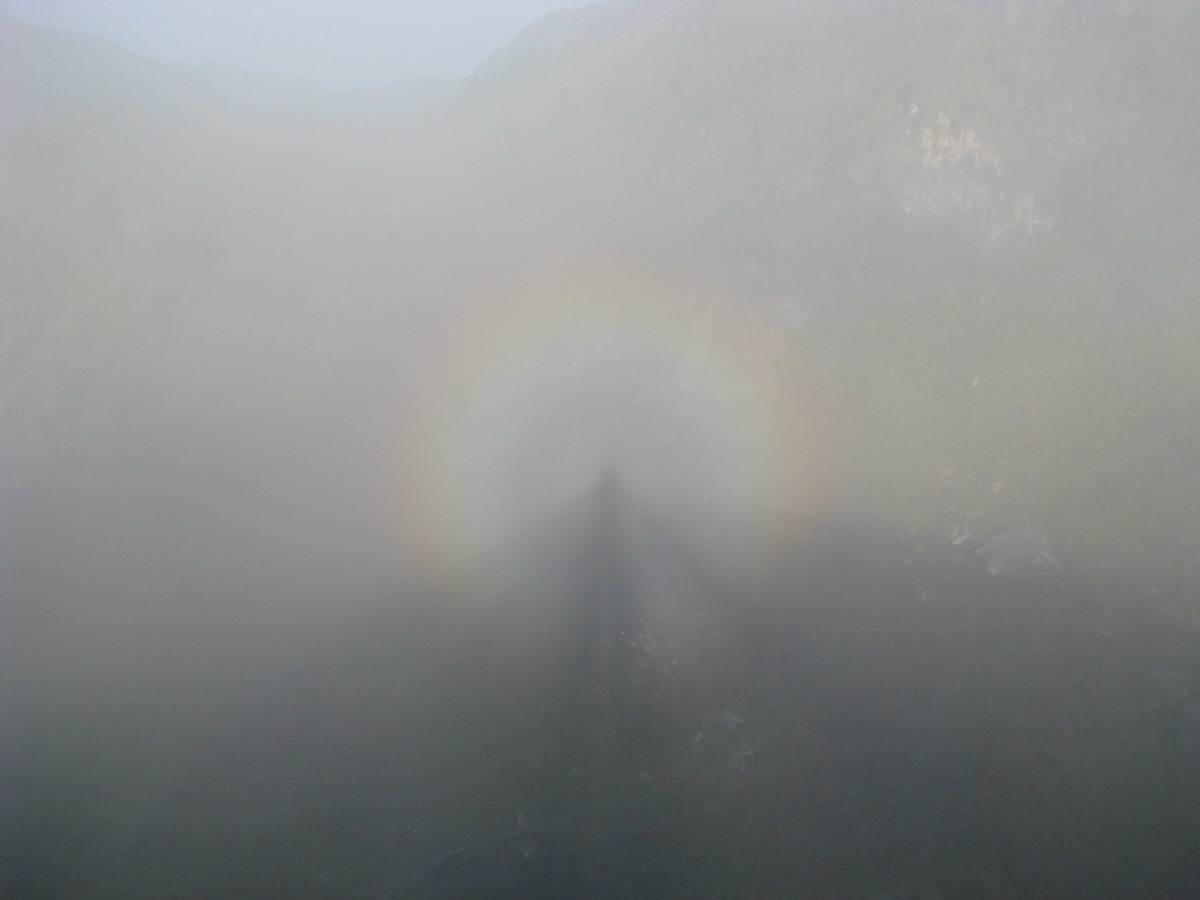 Why do the colored rings follow your own shadow and nobody else’s?optics
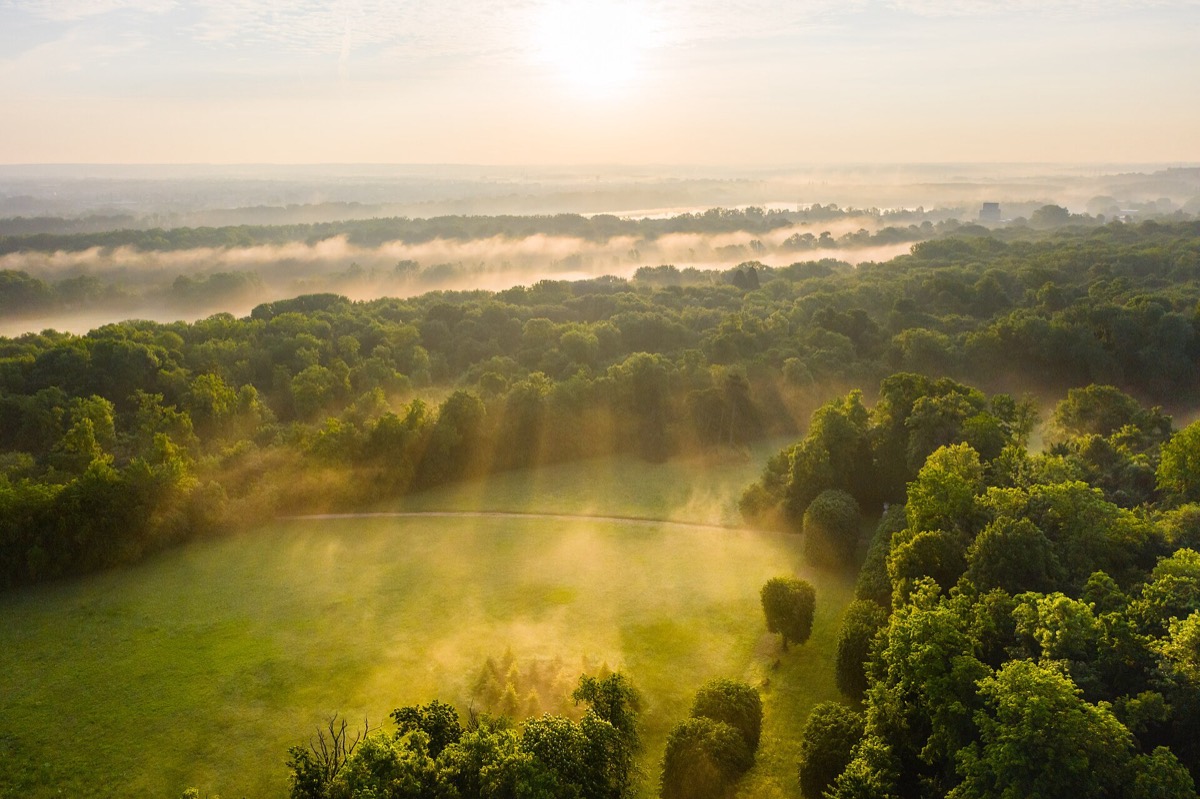 Why do sunbeams fan out from a point in the clouds?optics
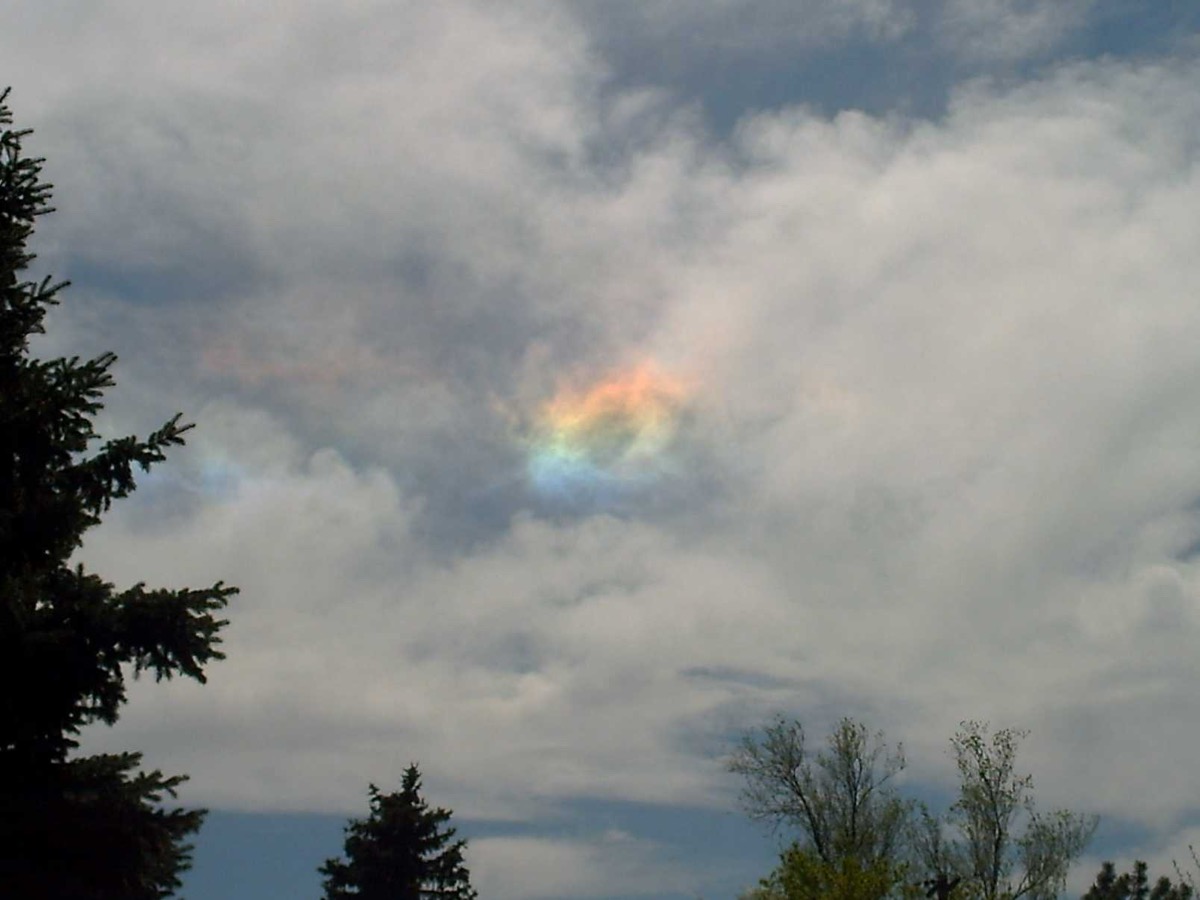 What was the band of rainbow colors over Spokane with no rain anywhere?light