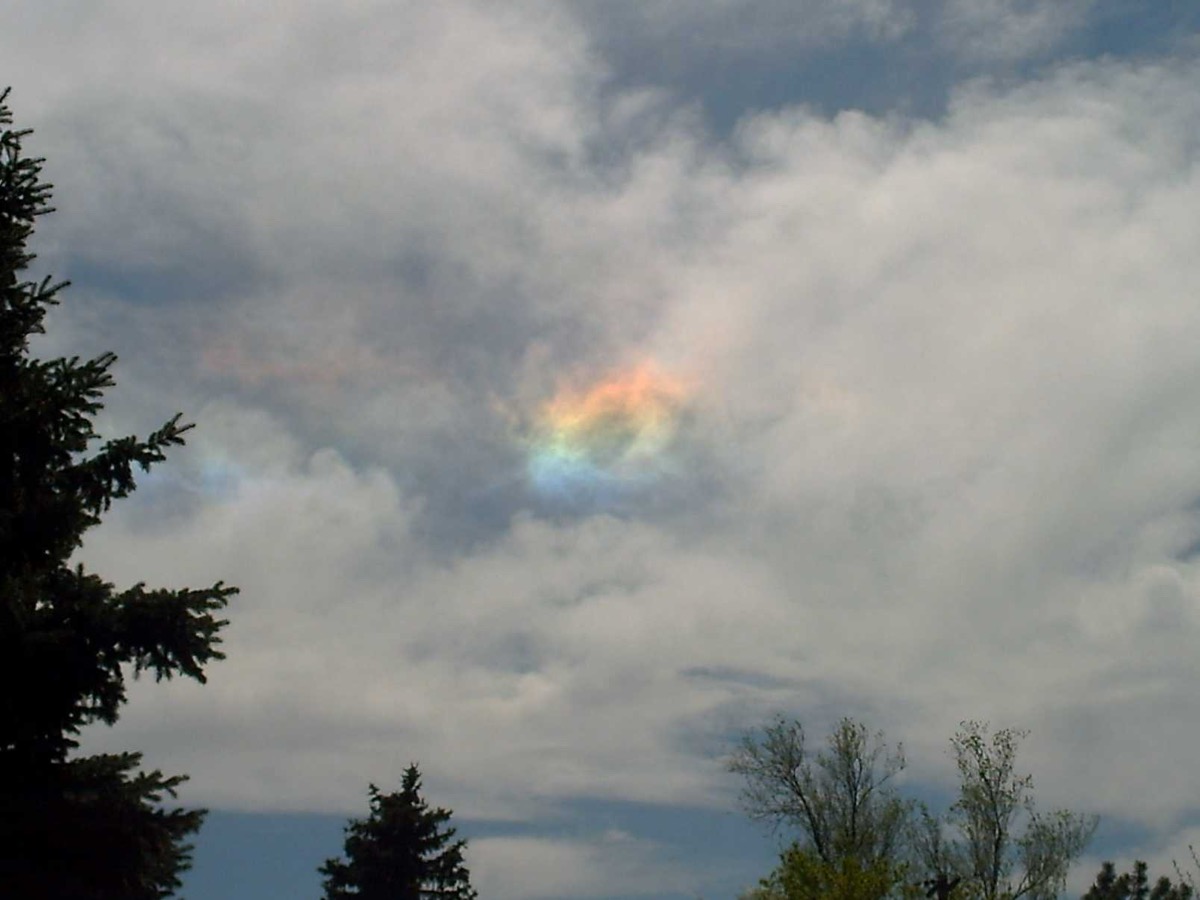
On the afternoon of the third of June, two thousand and six, the sky over Spokane and Post Falls carried what looked like a rainbow. There was no rain. It also failed to form the high arch a rainbow makes near a shower. Sun dogs were the popular guess, and they are far less vivid and much smaller than what people saw. So what was it?
A , and the conditions are brutal. It needs a of about fifty-eight degrees or higher, which at that latitude happens only between May and the first week of August. Even then it holds for about an hour in May and August, and around three hours near the solstice. It also needs ice crystals aligned nearly perpendicular to the sunlight.
People in the Spokane and Post Falls area were treated to a rare show of atmospheric optics on the afternoon of the third of June, two thousand and six. The sky carried what appeared to be a rainbow while no rain fell, and unlike a rainbow the lights did not form the high arch associated with a nearby shower.
The common guess was wrong too. Many referred to the colorful display as sun dogs, which it was not: sun dogs are far from that vivid and much smaller in scope than what was seen that day. The feature was something rarer still, a circumhorizon arc.
Two conditions have to hold at once. The first is a very high sun angle, approximately fifty-eight degrees or more, which at Spokane’s latitude is only reached in a small window from May to the first week of August. Even inside that window the sun exceeds that elevation for about an hour in May and August, rising to around three hours near the summer solstice.
The second condition is more restrictive. It takes a cluster of ice crystals, lying nearly perpendicular to the sunlight, so that light enters the nearly vertical side of a crystal and exits the relatively horizontal bottom. Those crystals refract the light by approximately forty-six degrees, which produces a very pure spectrum and a vivid display. On that day a layer of supplied the crystals.
wat. No rain, no arch, and far too vivid for a sun dog, because the light came through ice lined up edge-on to the sun.
wat wat
Most optical effects in the sky need only the right material. This one needs the material arranged in a particular orientation and the sun in a narrow band of the year, which is why it reads as unprecedented.
How do we know?
The National Weather Service office in Spokane explained the display after receiving photographs from the public, setting out the sun angle, the crystal alignment and the refraction angle involved.
What is still unknown
A local forecast office explaining one event to the public. The figures given are for Spokane’s latitude, and the seasonal window moves with how far north or south you are.
Learn something?
Where to next
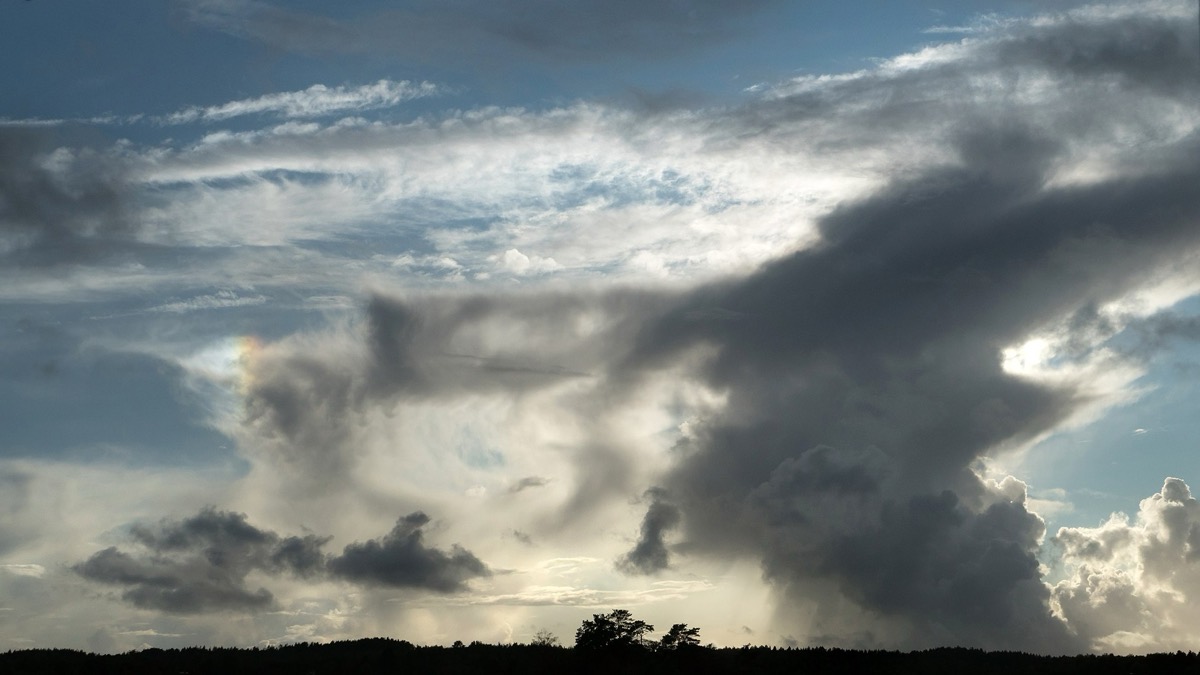 Why does the bright spot beside the sun always sit in the same place?ice crystals
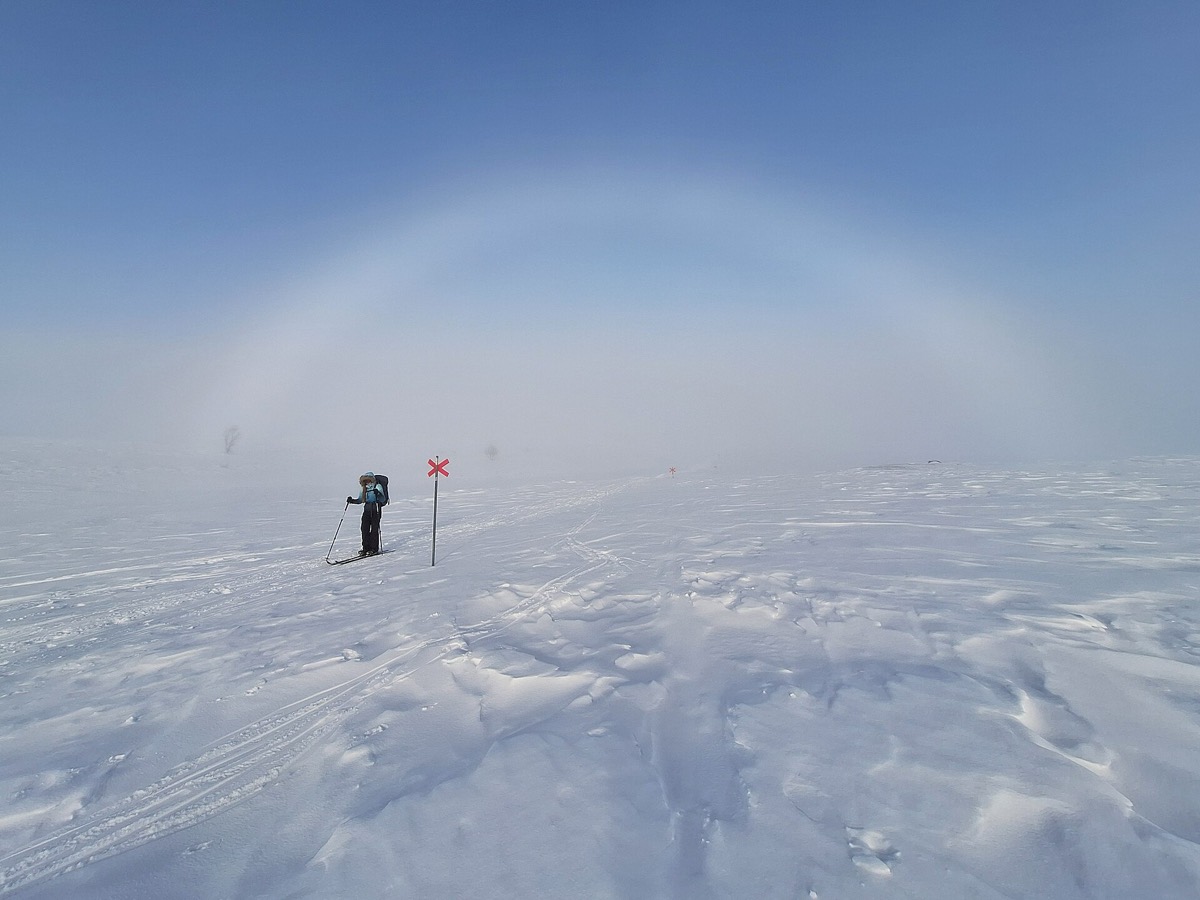 Why is a rainbow in fog white?optics
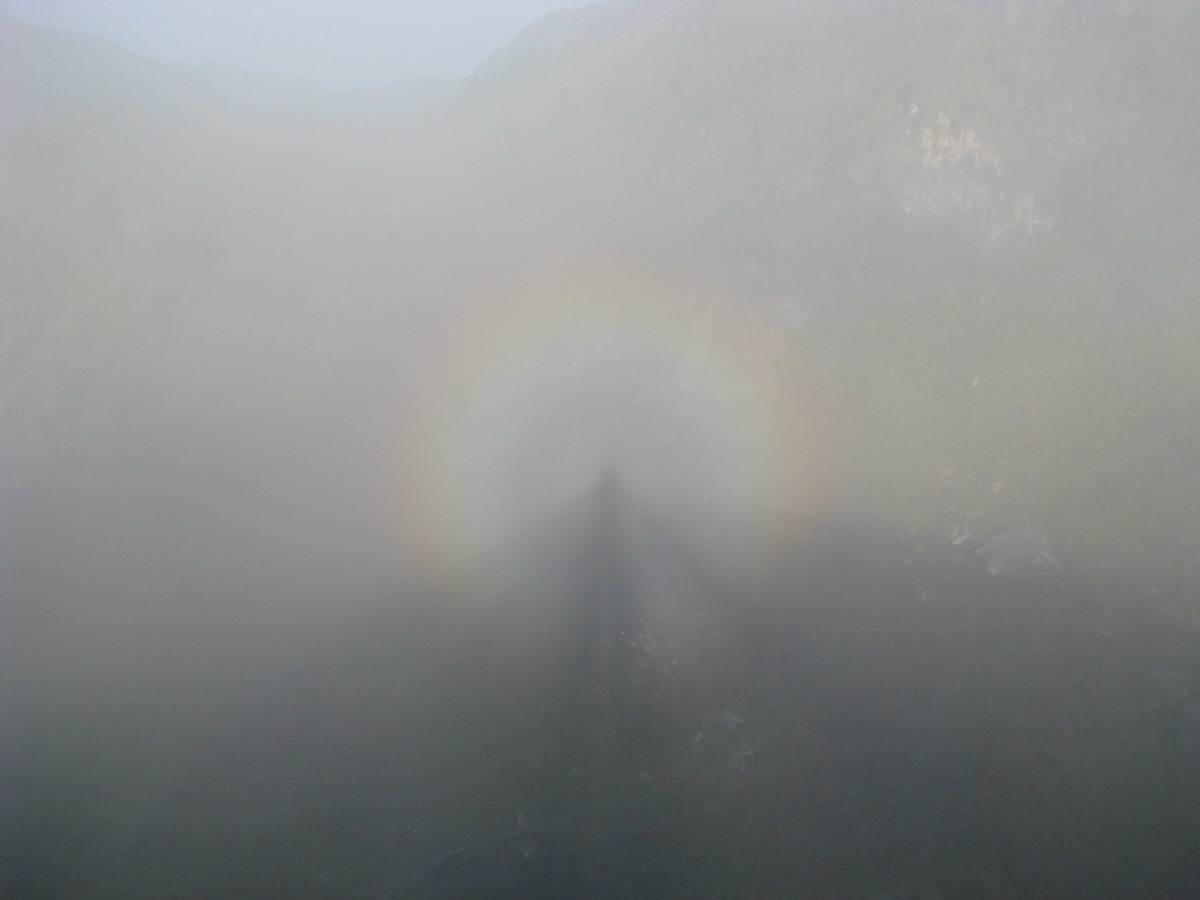 Why do the colored rings follow your own shadow and nobody else’s?optics