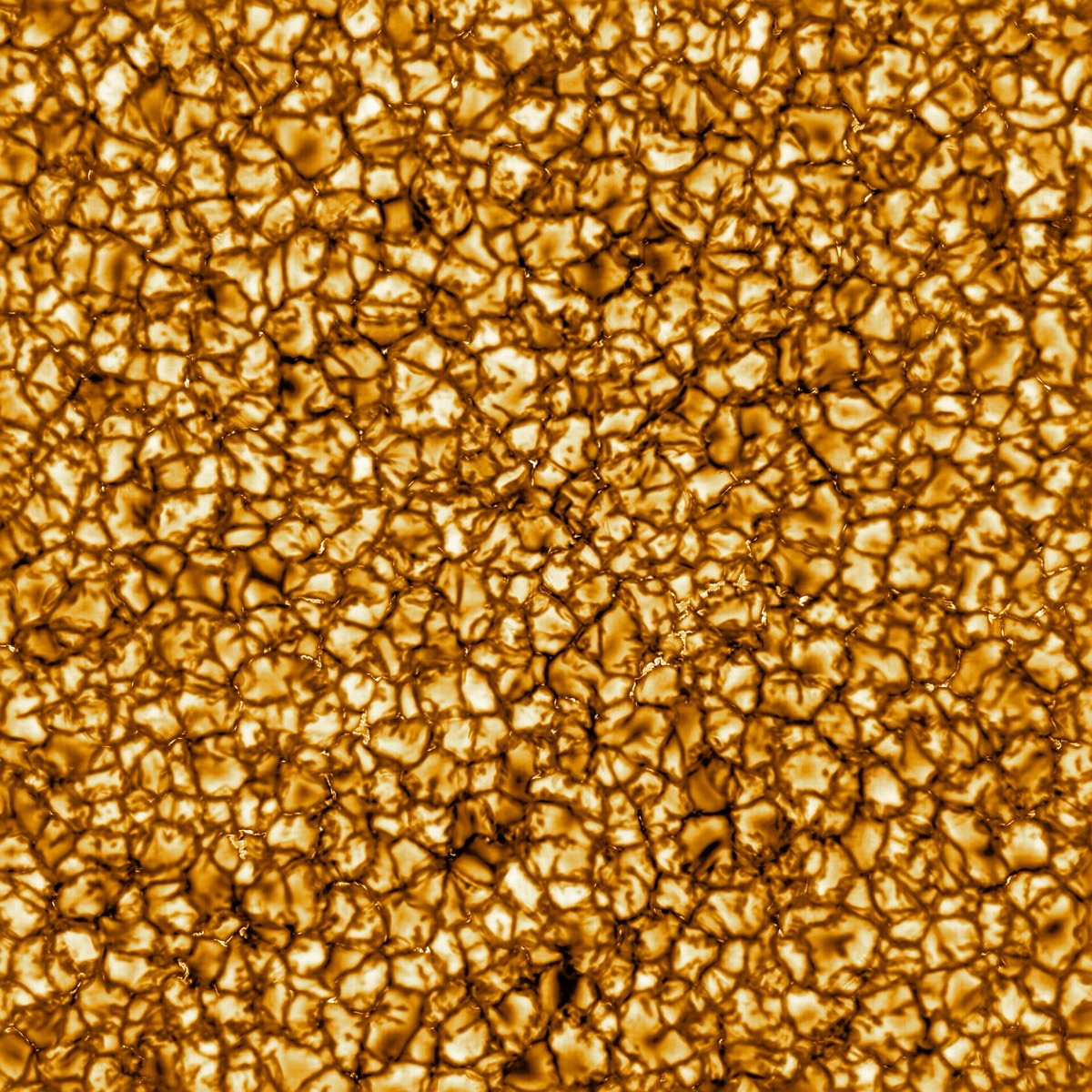
Sunlight takes just over 8 minutes to cross the 150 million kilometers from the Sun to Earth, which is the number everybody knows. The energy carrying it was made in the core, and the core is 695,700 kilometers below the surface. Getting out of the Sun is a different journey from crossing space.
Around 170,000 years old. A photon moving straight out would cross from core to surface in about 2.3 seconds. In the it is instead absorbed, re-emitted or scattered after a very short distance, over and over, in what physicists call a . Mitalas and Sills recalculated that distance against a realistic density model.
It takes sunlight just over 8 minutes to travel the 150 million kilometers from the Sun to Earth. Before it can start that journey, the energy produced in the core has to fight its way out through the densely packed interior, across 695,700 kilometers.
Nothing about that passage is direct. A photon traveling in a straight line would cover it in about 2.3 seconds. In the dense plasma a gamma-ray photon instead goes only a short distance before a charged particle absorbs and re-emits it, or scatters it in a new direction.
That short distance, the , is the key ingredient in the calculation. Earlier estimates assumed it was roughly constant through the interior, at 0.5 to 1 centimeter, which yields a somewhere between 3,000 and 30,000 years.
Mitalas and Sills noticed the assumption did not account for the much higher density of the inner layers. Recalculating with a realistic density model, they found the step length is less than 0.1 centimeters across more than 50 percent of the solar radius, which stretches the time to around 170,000 years.
wat. The warmth on your face set out before the pyramids.
wat wat
The familiar 8 minutes measures the easy part of the trip, after the hard part is already over.
How do we know?
ScienceAlert reports the 1992 calculation by Romas Mitalas and Kenneth R. Sills of the University of Western Ontario, who found that the step length assumed by earlier estimates was wrong.
What is still unknown
A diffusion time derived from a model of the Sun’s density rather than measured directly.
Learn something?
Where to next
 A snowfield turns into a forest of blades. Why do they all face the same way?physics
 Why does the bright spot beside the sun always sit in the same place?sun
 What makes the clouds on Neptune come and go?sun