
Neptune orbits thirty times further from the Sun than Earth, which makes sunlight there faint enough that it is easy to treat as irrelevant to the weather. The planet’s brightness in the near-infrared rises and falls over years. Archival images going back to 1994 are enough to ask what that tracks.
The Sun, through photochemistry. Cloud activity peaked in 2002 and 2015 and bottomed out in 2007 and 2020, and the authors find a clear positive correlation between cloud activity and solar irradiance at 121.56 nm. That supports the theory that the cycle comes from cloud and haze production triggered by solar ultraviolet.
Using archival near-infrared observations from the Keck and Lick Observatories and the Hubble Space Telescope, the authors document the evolution of Neptune’s cloud activity from 1994 to 2022. They calculate the fraction of the disk containing cloud, and the average brightness of both cloud features and cloud-free background.
The record oscillates. Cloud activity and brightness reached maxima during 2002 and 2015 and minima during 2007 and 2020, with the later minimum particularly deep.
The 2020 dip has a shape of its own. It shows a near-total loss of clouds at while activity continued at the South Pole, so the planet did not simply dim everywhere at once.
The cause points outward. The periodic variations in across six bands are dominated by rather than background haze. The clear positive correlation with solar Lyman-alpha irradiance supports photochemical cloud and haze production triggered by solar ultraviolet.
wat. Neptune’s clouds keep time with the Sun, not with Neptune.
wat wat
Weather on a planet that far out still answers to the Sun, on the Sun’s schedule rather than Neptune’s.
How do we know?
Chavez and colleagues used archival near-infrared observations from the Keck and Lick Observatories and the Hubble Space Telescope. They measured the fraction of the disk covered by cloud, and the average brightness of cloud and of cloud-free background.
What is still unknown
A correlation across roughly three decades of archival images, which is a handful of cycles.
Learn something?
Where to next
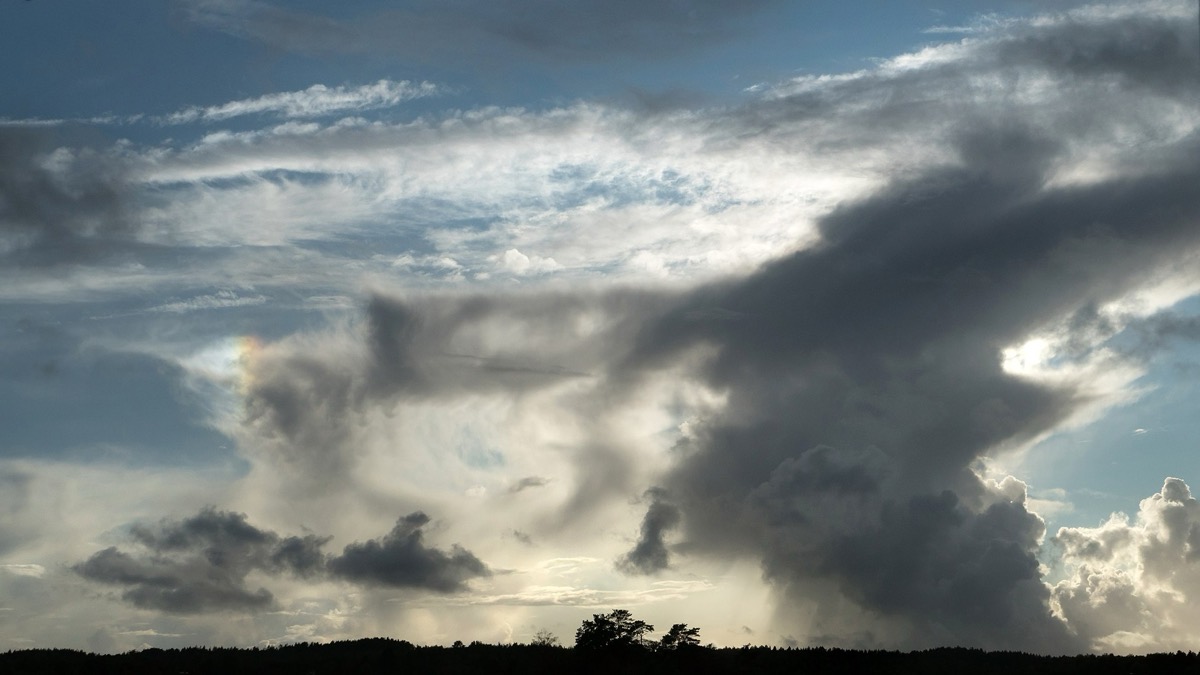 Why does the bright spot beside the sun always sit in the same place?sun
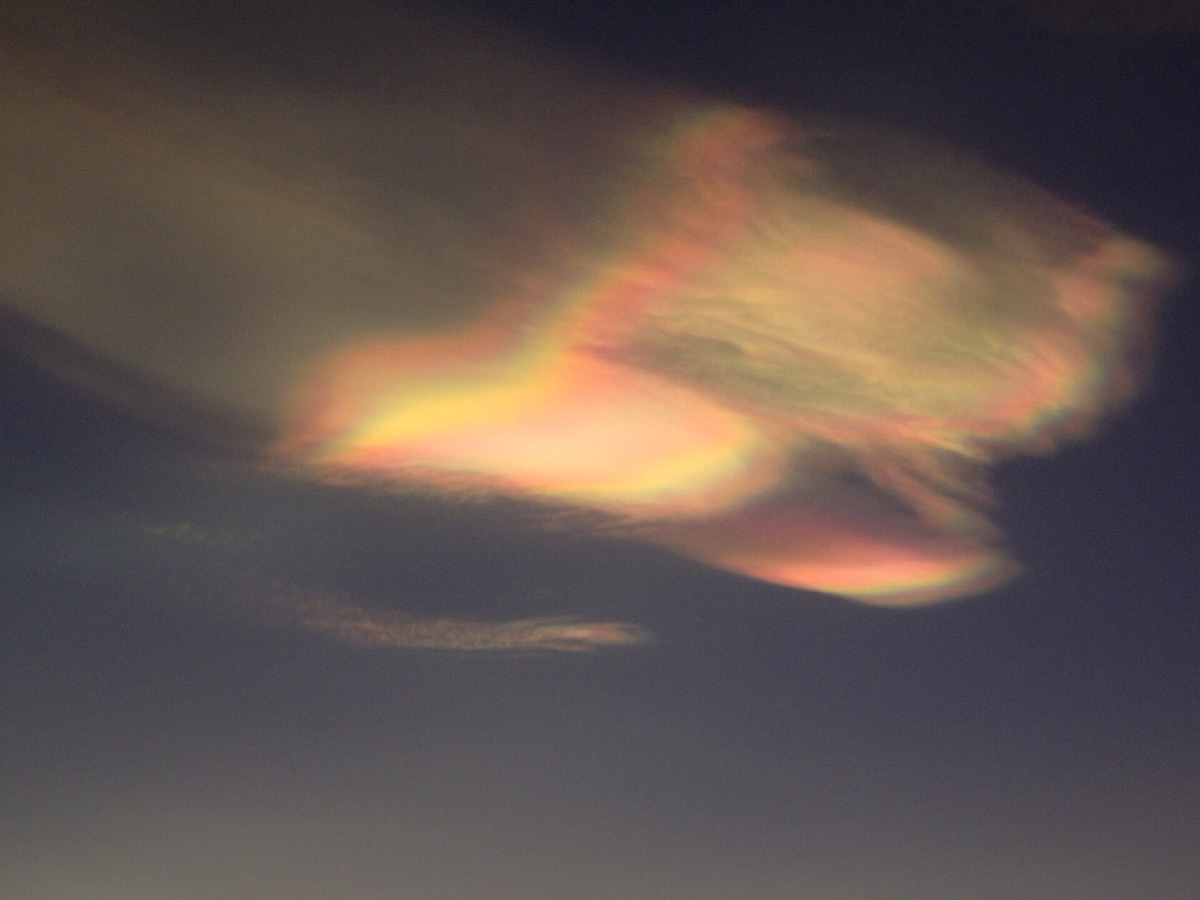 A nacreous cloud glows in a sky that has already darkened. What is happening high above us?clouds
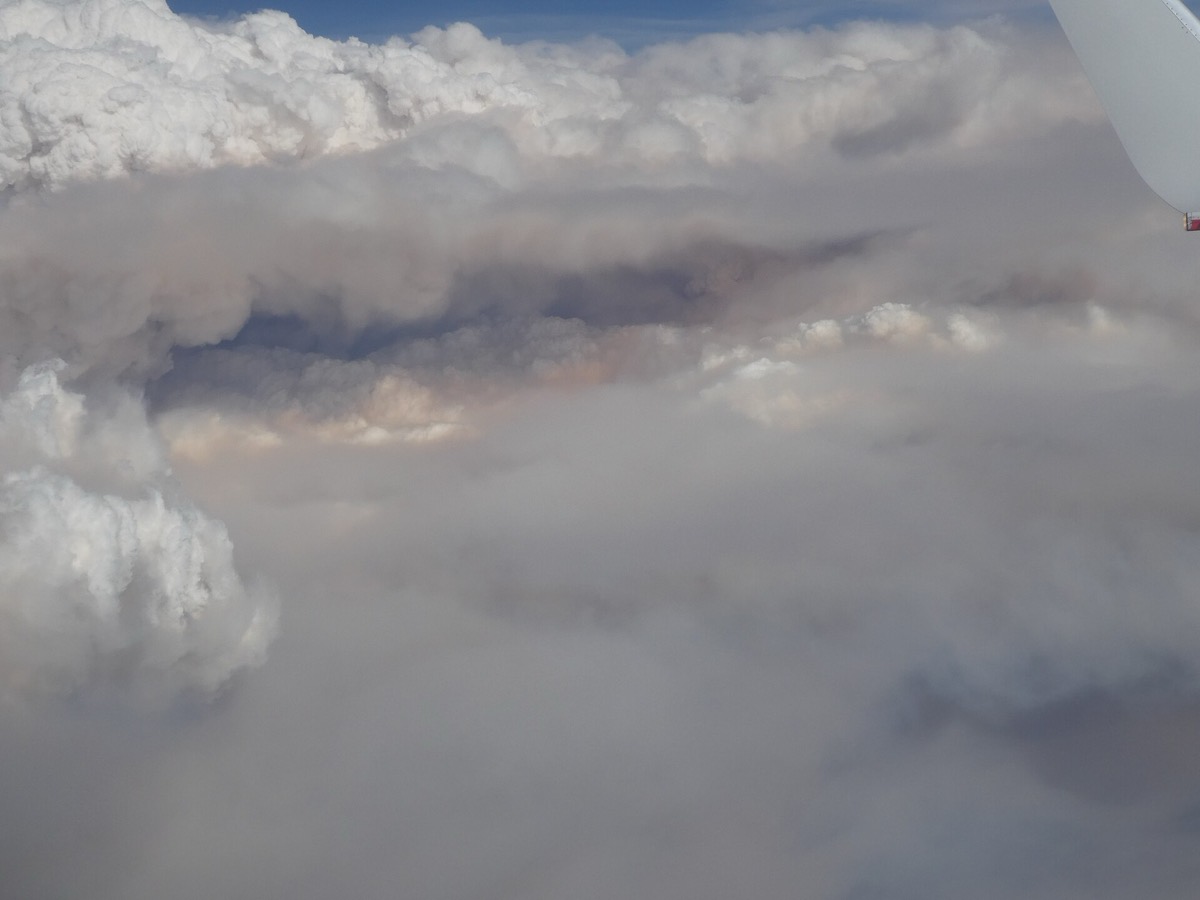 A forest fire grows a storm cloud above the flames. How far up can it reach?clouds