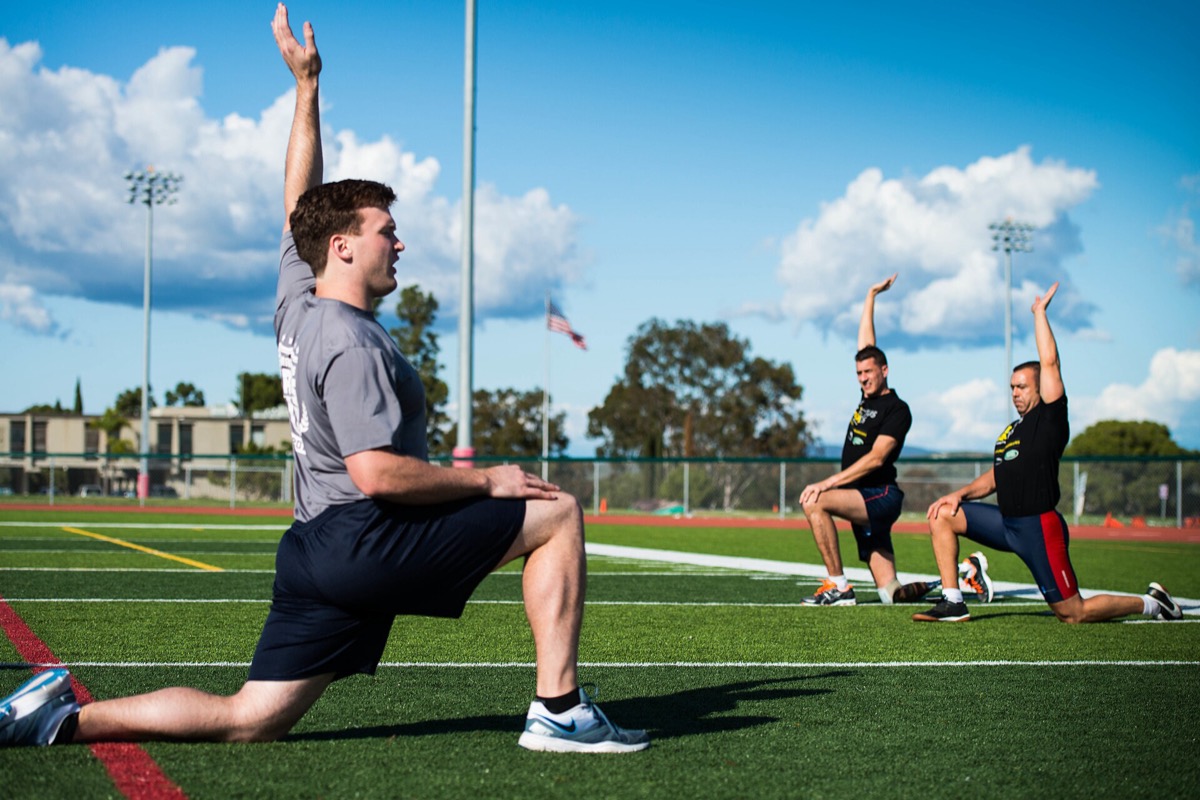
Physical activity prevents and treats a long list of diseases, and injuries are the obvious cost against it. Several exercise measures are recommended to reduce that cost: strength training, stretching, work, and combinations of them. A systematic review and meta-analysis searched four databases, screened 3,462 results, and pooled 25 randomized controlled trials covering 26,610 participants with 3,464 injuries.
Stretching came out at nothing, and combined programs worked. exposure analyses proved no beneficial effect for stretching, with a of 0.963 and a 95 percent interval from 0.846 to 1.095, which crosses one. Studies using multiple exposures together did show a benefit, at a risk ratio of 0.655. The overall effect estimate across all trials was heterogeneous, so the strata matter more than the average.
Physical activity is important in both the prevention and treatment of many common diseases, and sports injuries are the serious problem sitting against that benefit. So the question of which exercise measures actually reduce injuries is a practical one, and the candidates are strength training, stretching, proprioception work and combinations of these.
PubMed, EMBASE, Web of Science and SPORTDiscus were searched and yielded 3,462 results. Two independent authors selected the relevant randomized controlled trials, and all the authors then ran quality assessments using the Cochrane collaboration domain-based tool. Twelve studies that had neglected to account for were adjusted, and sensitivity analysis was done by intention to treat.
The pooled analysis covered twenty-five trials, including 26,610 participants with 3,464 injuries. The overall effect estimate on injury prevention was heterogeneous, which is the signal that a single pooled number would mislead and that the stratified analyses are where the information lives.
Stratified exposure analyses proved no beneficial effect for stretching, with a risk ratio of 0.963 and a 95 percent interval from 0.846 to 1.095 straddling no effect. Studies with multiple exposures showed a benefit, at a risk ratio of 0.655, roughly a third fewer injuries. Heterogeneity and publication bias were both formally tested, the latter via Harbord’s small-study effects. Read the stretching result precisely: it is an absence of detected benefit in pooled trials, which is weaker than proof that stretching does nothing.
wat. Pooling twenty-five trials and over twenty-six thousand participants, stretching alone prevented no injuries while multi-component programs did.
wat wat
Stretching is the measure most athletes actually perform and the one with the weakest case. The benefit sits with programs combining several components, which is a different recommendation from the one most warm-ups follow.
How do we know?
Lauersen, Bertelsen and Andersen searched PubMed, EMBASE, Web of Science and SPORTDiscus, selected randomized controlled trials independently, assessed quality with the Cochrane domain-based tool, and adjusted twelve studies that had neglected clustering effects.
What is still unknown
The overall effect estimate was heterogeneous, meaning the trials disagreed, and publication bias was formally tested in a field where small positive studies are easy to publish. A null for stretching is an absence of detected benefit, not proof of uselessness.
Learn something?
Where to next
 Which part of a warm-up actually prevents injuries?strength training
 Does an ice bath after training actually speed up recovery?meta-analysis
 How much physical performance is lost after a short night?meta-analysis