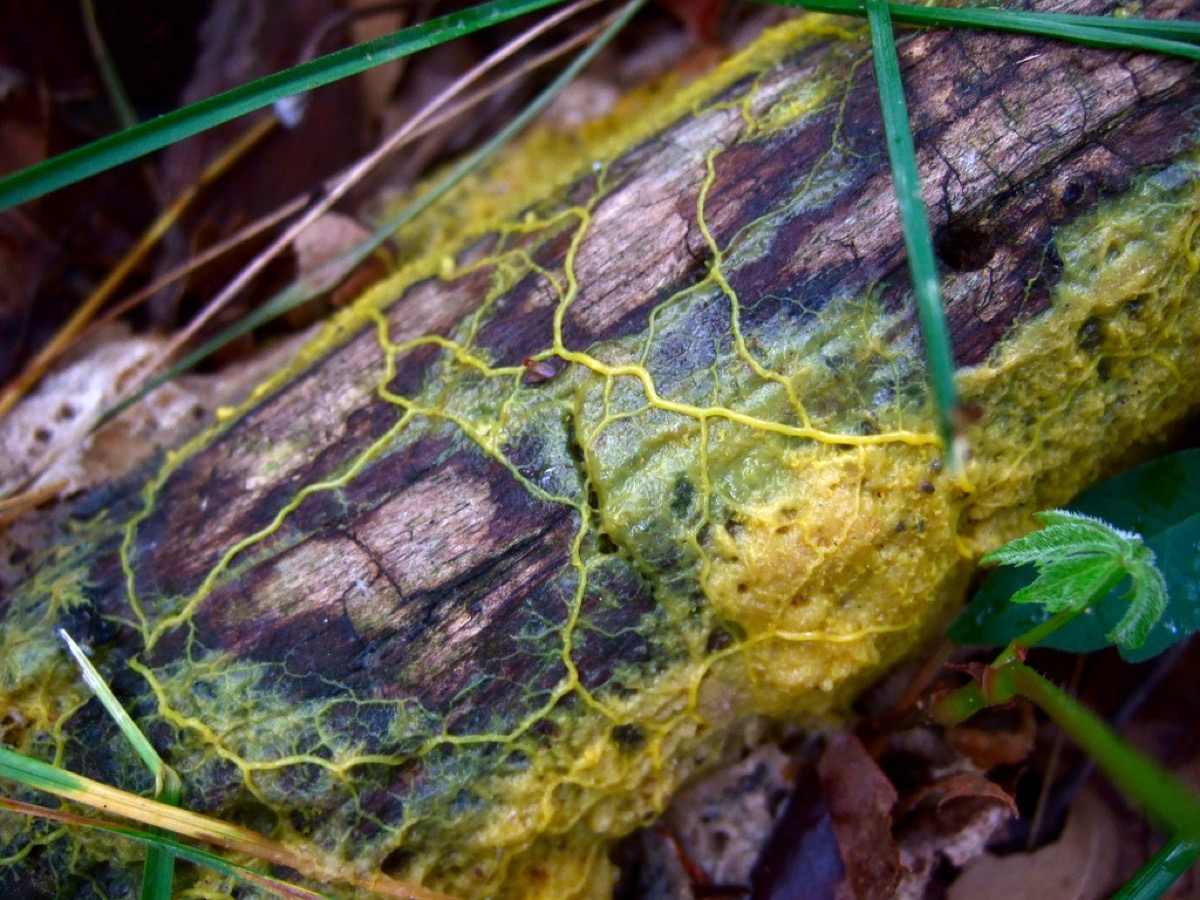
A plasmodium of the Physarum is one enormous cell with no neurons in it, and it crawls across a surface looking for food. Hit it with dry cold air and it slows down, which is a reaction and nothing more. Saigusa and colleagues delivered three such episodes at a constant interval, then stopped and kept conditions pleasant. What happens when the fourth would have been due?
It slowed down anyway. Three unfavorable pulses at a constant interval each slowed the plasmodium at the time. Then, with nothing happening at all, the organism spontaneously reduced its at the moment the next episode would have arrived. That implies anticipation of an impending change rather than a response to one. The authors examined the mechanism from a perspective.
Physarum are single cells of impressive size, crawling over damp surfaces in search of bacteria. No nervous system, no neurons, nothing that could obviously hold a memory, and yet a long history of doing things that look like decisions.
Saigusa and colleagues set up a simple schedule. Unfavorable conditions were presented as three consecutive pulses at constant intervals, and each time the plasmodium reduced its locomotive speed in response, which is unremarkable on its own.
Then the pulses stopped and conditions stayed favorable. At the time the next unfavorable episode would have occurred, the plasmodium spontaneously slowed down anyway. Nothing in the environment had changed, so the slowdown came from inside the cell.
The authors frame the explanation from a dynamical systems perspective, which is the useful move. An organism with internal oscillations can have them entrained by a regular external beat, then keep running on the inherited rhythm once the beat stops. Anticipation falls out of physics rather than out of anything resembling a brain.
wat. Three cold shocks at a steady beat, and the single cell flinched at the fourth that never came.
wat wat
Anticipating a periodic event is normally described in terms of a clock and a memory, both of which imply cells talking to each other. This happens inside a single one.
How do we know?
Saigusa and colleagues exposed Physarum plasmodia to three consecutive unfavorable pulses at constant intervals, returned them to favorable conditions, and tracked locomotive speed through the time the next pulse was due.
What is still unknown
Slowing at the expected moment is consistent with anticipation and also with an internal oscillator entrained by the pulses, which is what a dynamical account proposes rather than what it rules out.
Learn something?
Where to next
 What happened when a brainless organism designed a rail network?physarum
 How do penguins decide who has to stand on the cold outside?behavior
 Why does a wombat go to the trouble of leaving its mark up high?behavior