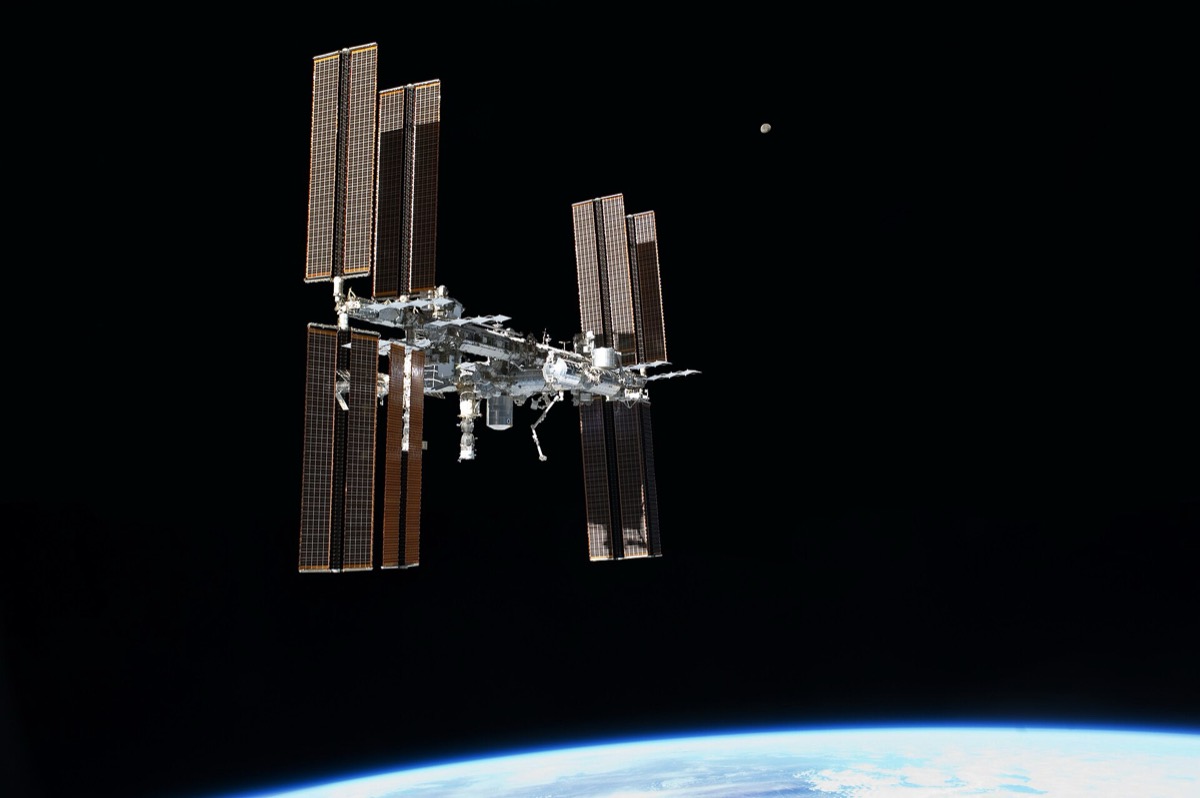
The travels at about 28,000 kilometers an hour, some four hundred kilometers up. At that speed one full lap of the Earth takes about ninety minutes. So how often does the crew cross the line between light and shadow?
Sixteen sunrises a day, one roughly every ninety minutes. The is not a choice: it is exactly the speed at which a fall toward the Earth curves at the same rate as the Earth curves away underneath it. Which is also the answer to the weightlessness question, because the crew is not outside gravity at all. They are in inside it, continuously, along with the station around them.
The figure sounds like trivia and is really the result of a calculation. The station moves at about 28,000 kilometers an hour, some four hundred kilometers up, and at that speed a full lap takes about ninety minutes. Sixteen crossings of the light-and-shadow line every day follow from that.
The speed is neither arbitrary nor chosen. It is exactly the speed at which the path of a falling body curves at the same rate as the Earth curves away beneath it. Go slower and you hit the ground; go faster and you climb to a higher orbit.
The same thing explains weightlessness, which is almost always explained wrongly. Up there gravity is still about ninety percent of its strength on the ground. The astronauts are not outside gravity but falling within it continuously, together with the station and with the pen that slips out of a hand, which is why nothing presses against the floor.
The practical consequence is not the view but sleep. A ninety-minute cycle of light and dark interferes with the , so the crew lives by an artificial day with scheduled lighting. One more detail shows that an orbit is not a fixed place. The thin remaining atmosphere drags on the station and it loses altitude, so it needs an engine push from time to time, and the lap time shifts a little over the years.
wat. Ninety minutes to the lap, and therefore sixteen sunrises and sixteen sunsets every day.
wat wat
A ninety-minute cycle of light and dark wrecks the body clock, which makes sleep in orbit a real operational problem rather than a curiosity.
How do we know?
Radar and satellite tracking follow the station’s orbit continuously, and the time of one lap follows directly from its altitude and speed under the laws of gravity.
What is still unknown
The station loses altitude to the thin atmosphere it still flies through and needs an engine push now and then, so the lap time shifts slightly over the years.
Learn something?
Where to next
 What does the brain do at night that it cannot get done by day?sleep
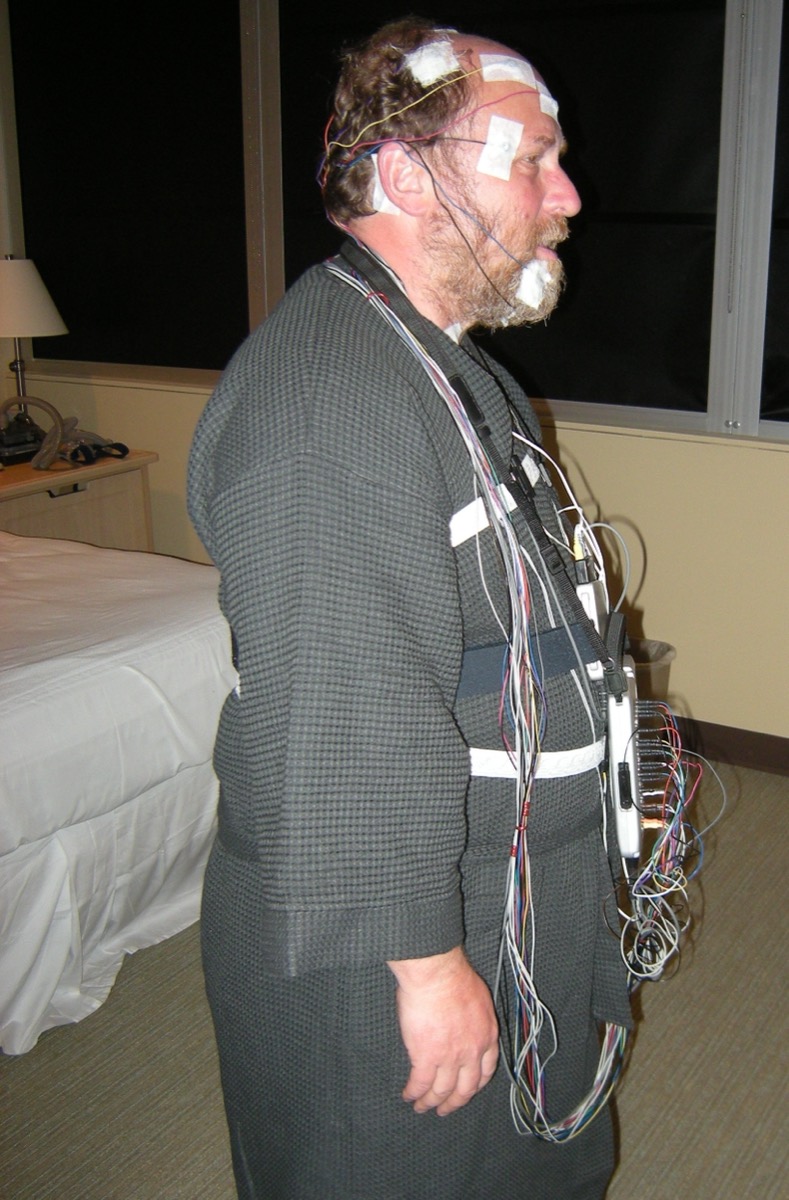 Who decides which of today’s memories you still have tomorrow?sleep
 A jumping spider sleeps and its legs curl. Is it dreaming?sleep