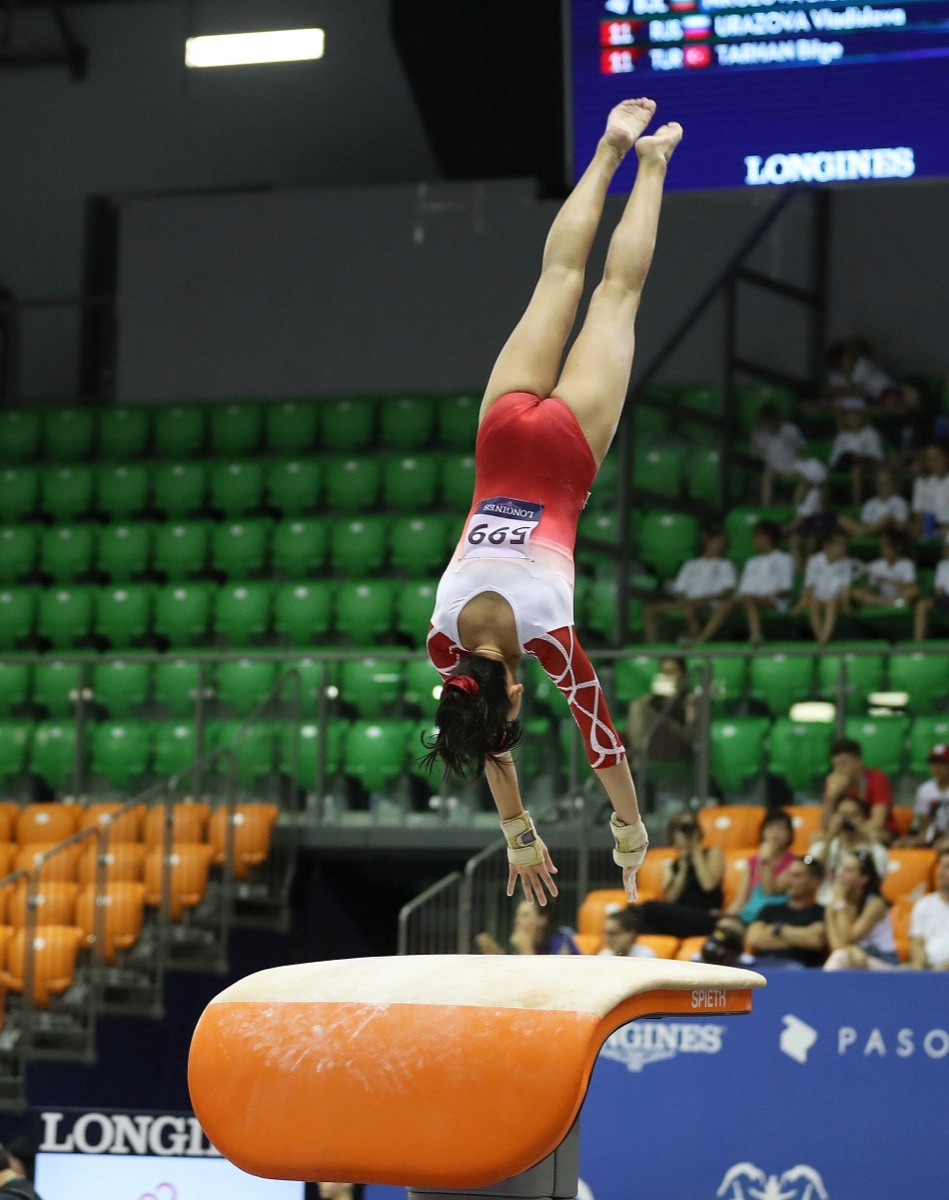
A gymnast loses track of where they are in the air. Simone Biles launched a vault in Tokyo meaning to do , lost her bearings once airborne, and completed one and a half. She knew immediately. The danger is not the lost twist but the landing that follows one.
Biles described it herself as not being able to tell up from down, with no idea where she was in the air and therefore no idea how she would land, or on what. Jordyn Wieber, who coaches at Arkansas and won team gold in 2012, says every gymnast knows the word. For her it first happened at ten: she went to flip forward and her body twisted instead.
After her first vault in the team competition in Tokyo, Simone Biles looked worried rather than hurt. She was not limping or grimacing. She had meant to do two and a half twists in the air after launching, and once airborne she lost her bearings and completed only one and a half. She knew immediately that something was wrong.
Gymnasts have a word for it. If you say twisties, every gymnast knows what you are talking about. So says Jordyn Wieber, a member of the 2012 Olympic gold medal team and now head coach at the University of Arkansas, who adds that all of them experience it. Hers first came at ten years old: she went to flip forward and her body automatically twisted instead.
Her description is specific. You get . You do not know where you are, or where the ground is. You do not know how many times you are twisting, and you cannot control it. Biles put it the same way on Instagram, writing that she literally could not tell up from down, and that what was scarier was not knowing how or on what she would land.
The causes vary by gymnast. Training several different at once can trigger them, going back and forth between double twists, one-and-a-half twists and triples. Stress can contribute. Sometimes they descend for no reason. Recovery usually means a trampoline or a , neither of which exists at an Olympic venue. Wieber’s point about Biles is the one that matters: doing the most difficult skills in the world without being mentally in a great place can be a matter of life or death. One caution: this is a news report, so the account of causes comes from experience rather than measurement.
wat. You are upside down, spinning, and you no longer know which way the floor is.
wat wat
It reframes a withdrawal that was widely read as nerves. A gymnast who cannot predict their landing is not underperforming, they are in physical danger on every attempt.
How do we know?
A Time report from Tokyo, drawing on Biles’s own public account of the episode and on an interview with Wieber about what the experience is like and what triggers it.
What is still unknown
A news report rather than clinical or biomechanical research. Its account of causes is drawn from a coach’s experience and from the gymnast’s own description, not from measurement.
Learn something?
Where to next
 Why does a library protect its visitors from the manuscripts?safety
 What happens on a flight deck when nobody dares correct the captain?safety
 Can reading a list out loud before surgery keep people alive?safety