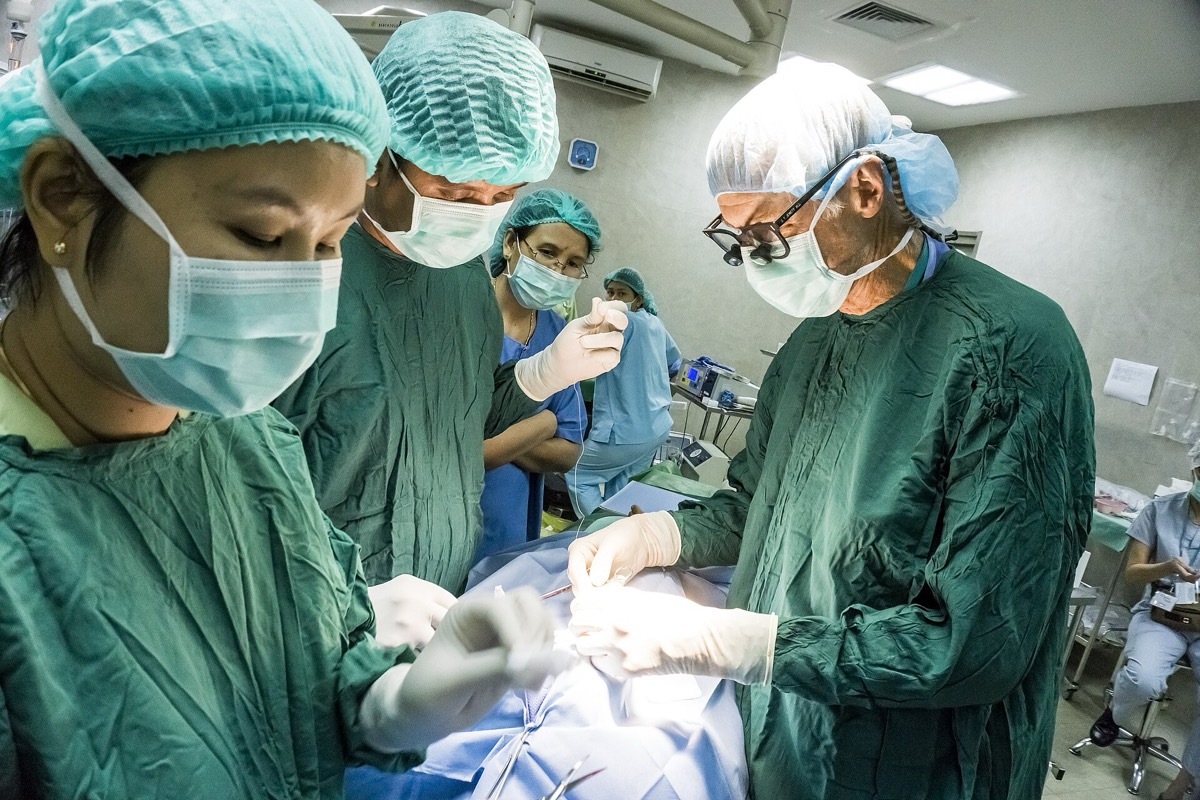
Surgeons worldwide carry out an estimated 234 million operations a year, and surgical complications are both common and often preventable. The proposal was unglamorous: a nineteen-item checklist read aloud to improve team communication and consistency. Eight hospitals in eight cities, from Toronto to Ifakara, collected outcomes on consecutive patients before it was introduced and then after. What changed in the numbers?
Deaths roughly halved and complications fell by a third. The rate of death was 1.5 percent among 3,733 patients before the checklist was introduced and 0.8 percent among the 3,955 patients afterward. Inpatient complications occurred in 11.0 percent of patients at baseline and 7.0 percent after introduction. The hospitals spanned very different economic circumstances, and the pattern held across that range.
Surgery is now an integral part of global health care, with an estimated 234 million operations performed yearly. Complications are common and frequently preventable, which invites interventions aimed at the process rather than the technique. The hypothesis here was that a nineteen-item , designed to improve team communication and the consistency of care, would reduce complications and deaths.
Between October 2007 and September 2008, eight hospitals in eight cities took part in the World Health Organization’s Safe Surgery Saves Lives program. The cities ranged from Toronto and London to New Delhi, Manila and Ifakara, deliberately spanning very different economic circumstances and patient populations.
Data on clinical processes and outcomes were collected prospectively from 3,733 patients aged sixteen or older undergoing . The team then collected data on 3,955 consecutively enrolled patients after the checklist was introduced. The was the rate of complications, death included, during hospitalization within the first 30 days after the operation.
The rate of death was 1.5 percent before the checklist and 0.8 percent afterward. Inpatient complications occurred in 11.0 percent of patients at baseline and 7.0 percent after introduction. Now read the design: implementation of the checklist was associated with those reductions, which is the authors’ own wording, because there were no control hospitals and no randomization. A before-and-after comparison cannot separate the checklist from everything else that shifts when a hospital knows someone is watching.
wat. After a nineteen-item list was read aloud before operations, deaths fell from 1.5 percent to 0.8 and complications from 11 percent to 7.
wat wat
The intervention costs nothing and needs no technology, which is why the result traveled so far into policy. It also locates the problem in communication rather than in surgical skill.
How do we know?
Haynes and colleagues prospectively collected clinical process and outcome data on consecutively enrolled patients aged 16 or older undergoing noncardiac surgery at eight hospitals, before and after introducing the WHO Surgical Safety Checklist.
What is still unknown
This is a before-and-after study with no control hospitals and no randomization, so secular improvement, better data collection and the attention of being studied are all uncontrolled. The association is strong and the design cannot isolate the checklist as its cause.
Learn something?
Where to next
 What happened to the first man to receive another person’s heart?surgery
 Does a placebo still work if you are told up front that it is one?medicine
 Does knee surgery for arthritis beat a fake operation?surgery