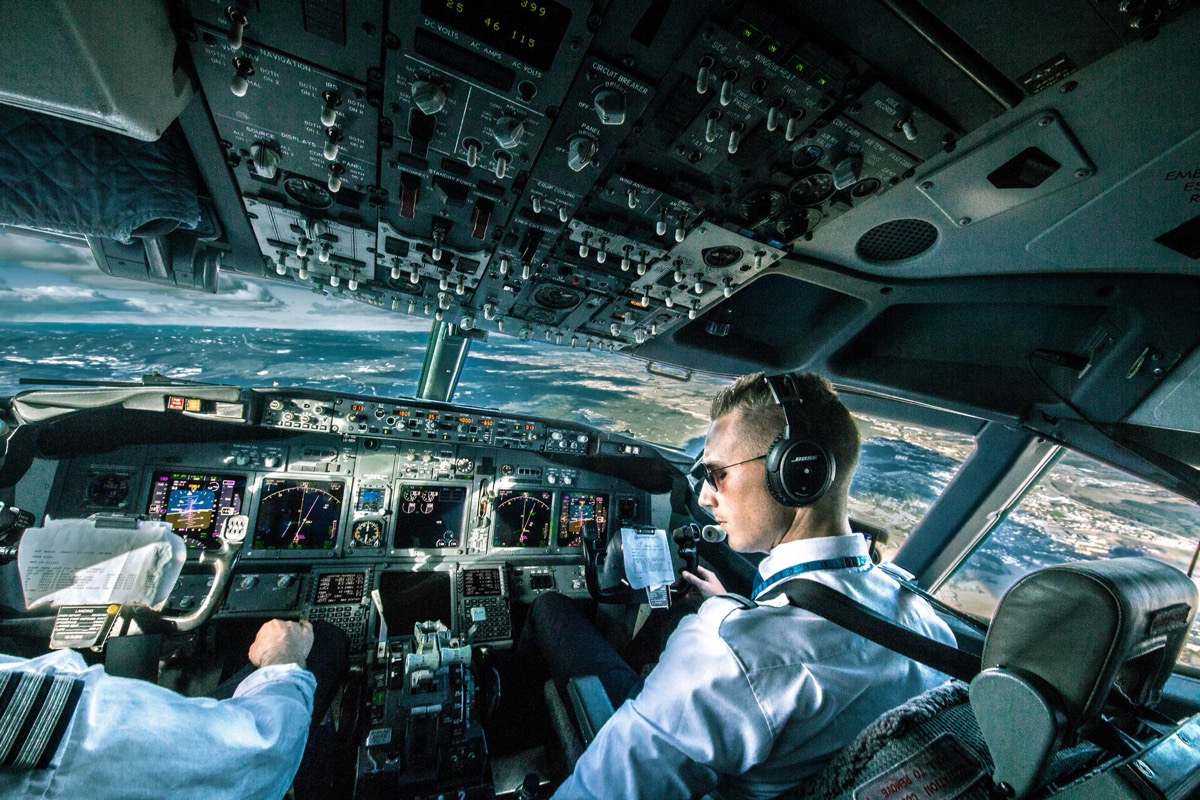
Flight data recorders and changed what accident investigators could see. Many crashes turned out not to involve a technical malfunction, a failure of handling skill or missing knowledge. They involved crews unable to respond appropriately to the situation they were in, and the barrier was often inside the conversation.
A steep , which is how aviation now names it. Concentrate command and decision-making power in one person and the others experience it as steep, so questioning a decision or even clarifying an instruction takes considerable determination, because comments meet criticism. Input then stops being offered, and in extreme cases people cease to participate at all.
What changed first was the evidence. The introduction of flight data recorders and cockpit voice recorders into modern jet aircraft produced new insights into the causes of accidents, and the pattern was not what anyone had assumed. Many accidents did not result from a technical malfunction of the aircraft or its systems, nor from a failure of handling skills or a lack of technical knowledge. They came instead from the inability of crews to respond appropriately to the situation they found themselves in. Inadequate communication between crew members could lead to lost situational awareness, a breakdown of teamwork, and ultimately a wrong decision.
Aviation gave the mechanism a name. An authority gradient is the established, or perceived, command and decision-making power hierarchy in a crew, and how balanced that distribution feels. A leader with an overbearing, dominant and dictatorial style produces a steep gradient. Team members see such a leader as overly opinionated, stubborn and aggressive. Expressing a concern, questioning a decision or even clarifying an instruction then takes considerable determination, because comments meet criticism.
The consequences are specific to safety. Steep gradients act as barriers to involvement, reducing the flow of feedback, halting cooperation and preventing creative problem solving, and only the most assertive and confident will at all. The worked example SKYbrary gives is exactly the accident shape. A captain with an authoritarian style misunderstands an altitude clearance from air traffic control, a passive first officer hesitates to correct it, and the aircraft busts its altitude.
The response was to train the missing skills. Flight simulators let new theories about accident causes be studied under experimental conditions, and most airlines added training in flight deck management techniques, which collectively became . Its elements are not new, having been recognized since aviation began under headings such as airmanship, captaincy and crew co-operation, but those terms had never been defined, structured or articulated formally. The name itself records the shift: cockpit resource management was later broadened to cover the entire crew.
wat. The first officer who sees the error and says nothing is the accident. That is what the voice recorders kept showing.
wat wat
The fix was not better flying. It was formalizing skills that had always existed under vague names like airmanship and captaincy, and then training them in simulators.
How do we know?
SKYbrary, the aviation safety reference maintained with EUROCONTROL and the Flight Safety Foundation, in its articles on authority gradients and on crew resource management, the training that grew out of these accident findings.
What is still unknown
A reference article rather than an accident report. It sets out the mechanism and the training response without tying either to a named crash or quantifying how much the accident rate changed.
Learn something?
Where to next
 Why does a library protect its visitors from the manuscripts?safety
 Can reading a list out loud before surgery keep people alive?safety
 What are the twisties, and why are they dangerous?safety