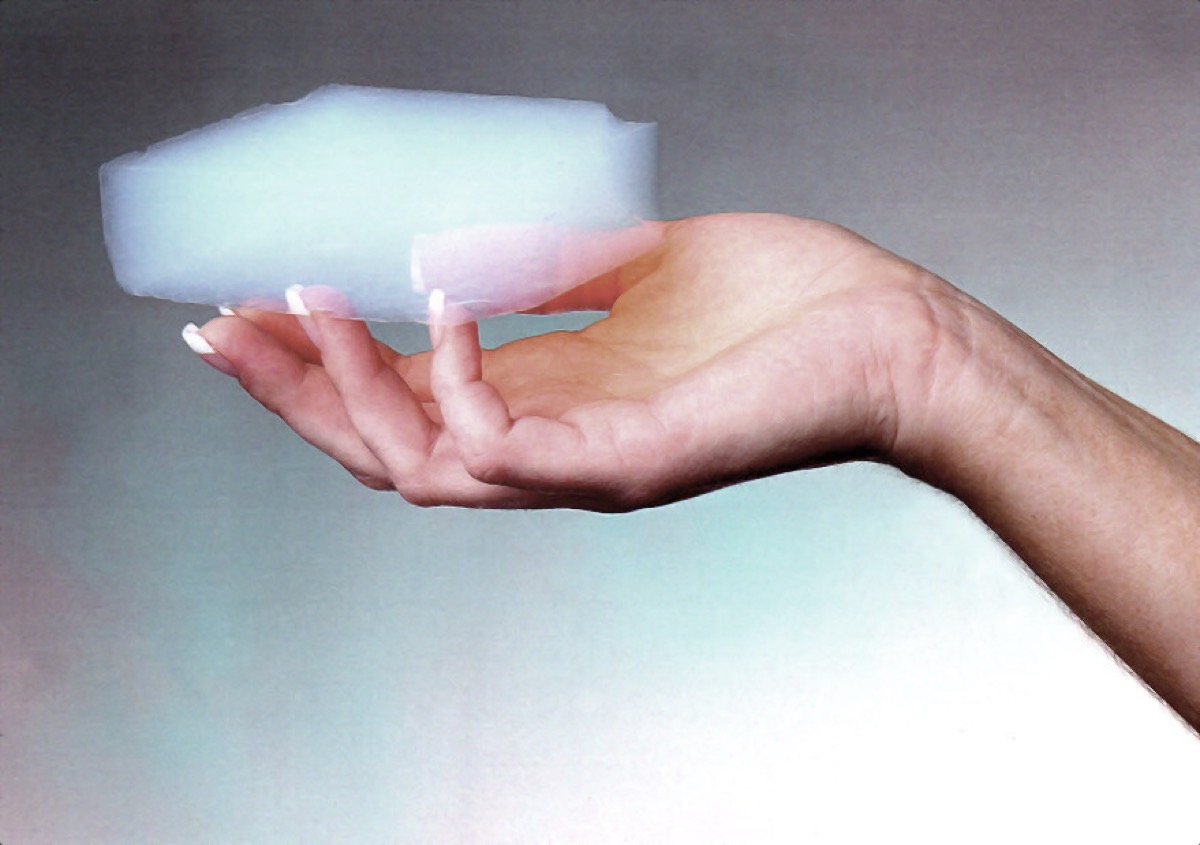
Almost nothing. Silica aerogels are roughly 95 percent air by volume, and the remaining few percent is a continuous holding the whole thing in shape. That is why a block of it looks like solid smoke, and why it insulates so well. The hard part was never building the structure. It was getting the liquid out without collapsing it.
Aerogels start as a wet gel, built from molecular precursors by . The network forms inside a , and then that fluid has to leave without surface tension pulling the solid down with it. is the usual answer. Newer routes work at atmospheric pressure by chemically altering the gel’s internal layer first, so the liquid can go quietly.
The striking claim about silica aerogel is a compositional one: almost 95 percent of the total volume is air. What allows that is a continuous silica network of very fine solid strands enclosing pores far smaller than the wavelength of visible light. Hence the odd appearance, solid and translucent and faintly blue, and the nickname frozen smoke.
Getting there takes two stages. Sol-gel processing builds the network from molecular precursors inside a liquid, which leaves a wet gel rather than an aerogel. The whole difficulty is the second stage: taking the pore fluid out and leaving the solid skeleton standing.
Supercritical drying is the most frequent approach, because above the critical point there is no liquid-vapor interface and so no surface tension to crush the pores. Recent routes avoid the pressure vessel instead. They chemically alter the gel’s internal layer so that liquid can leave at atmospheric pressure, which leaves a porous silica network filled with air.
The properties all follow from the emptiness. Low density, hydrophobicity, optical transparency, low thermal conductivity and a large surface-to-volume ratio all come out of the same structure. That is why the review runs through applications in electronics, construction, aerospace, water and air purification, sensing, catalysis, medicine, absorbents, food packaging and textiles. One caution: a review reports typical values across a family of materials. Any particular aerogel’s numbers depend on its precursor and on how it was dried.
wat. Pick up a block of aerogel and you are mostly holding trapped air.
wat wat
The composition explains every property at once. Low density, low thermal conductivity and optical transparency are all consequences of a solid that is mostly empty, which is why aerogel turns up in construction, aerospace and water purification alike.
How do we know?
A review in Particle & Particle Systems Characterization covers the sol-gel route to silica aerogels, the drying processes used to replace pore fluid with air, and the properties and applications that follow from the result.
What is still unknown
A review article rather than new measurement, so its figures are representative of silica aerogels in general. Properties vary with the precursor and the drying route, and the review does not report one material’s numbers.
Learn something?
Where to next
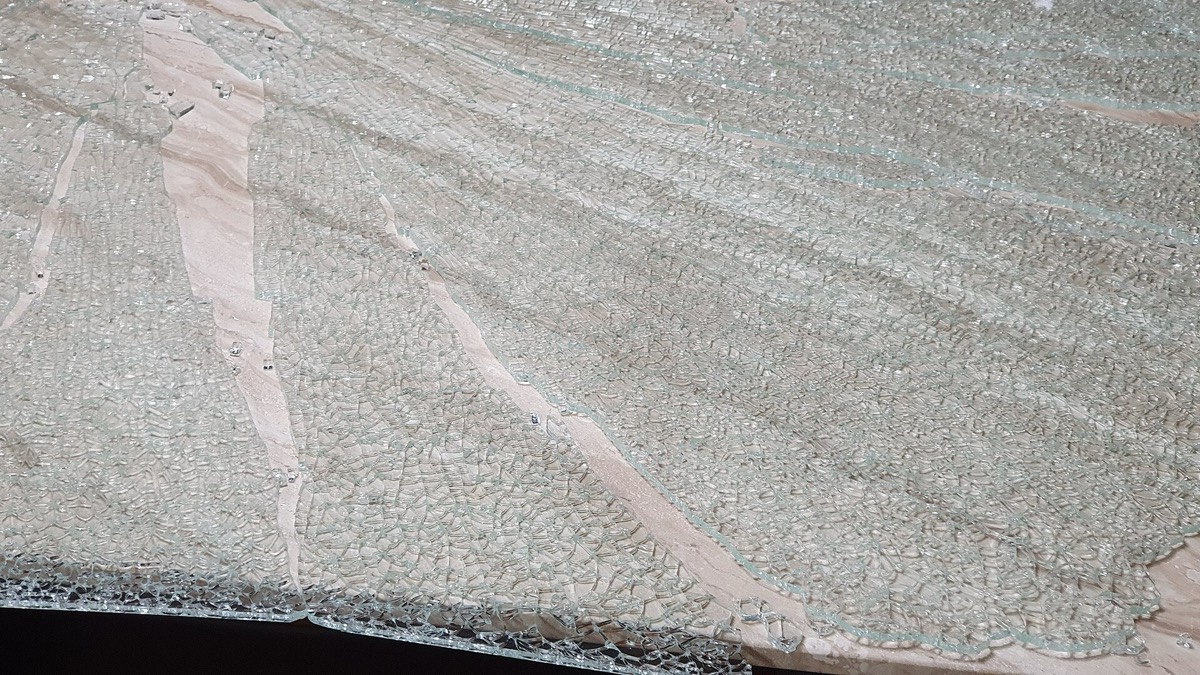 Why does a toughened window crumble into thousands of small pieces instead of long blades?materials
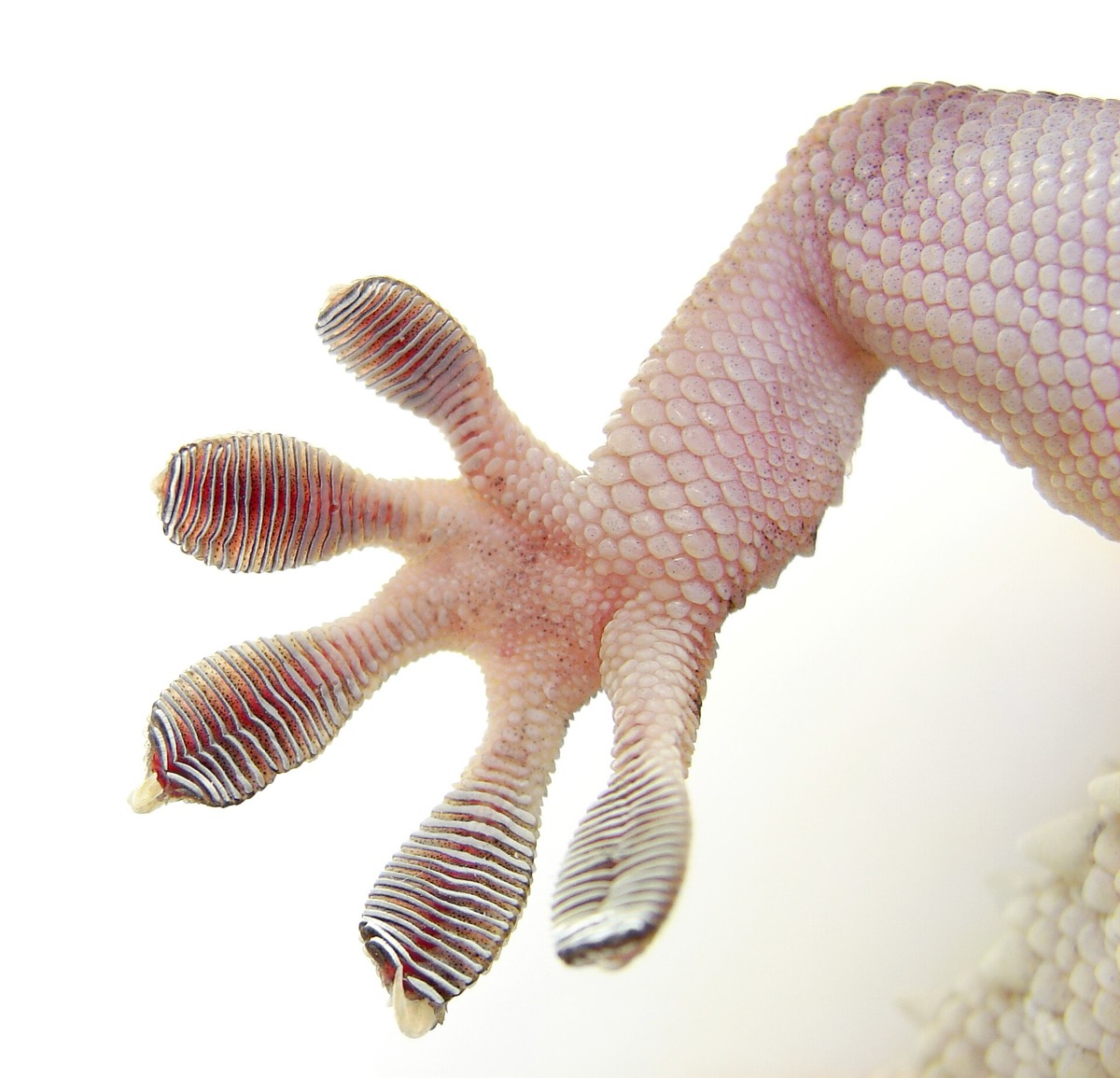 A gecko runs across a smooth ceiling with no glue. What holds each step?materials
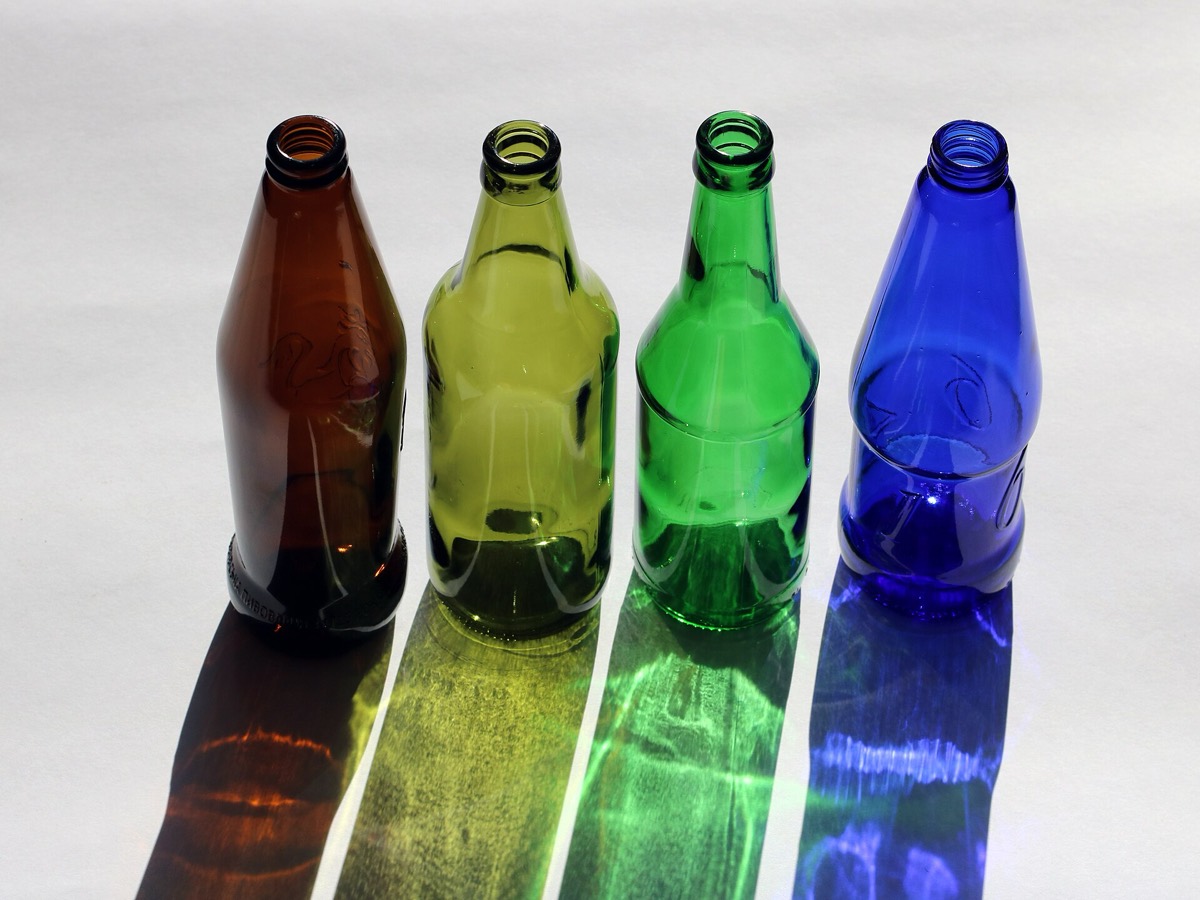 Full or empty, which beer bottle survives the impact?materials