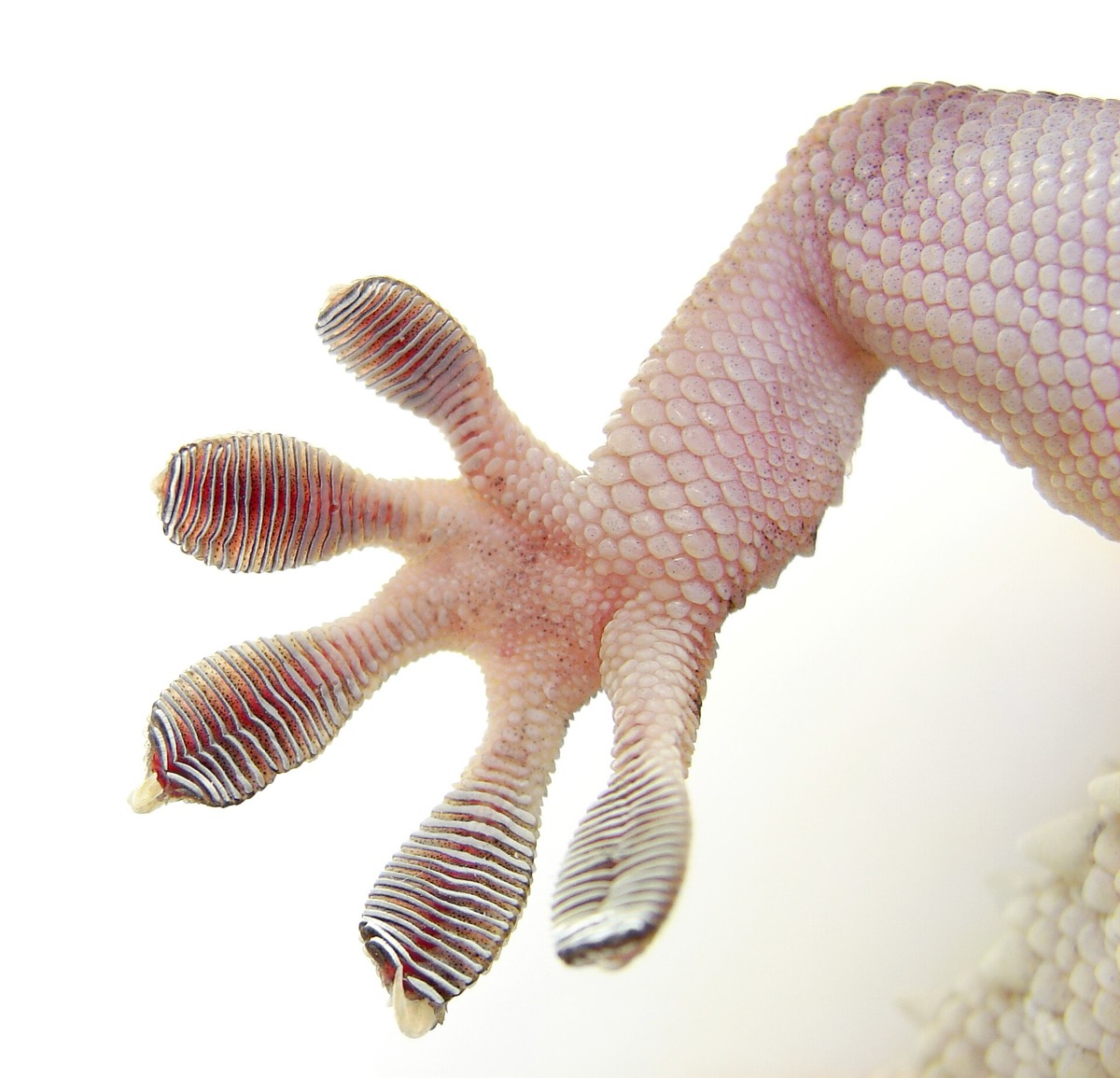
A gecko runs across a smooth ceiling with no glue at all, and comes off the instant it wants to. Real adhesive does not behave that way, because it sticks and then fights being removed. To find the mechanism, researchers pulled on one hair from a gecko toe, and on the toes of live animals, across surfaces of opposite chemistry. What held?
, the weakest attraction there is. A gecko toe gripped a strongly water-repelling surface just as well as a strongly water-loving one, which rules out every mechanism that needs water or surface polarity to work. What remains is the plain attraction between molecules at almost no distance. One contact is nothing, and millions of hair tips together carry the whole animal.
A gecko crosses a smooth ceiling with no glue and no suction, and the mechanism turns out to be a force that exists between any two bodies at all.
Its toe pads are covered in microscopic hairs, and each one of these splits into tiny flat tips. The branching multiplies the number of contact points and lets every tip conform to the roughness under it, so the foot meets even a gritty wall at millions of places.
When the animal lays them almost flat against the surface, the tips come close enough for van der Waals forces to act. The experiment ruled out the alternatives by chemistry. A toe held equally well on a strongly water-repelling surface and a strongly water-loving one, and so did a single hair on a force sensor. No water-based or polarity-based mechanism predicts that.
Release is just as simple. by a change of angle lets the tips go one at a time rather than fighting all of them together. That is what makes this worth copying in tapes and climbing robots, and humidity, dust, roughness and wear are the reasons a copy still falls short of the foot.
wat. A gecko secretes no glue at all: millions of hair tips come close enough to the wall that the weakest attraction in physics adds up.
wat wat
A grip that needs no sticky substance can be attached and released thousands of times, which is why climbing robots and reusable tapes were built on this principle.
How do we know?
Autumn and colleagues measured the pull of a single isolated hair on a micromechanical force sensor, and of whole toes on live Tokay geckos, over surfaces chosen for opposite surface chemistry.
What is still unknown
Humidity, dust, roughness and wear all change the force. Van der Waals forces explain the close contact, and the architecture of the whole foot is what steers it.
Learn something?
Where to next
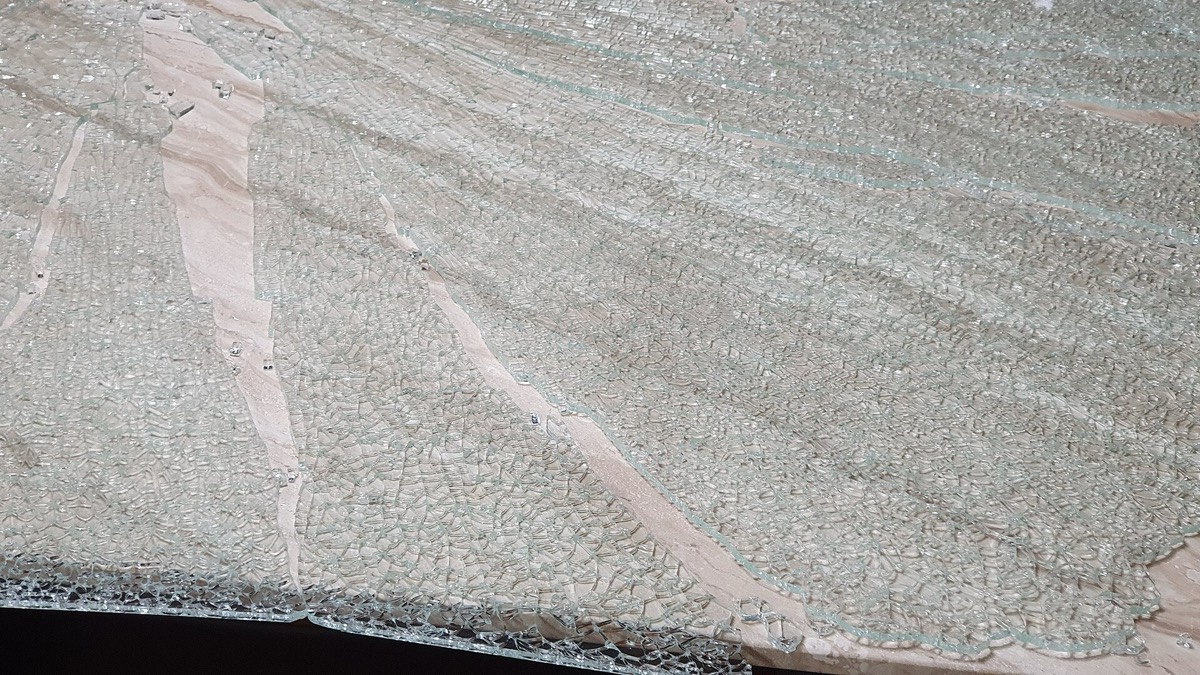 Why does a toughened window crumble into thousands of small pieces instead of long blades?materials
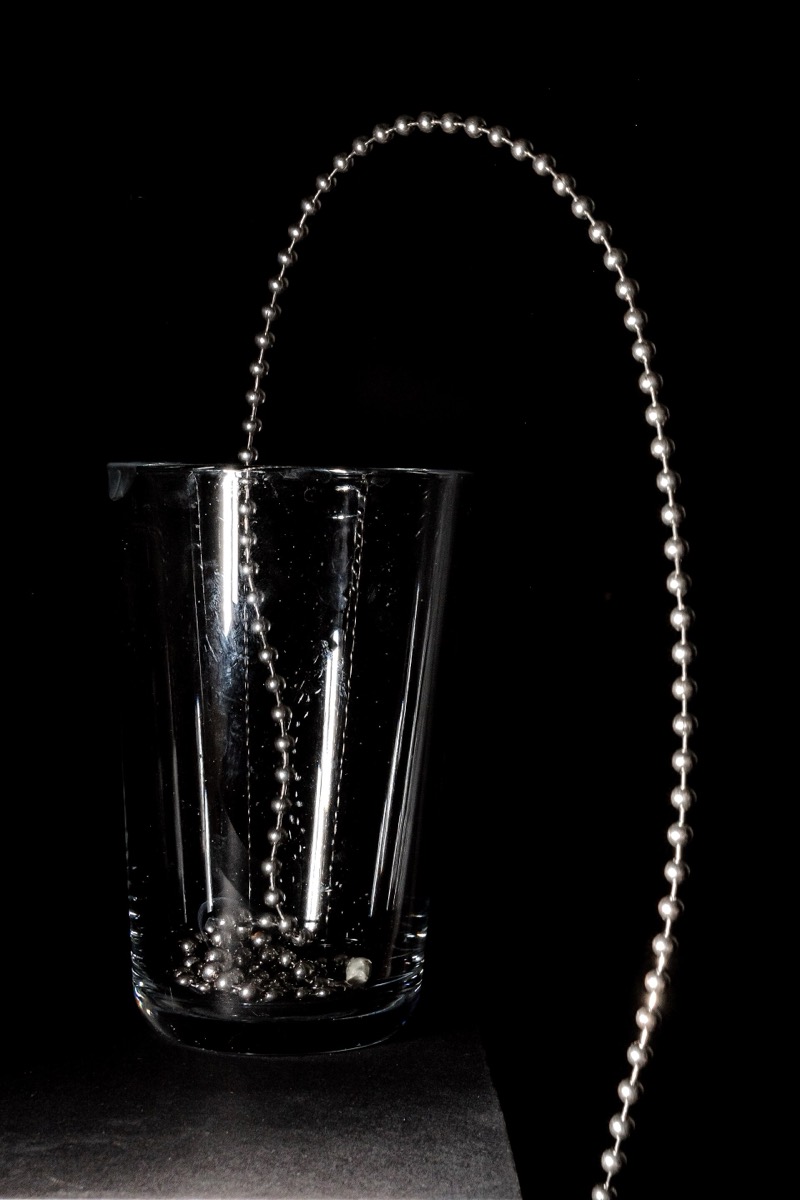 A chain pours from a cup to the floor. Why does it rise into the air first?forces
 Full or empty, which beer bottle survives the impact?materials