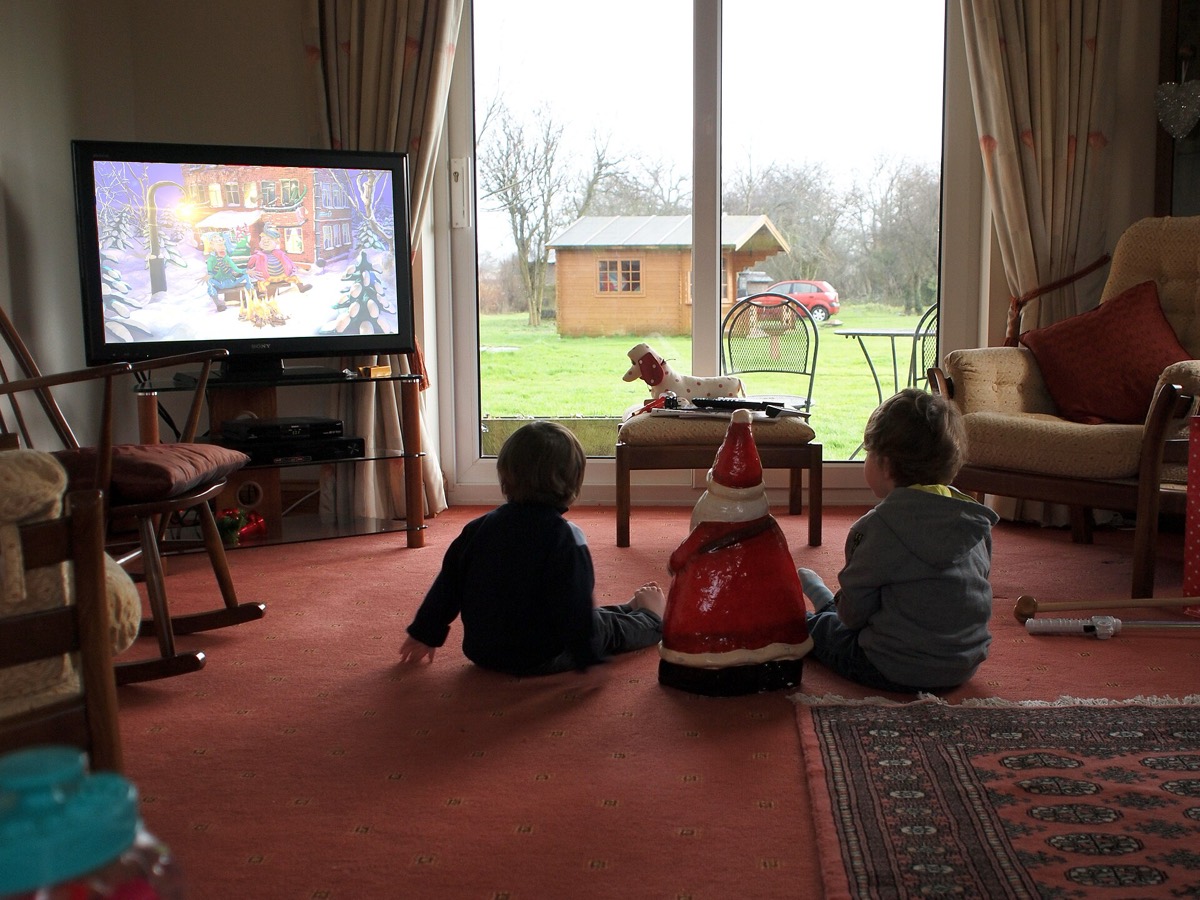
Children learn language from the talk around them, so the worry about screens is not really about the screen. It is about what the screen replaces. Australian researchers put recorders on 220 families and captured an average sixteen-hour day, five times between the ages of twelve and thirty-six months. Did the household words actually go missing?
Every extra minute cost words. By three years old, one additional minute of screen time went with 6.6 fewer adult words, 4.9 fewer and 1.1 fewer . The models had already allowed for the child’s sex and age, the mother’s education, how many children and activities the home held, and the caregiver’s distress. The shortfall grew as the children got older.
Language development runs on input, which is why the question about toddlers and screens is really a question about displacement. The term the field uses is : technology getting in the way of the back and forth between a parent and a child.
An Australian cohort tested it directly. Recorders went home with 220 families once every six months, at 12, 18, 24, 30 and 36 months of age. then counted adult words, child vocalizations and conversational turns across an average 16-hour day.
The association ran one way and got stronger with age. At 36 months, each extra minute of screen time matched a drop of 6.6 adult words, 4.9 child vocalizations and 1.1 conversational turns. The models already allowed for the child’s sex and age, the mother’s education, how many children were at home, how many activities the family did, and the primary caregiver’s psychological distress.
Read those numbers as an exchange rate, not a verdict. This is a single cohort of 220 families in Australia, and heavy screen households may differ in ways the adjustments miss. What the work does well is price the cost in the right currency: the words and turns a child actually hears, rather than the hours a screen is on.
wat. At three years old, each minute in front of a screen cost the household roughly seven adult words and one conversational turn.
wat wat
It names the cost in the currency that matters. Not screen hours, but adult words and conversational turns, which is the input a child’s language actually runs on.
How do we know?
Brushe and colleagues followed 220 Australian families every six months from twelve to thirty-six months, using speech recognition software to count words, vocalizations and turns across a full day at home.
What is still unknown
This is one prospective cohort in Australia, and families who use more screens may differ in ways no adjustment catches, so the minute-for-words rate is an association rather than a price list.
Learn something?
Where to next
 What does your brain already know about a word that escaped you?language
 Does a bedtime routine on its own improve a young child’s sleep?toddlers
 Does speaking two languages sharpen the rest of your thinking?language