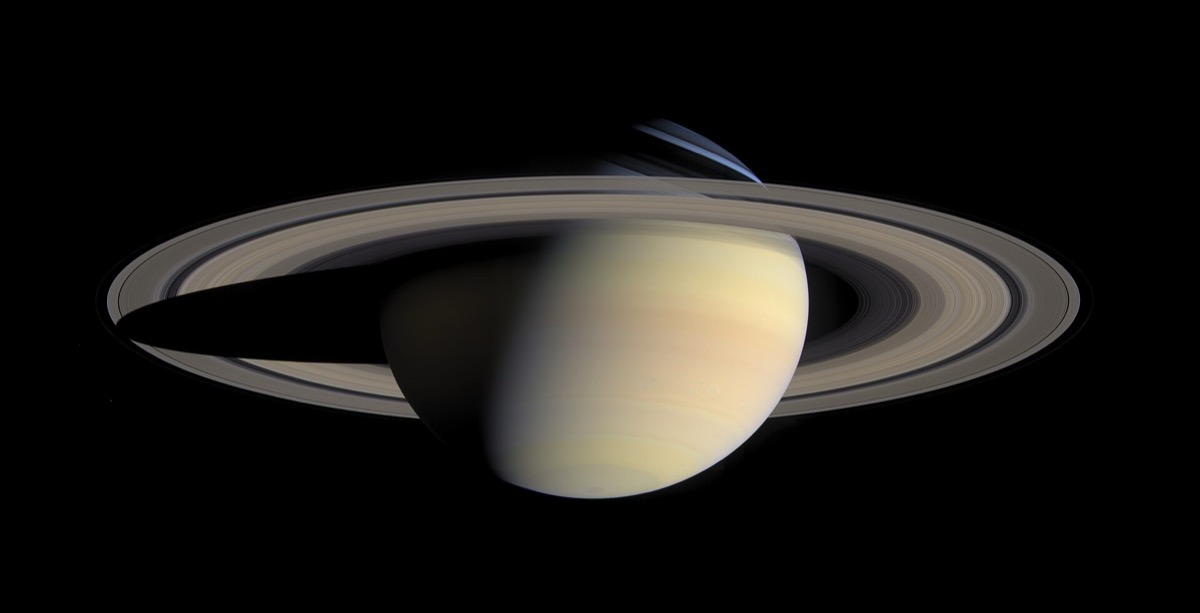
Saturn’s rings are almost entirely , with hardly any dust in them. That is odd, because space is not clean and microscopic dust should have been collecting in them and darkening them for as long as they have been there. What does their brightness give away?
That they have not been there for billions of years. Alongside that, measured material falling out of the rings into Saturn’s atmosphere, at a rate that is not negligible. Two observations from different directions, and together they describe rings that are an episode rather than a permanent feature of the planet.
The natural assumption is that Saturn’s rings are a permanent feature, as old as the planet. Two Cassini measurements unsettle it, and each arrives from a different direction.
The first is composition, read by from a billion kilometers off. The rings are almost entirely water ice with hardly any dust. But space is not clean, and microscopic dust should accumulate and darken them over time. Bright, clean ice suggests they have not been sitting there for billions of years.
The second is loss. Passing through the gap between Saturn and its rings, Cassini measured material falling from them into the atmosphere, and the rate of that is far from negligible. The rings are emptying, and at that rate they have a lifetime rather than a forever.
The conclusion, if it holds, is strange: we are watching them precisely during the period they exist, which is luck rather than law. Ring systems may be something that happens to planets from time to time rather than a standing feature. Worth qualifying that the age estimates rest on contested models of dust arrival and material loss, and the span in question is hundreds of millions of years.
wat. Saturn’s rings are ice almost without dust in it, and that cleanliness is what gives away that they have not been there for billions of years.
wat wat
If the rings are temporary, we are watching them during the stretch when they happen to exist, which changes the assumptions about ring systems around planets generally.
How do we know?
Cassini flew between Saturn and the rings at the end of its mission and measured the ring mass and the infalling material directly. Ring composition was read by spectroscopy.
What is still unknown
Age estimates rest on models of dust accumulation and of material loss, and both are contested. The span under discussion is hundreds of millions of years, not a handful.
Learn something?
Where to next
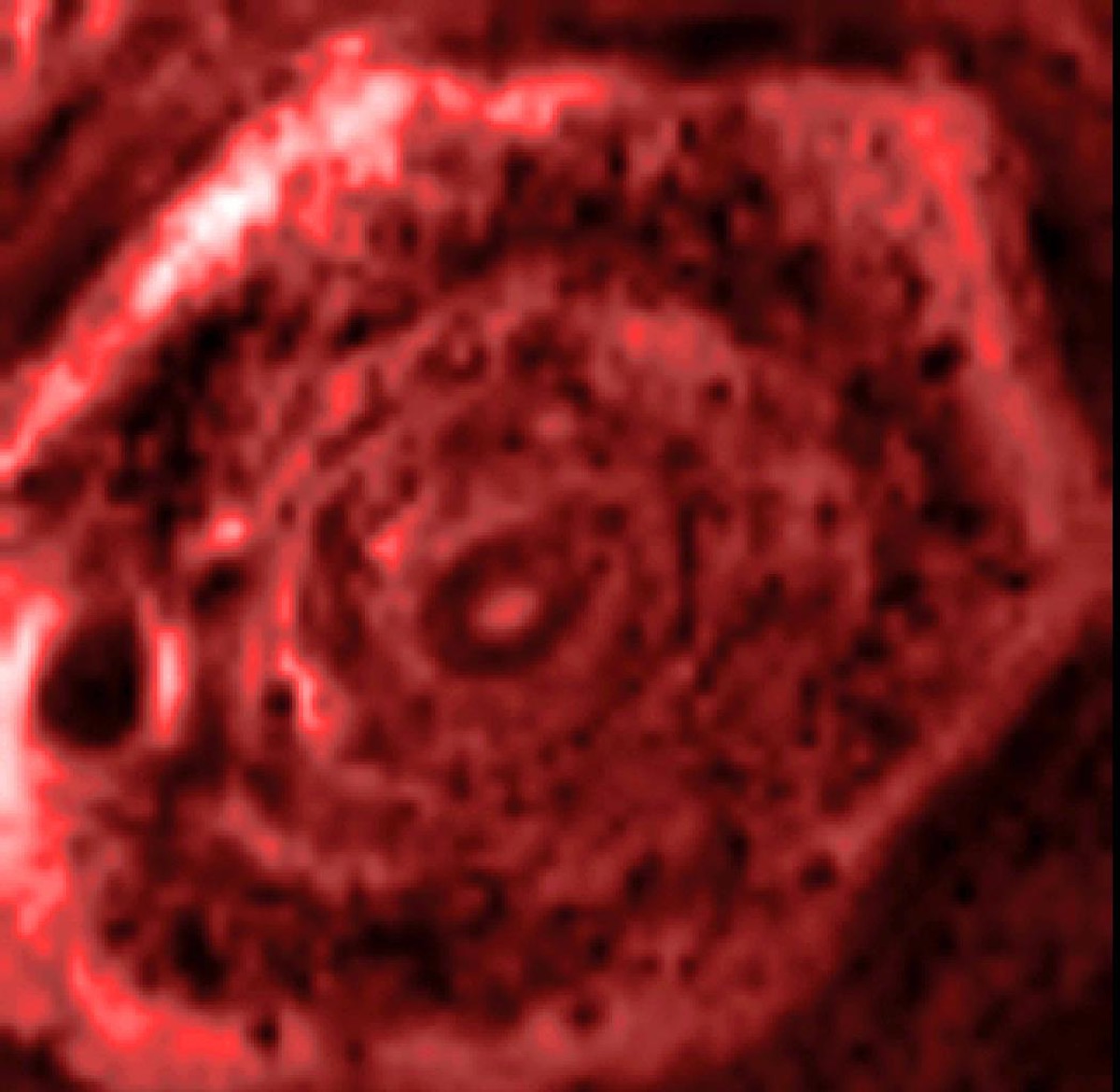 Why does the storm at Saturn’s pole have six nearly straight sides?Saturn
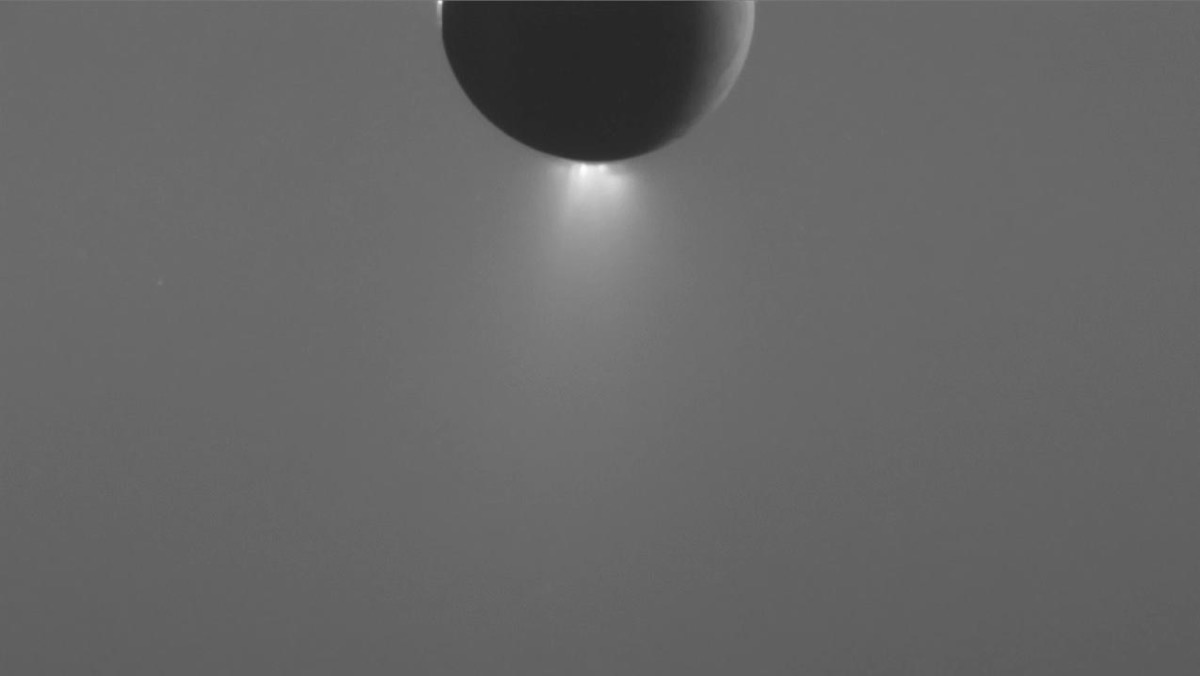 What did Cassini find inside the ice grains fired out of a moon of Saturn?Cassini
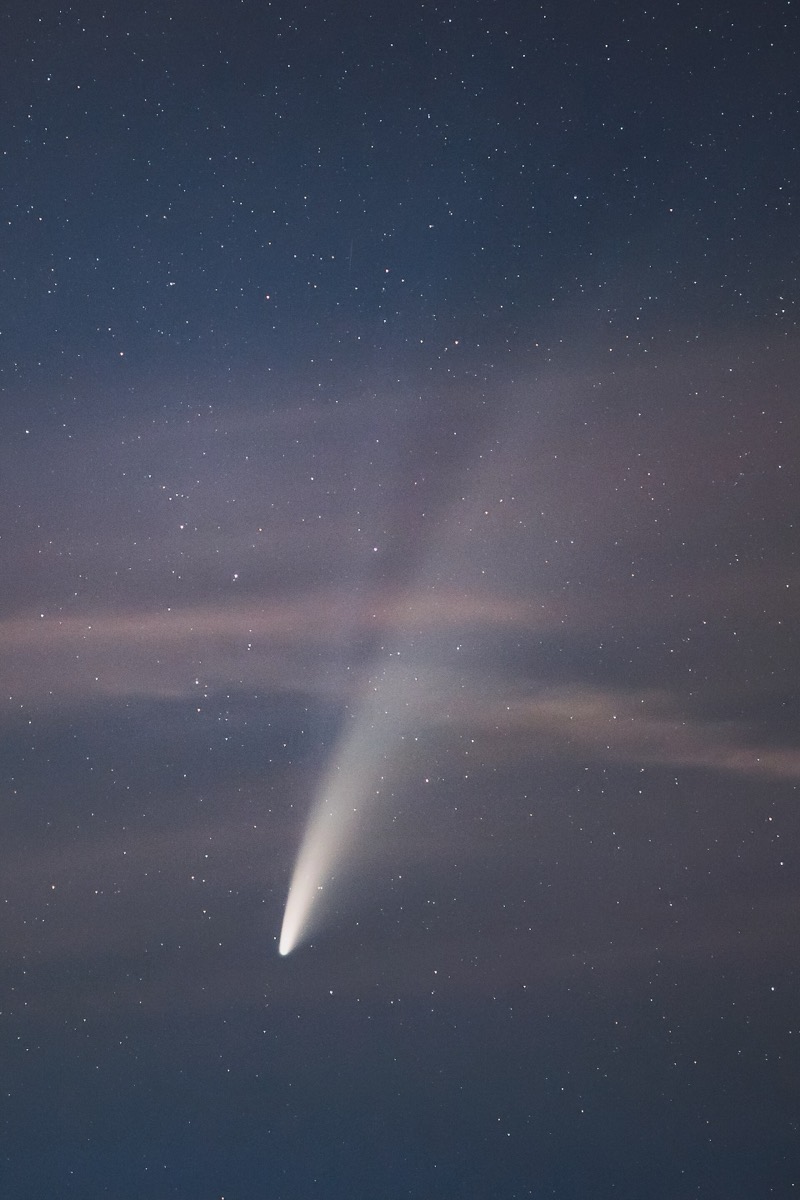 Has anyone ever seen the Oort Cloud?solar system