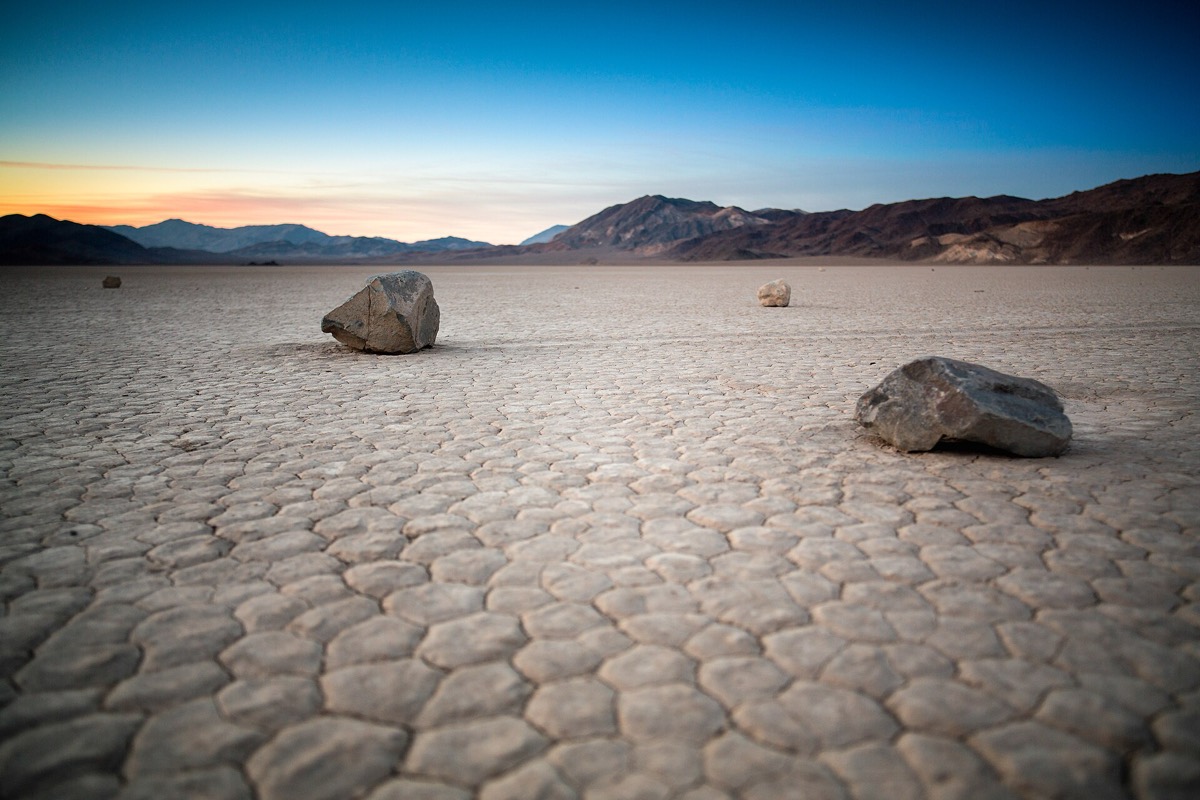
Rocks on leave long engraved trails across flat dry mud. Since the nineteen forties the blame has gone to hurricane winds, rain-slicked clay, or carrying the stones clear of the ground. Nobody had ever watched one move. Norris and colleagues bolted GPS units to rocks and left cameras and a weather station running through a winter. What happens when a rock moves?
Thin ice, light wind, slow motion. The carries a sheet only a few millimeters thick. Late-morning sun starts it melting, and winds of four or five meters per second break it into floating panels tens of meters across. Those panels shove whole groups of rocks along at two to five meters per minute. More than sixty rocks moved on a single December day.
Racetrack Playa is a dry lakebed, almost perfectly flat, and some of the rocks sitting on it trail long grooves behind them. The grooves have invited explanation since the nineteen forties: hurricane-force winds, a surface turned slick by rain, ice flotation lifting the stones off the mud. None of it had ever been caught happening.
Norris and colleagues set out to catch one in the act. They fitted rocks with GPS units, put up a weather station, and ran time-lapse cameras over the playa through the winter. The instrumented rocks turned out to travel a long way, some of them more than two hundred meters over about two months, in several separate episodes.
The mechanism, once it finally showed up on camera, is gentler than every hypothesis it replaced. The shallow playa pool freezes into a windowpane ice sheet a few millimeters thick. Late-morning sun melts it, light winds of around four or five meters per second break it into panels tens of meters wide, and the panels push against the rocks.
Speeds run two to five meters per minute, slow enough that somebody standing nearby could miss it entirely. On one December day more than sixty rocks moved together, and that is the detail that gives the game away. A single sheet of ice shifts many rocks at once, their paths set by the wind above and the water flowing underneath.
wat. Not a gale and not a flood but a pane of ice a few millimeters thick, breaking up in the late morning sun.
wat wat
A famous mystery turned out to need the one mechanism nobody favored, because it is undramatic, which says something about where the confident hypotheses were coming from.
How do we know?
Norris and colleagues instrumented rocks with GPS, set a weather station and time-lapse cameras on Racetrack Playa, and recorded the first direct observation of the rocks in motion.
What is still unknown
One playa over one winter. The observed events involved thin ice and modest rocks, and whether the largest trails on that surface were cut the same way is not established.
Learn something?
Where to next
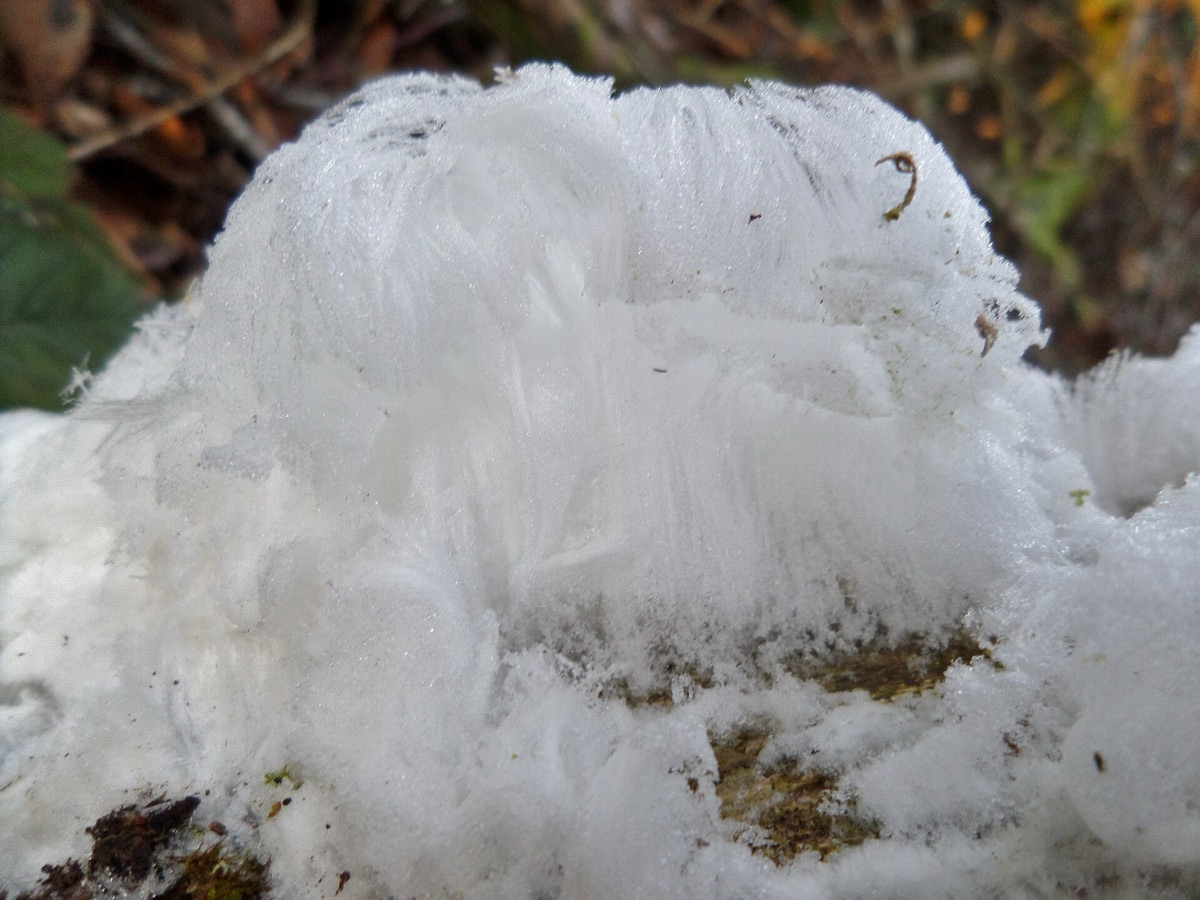 What combs frost into hair on a fallen branch?ice
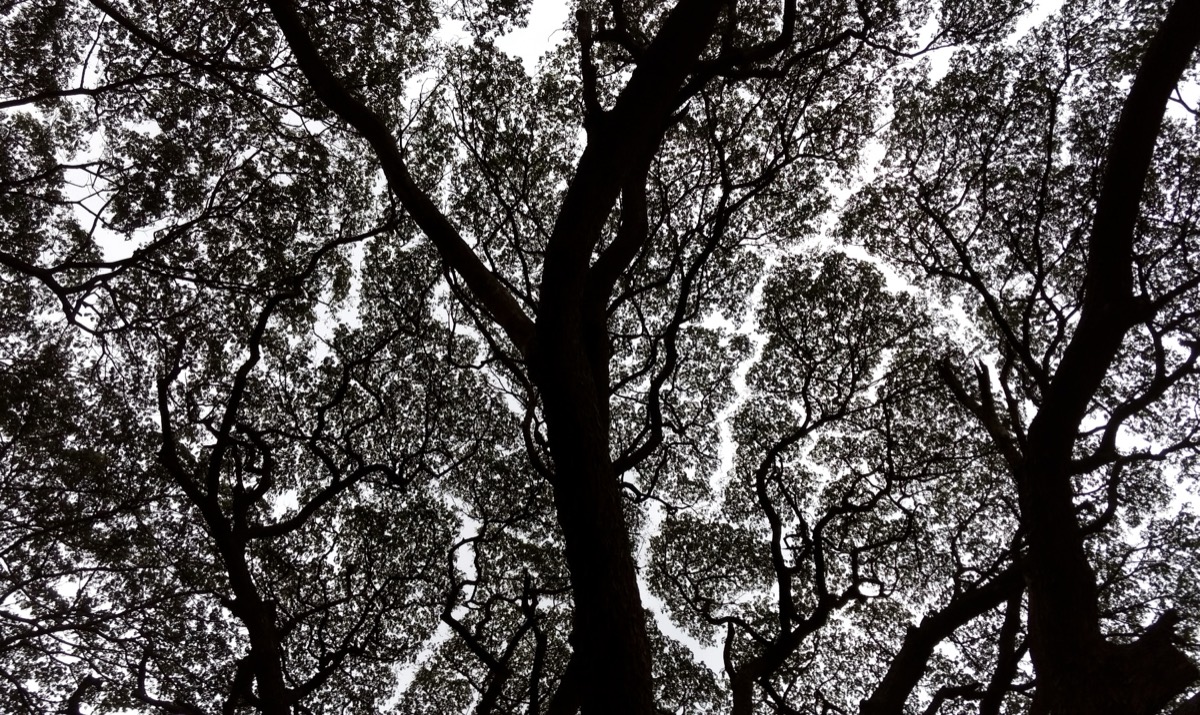 Why is there a gap of sky between one tree crown and the next?windWhy is there a gap of sky between one tree crown and the next?wind