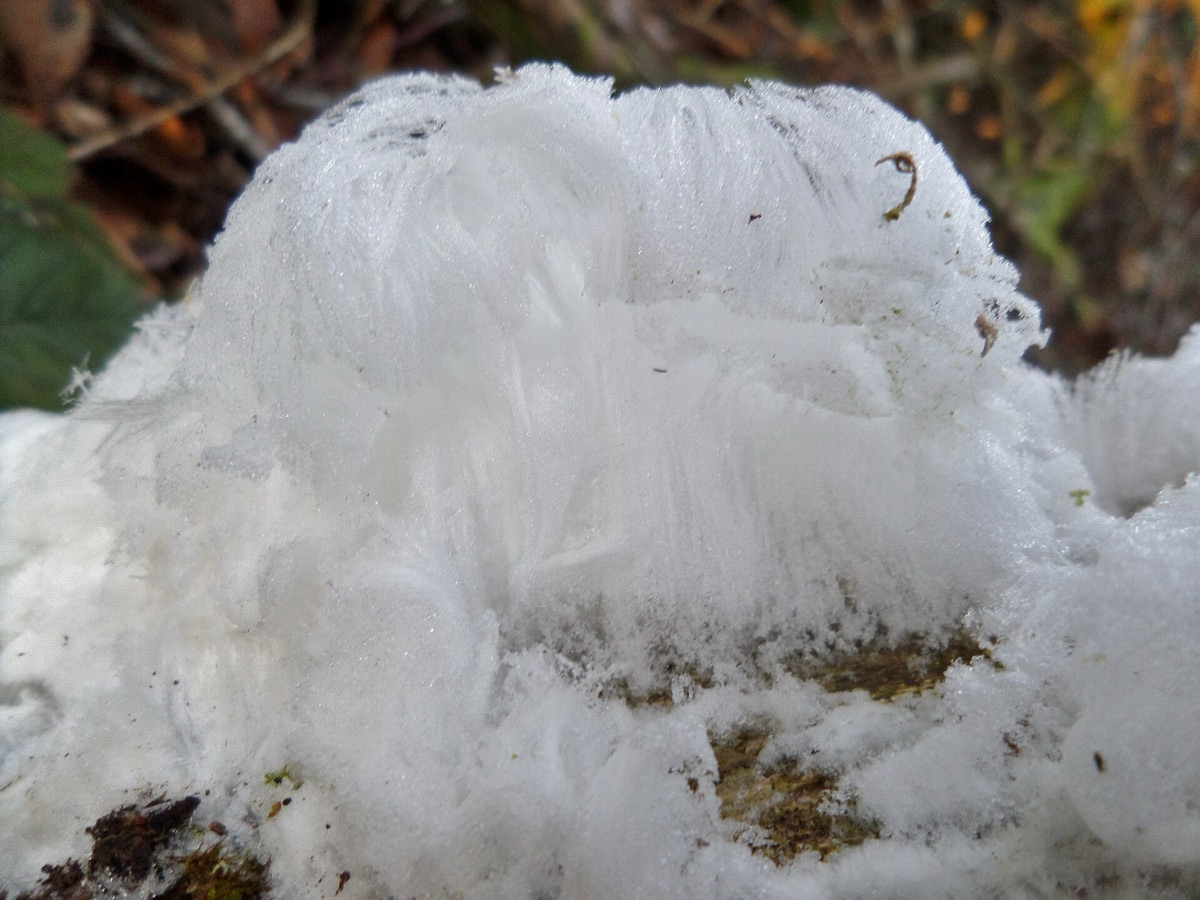
On dead broad-leaf wood, just below freezing, ice sometimes grows as a dense mass of fine white filaments rather than as a crust. Wegener proposed a fungus behind it back in nineteen eighteen and nobody settled the question. Hofmann and colleagues tried to reproduce on wood samples, then killed whatever was living in the wood with heat and with fungicide. Does the ice still grow?
Not without the fungus. Heat treatment and fungicide both suppress hair ice entirely, and the filaments came back on untreated wood, which confirms the old hypothesis. Fruiting bodies of Asco- and Basidiomycota turned up on hair-ice-bearing wood, with one species, , present on every sample examined. Treated and untreated wood cooled the same way, so the fungus is not warming anything or changing how fast the ice forms.
Hair ice grows on the surface of dead broad-leaf wood at temperatures slightly below freezing, as a dense mass of fine white filaments. Alfred Wegener suggested a fungus was involved in nineteen eighteen, and the idea sat unresolved for most of a century.
Hofmann and colleagues confirmed it by the obvious route. They reproduced hair ice on wood samples, then removed the biology: treatment by heat and by fungicide both suppress the formation. Fruiting bodies of Asco- and Basidiomycota were identified on hair-ice-carrying wood, and one species, Exidiopsis effusa, was present on all of the samples.
What the fungus is not doing is just as interesting. Wood producing hair ice and wood with the fungus killed showed essentially the same temperature variation, which means fungal metabolism produces very little heat and does not change the freezing rate. The ice itself grows by , plain physics, on treated and untreated wood alike.
The role left for the fungus is shaping. It gives the ice its hair form and prevents , holding the filaments fine instead of letting them coarsen into a lump. Melted hair ice contains organic matter, a complex mixture of several thousand compounds resembling fulvic acids, with decomposed lignin as the main constituent. Which molecule in there inhibits the coarsening is the question still open.
wat. Physics grows the ice and the fungus keeps it combed, which is why the hairs hold their shape all night.
wat wat
The fungus is not making the ice, it is shaping it, which is a stranger and more specific role than the usual biological explanation for a winter phenomenon.
How do we know?
Hofmann and colleagues reproduced hair ice on wood samples and suppressed it with heat and with fungicide. They also logged temperature in treated and untreated wood, identified the fungi present, and analyzed the organic matter in melted hair ice.
What is still unknown
The inhibitor responsible for keeping the hairs from coarsening has not been identified, and the role of the decomposed lignin found in the melt is still open.
Learn something?
Where to next
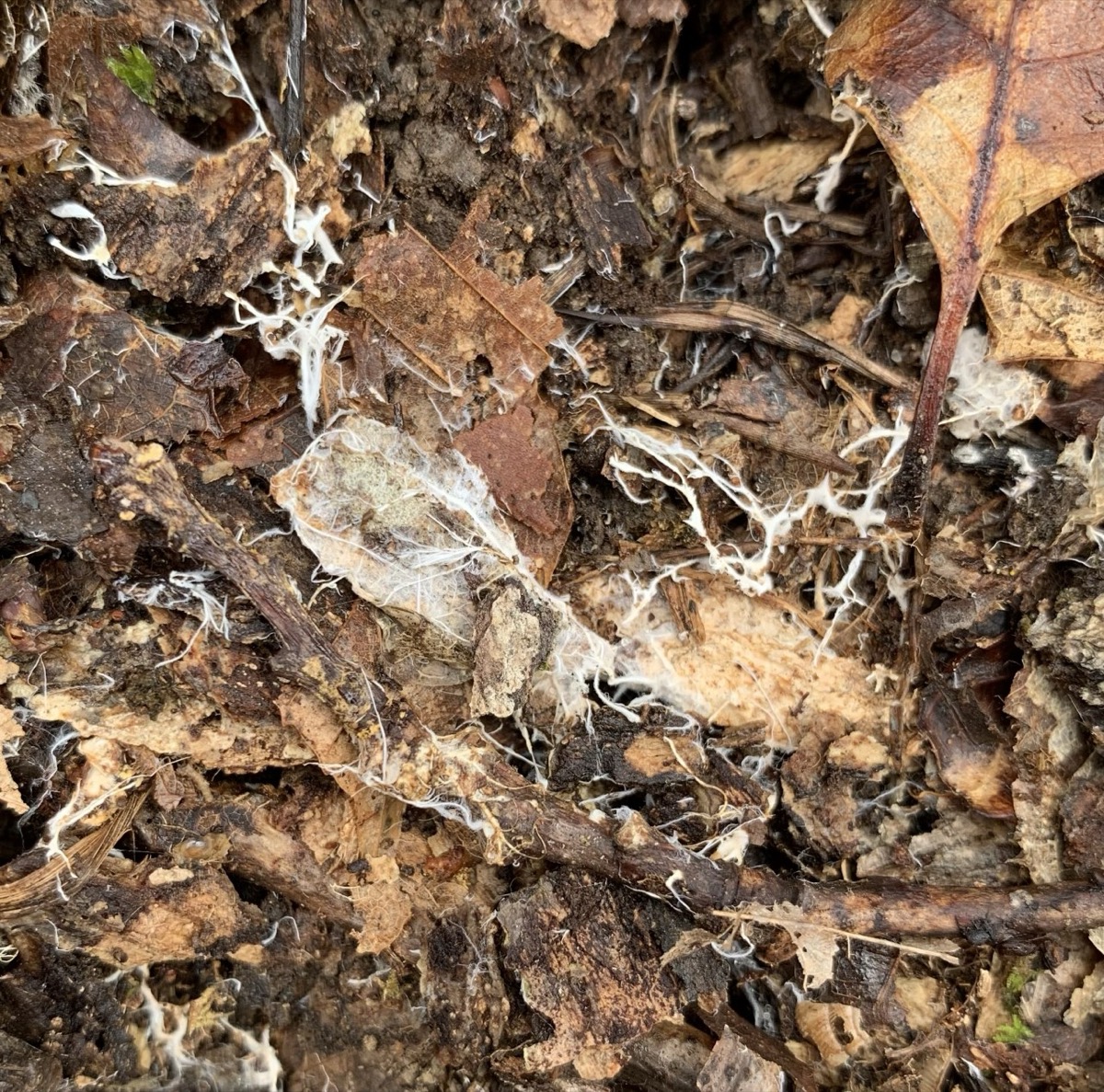 Do trees really help each other underground?fungi
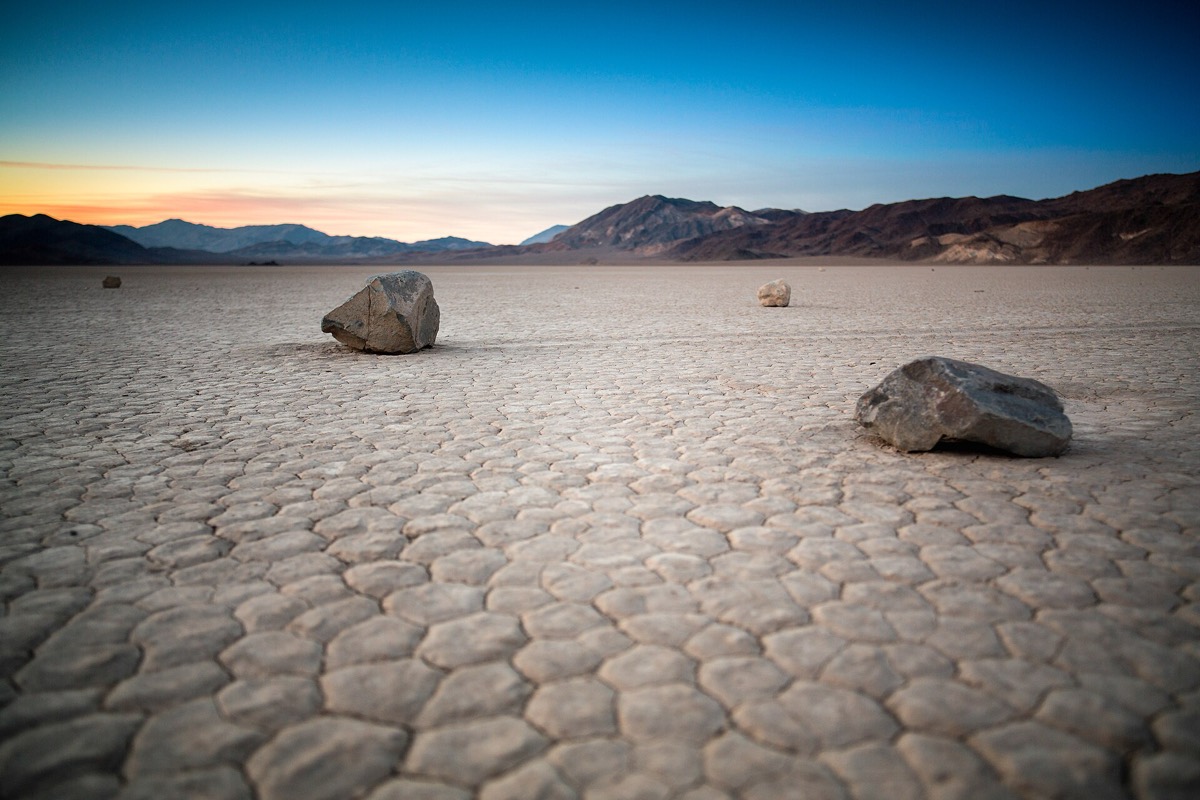 What drags rocks across the floor of Death Valley?ice
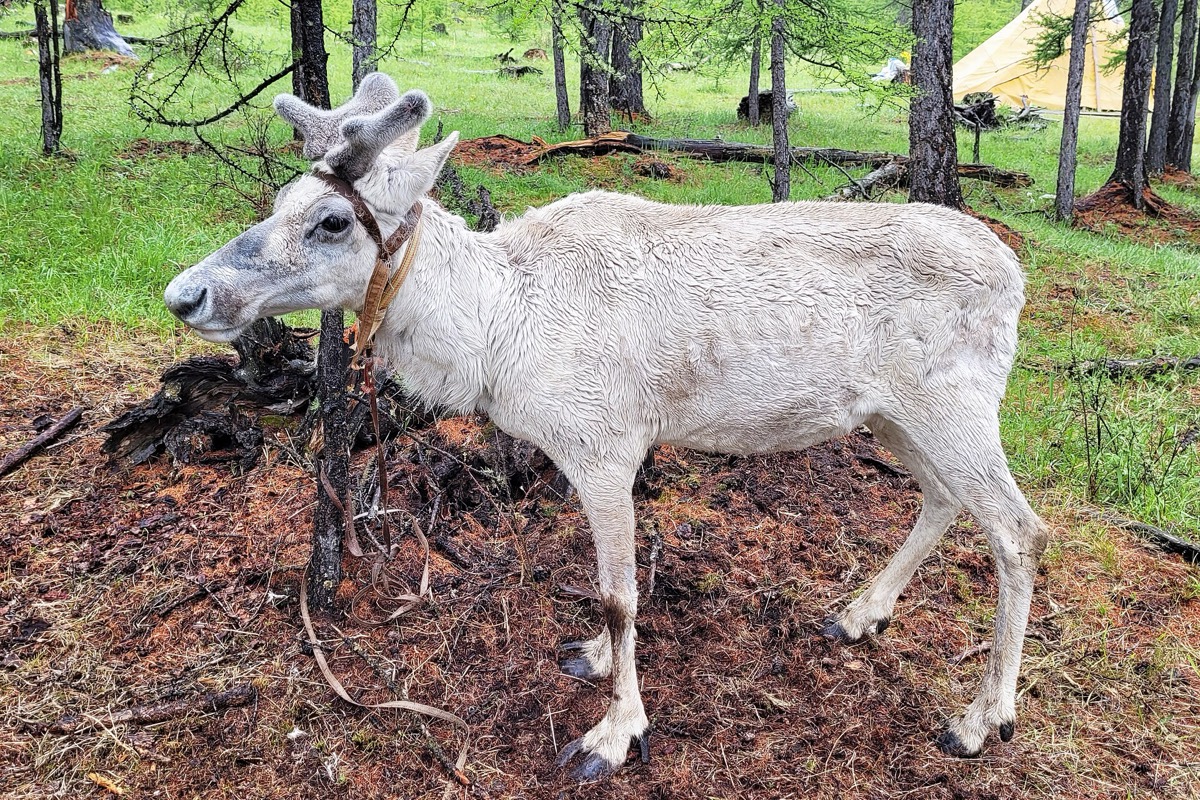 Why does a reindeer's eye glow a different color in winter?winter