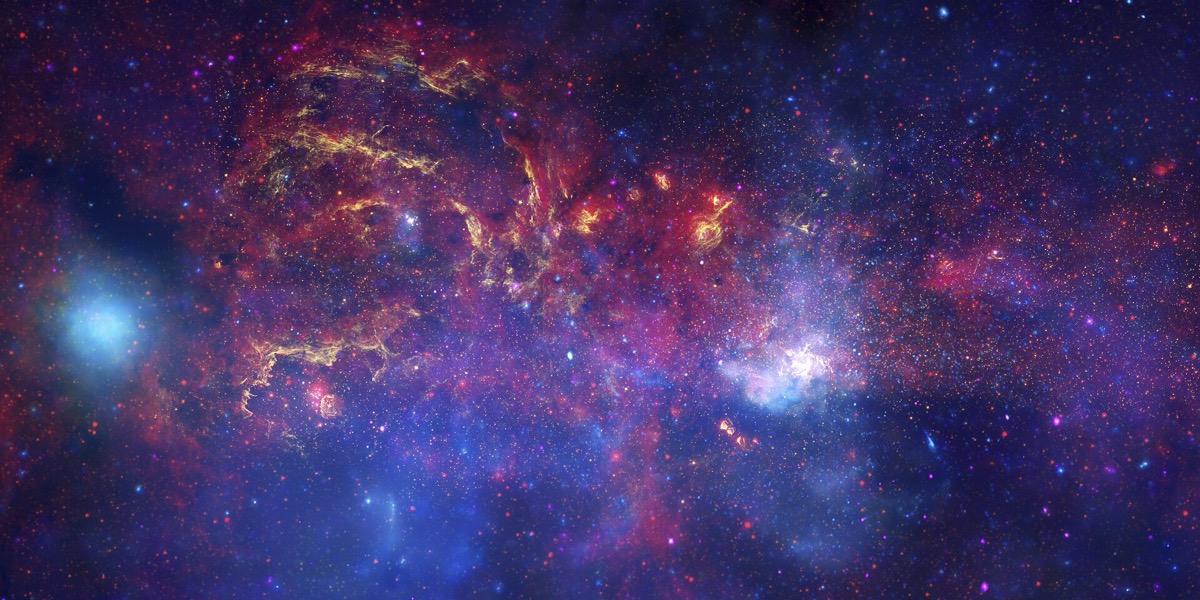
Three-dimensional revealed a 2.7-kiloparsec chain of dense gas clouds near the Sun, bent into the shape of a wave. A shape is not a motion, though, and early searches for matching movement came back inconclusive. Researchers then added the velocities of the clouds and of the young star clusters inside them. Does the structure actually move?
It oscillates, like a wave on a rope. The star-forming regions along it, Orion and Cepheus among them, move as parts of a single structure swinging through the plane of the Galaxy, driven by the pull of the Galaxy itself. The whole thing is also drifting outward from the Galactic Center. Treating it as one coherent object lets its motion be derived without assuming the local distribution of mass.
3D dust mapping had already revealed a long, undulating structure near the Sun, 2.7 kiloparsecs of dense gas clouds with our own star sitting within 300 parsecs of it. A wave-like shape is not the same as wave-like motion, and the first kinematic searches were inconclusive.
The new evidence comes from combining two kinds of velocity. Carbon monoxide gives the of the gas, and young stellar clusters give motion in all three dimensions. The pieces of the structure can then be compared against each other rather than taken in isolation.
They move as one. The massive star-forming regions along it, including Orion, Cepheus, North America and Cygnus X, travel as parts of a single wave oscillating through the Galactic plane, with the supplying the restoring pull.
Treating it as one coherent oscillator has an unexpected payoff, since its motion can then be derived without assuming the local mass distribution, which turns the wave into an instrument for measuring the Galaxy. The structure is also drifting outward from the Galactic Center, which raises the possibility that the cluster whose supernovae blew out today’s Local Bubble was born in it. What started the oscillation is still unknown.
wat. The Radcliffe Wave is a nearby chain of gas clouds that is swinging through the plane of the Milky Way.
wat wat
The neighborhood of the Sun is not a frozen picture. Its largest gas structures move coherently, and this one may even be where the cluster that blew the Local Bubble was born.
How do we know?
Konietzka and colleagues combined line-of-sight velocities of carbon monoxide gas with full three-dimensional velocities of young stellar clusters, set against the existing 3D dust map of the structure.
What is still unknown
The work measures the motion and does not establish what set the oscillation going in the first place. This is also one structure, not the whole Milky Way swinging together.
Learn something?
Where to next
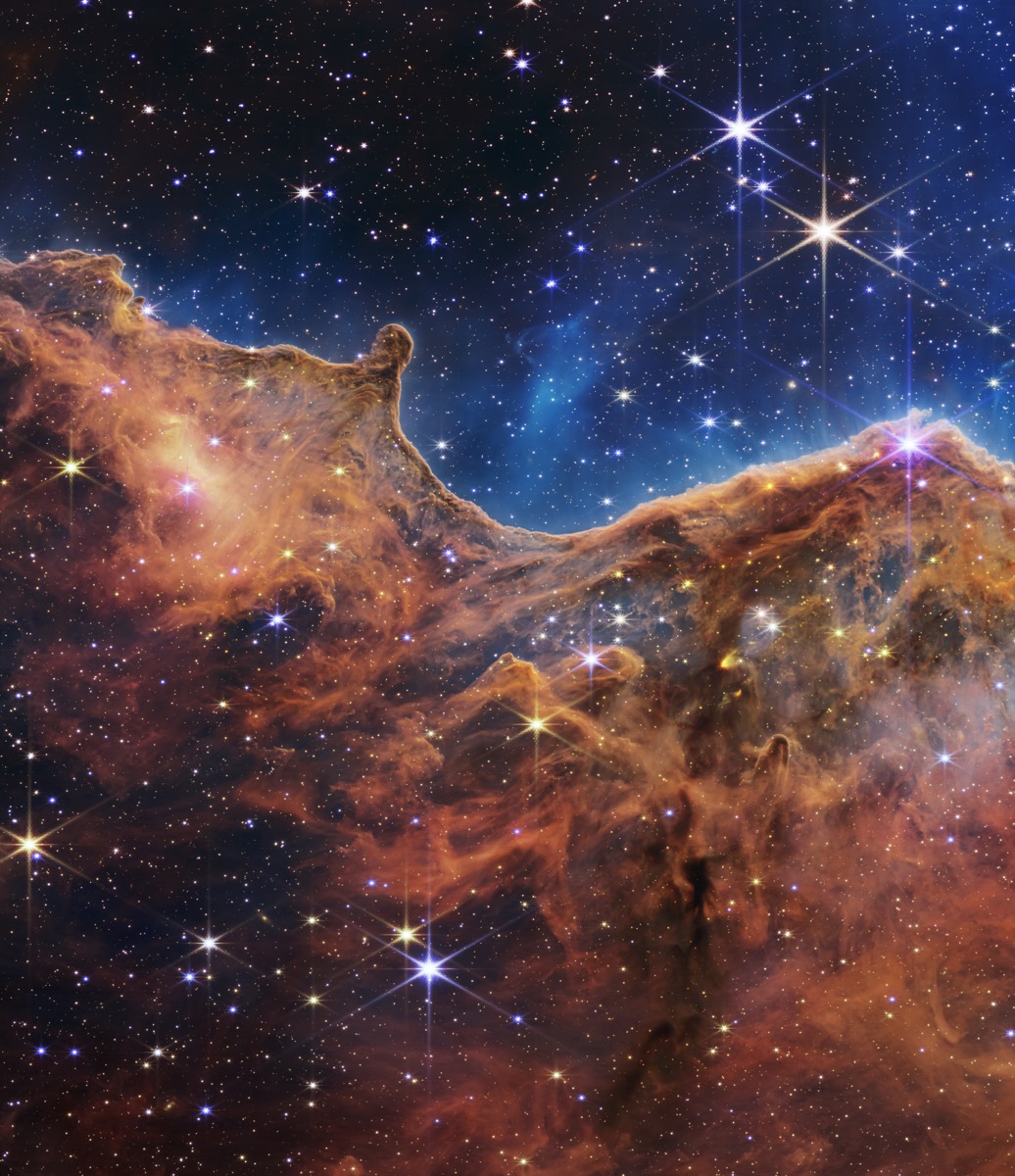 What is hiding inside a cloud of cosmic dust?star formation
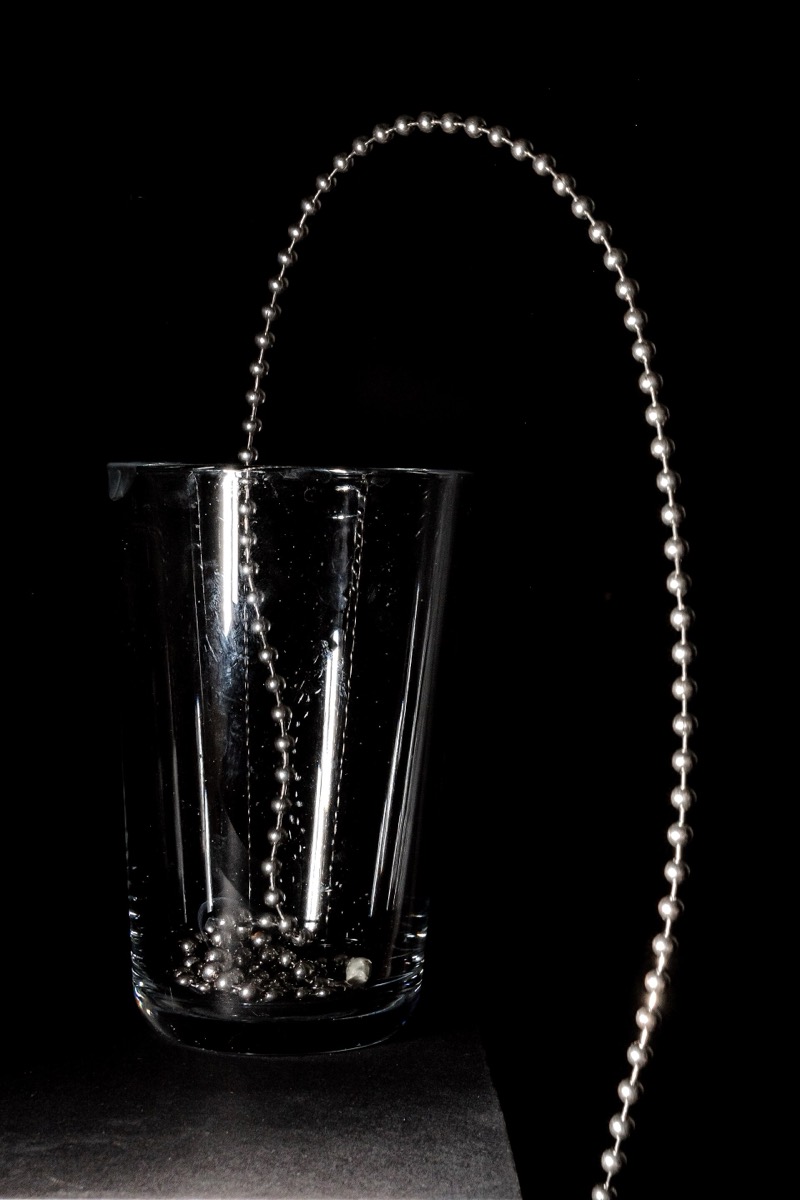 A chain pours from a cup to the floor. Why does it rise into the air first?motion
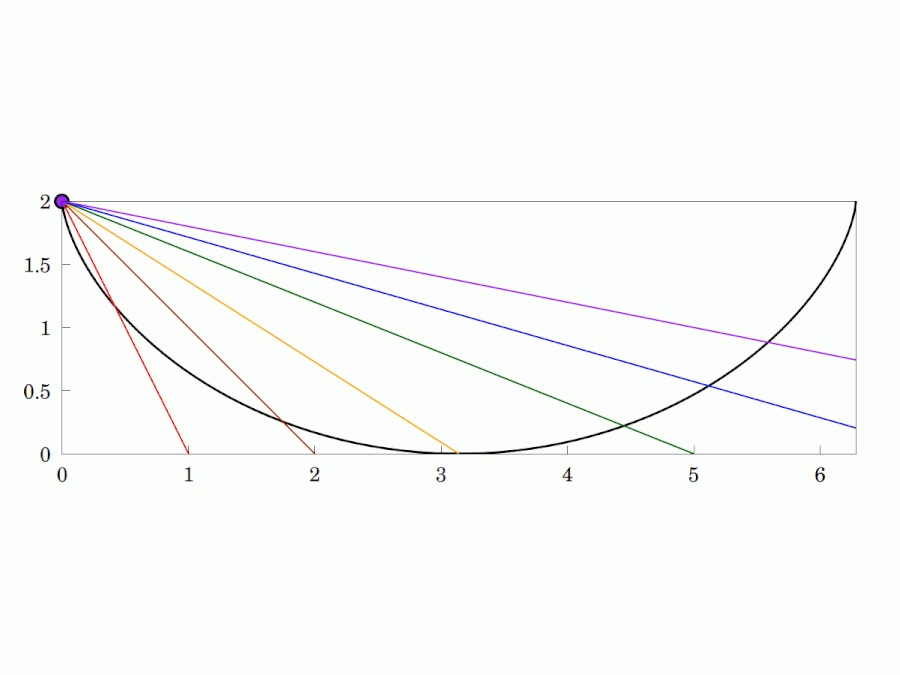 What is the quickest path for a bead sliding between two points?motion