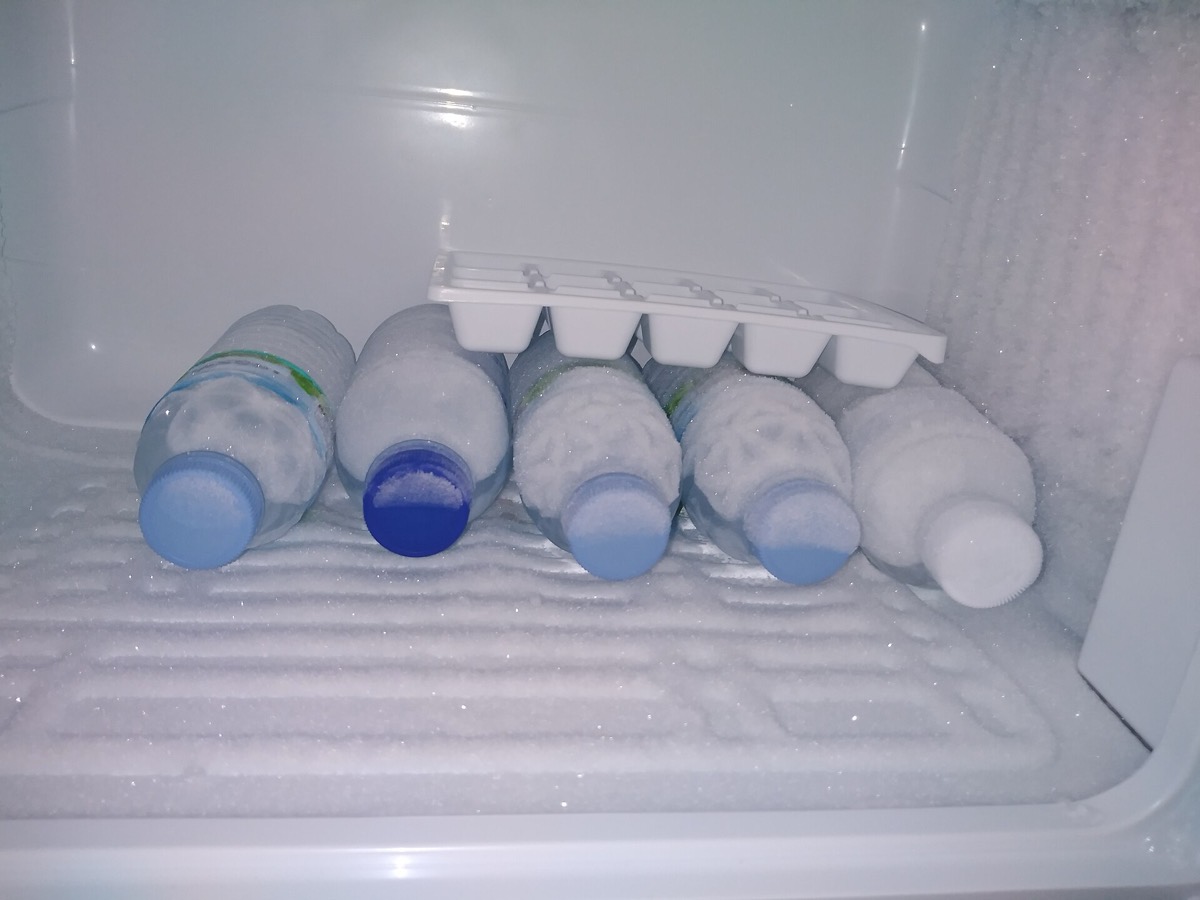
The claim is that water starting out hotter reaches a given low temperature sooner, and references to it go back at least as far as Aristotle. It sounds wrong, and at first thought it even looks like a breach of thermodynamics. Two physicists checked both halves of that.
The thermodynamics is fine, and the effect is not there. Burridge and Linden show that nothing fundamental is violated by the idea, then review the and cool water themselves under carefully . Their conclusion, which they call a somewhat sad one, is that no evidence supports meaningful observations of the effect.
The is the assertion that it is quicker to cool water to a given temperature when the initial temperature is higher. The assertion seems counter-intuitive, and references to it go back at least to the writings of Aristotle.
First the principle. One might consider the effect to breach fundamental , and the authors show that this is not the case, which clears the ground. Whether it happens becomes a question about water rather than about physics.
Then the evidence. They examine what is available in the literature and carry out their own experiments, cooling water in carefully controlled conditions, which is what the informal versions of the observation never had.
The conclusion is stated plainly and, in their own word, somewhat sadly: there is no evidence to support meaningful observations of the Mpemba effect. A null result covers the conditions tested, and what it removes is the general claim people repeat.
wat. Under controlled conditions, hot water did not reach a given temperature before cold water did.
wat wat
A claim can survive for millennia on anecdote, and the thing that eventually settles it is controlling the conditions rather than arguing about the principle.
How do we know?
They examined the published evidence for the effect and ran their own experiments, cooling water under carefully controlled conditions so that the starting temperature was the thing that differed.
What is still unknown
A null result covers the conditions tested, so it rules out a general effect rather than every arrangement anybody has ever described.
Learn something?
Where to next
 Why does a drop of water flee a very hot pan in particular?water
 What happened when the Dunning-Kruger effect was run on random data?replication
 What sets the limit on how tall a tree can get?water