Cosmic rays hitting air nuclei high in the atmosphere make muons, which decay with a known mean lifetime. Moving at nearly the speed of light, a muon should not survive the trip to sea level. Plenty arrive anyway. Coan, Liu and Ye built a detector small enough to carry up a mountain and measure how many stop in it at each altitude.
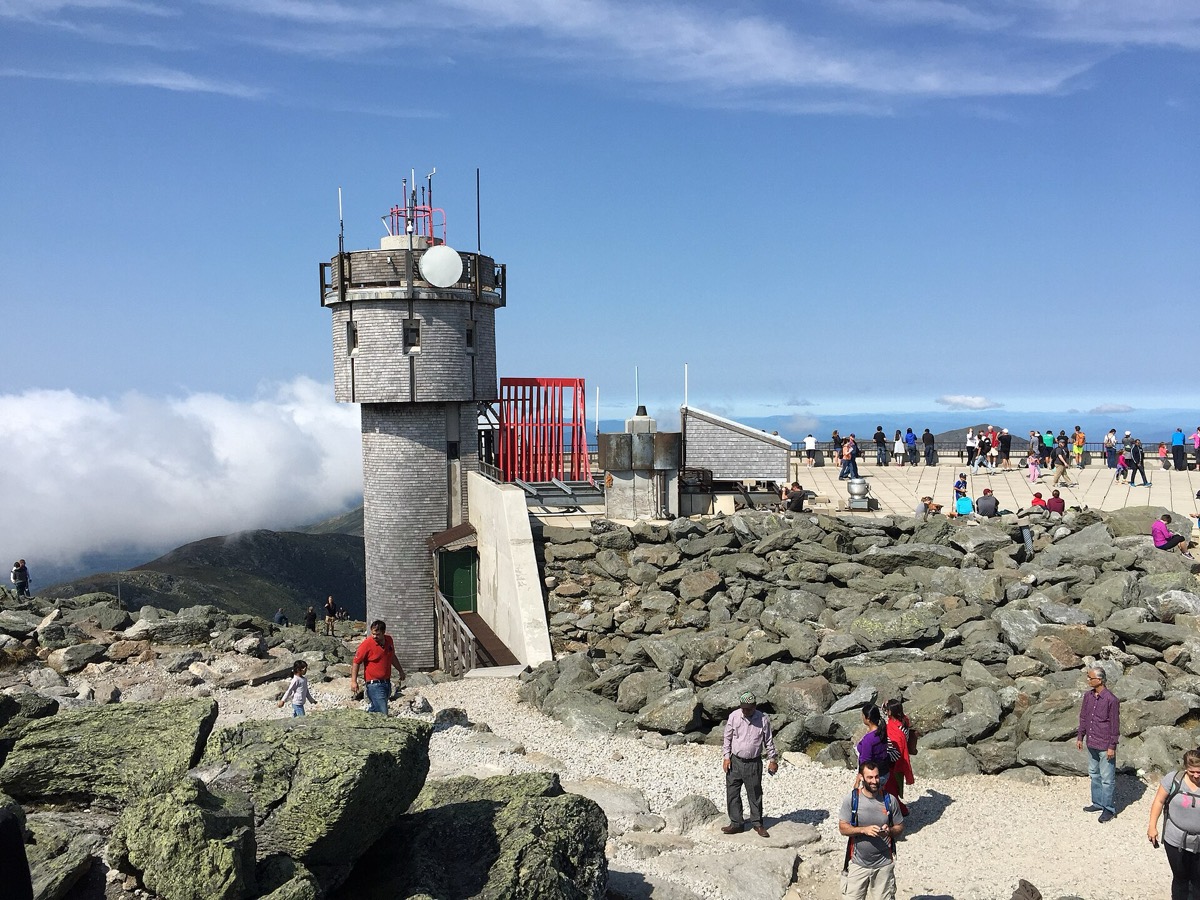
You count arrivals at two heights and compare them with two predictions. Their measured were one and a quarter muons per minute at a hundred and forty-six meters above sea level. Higher up it was two point two per minute at two thousand one hundred and thirty-three meters, and three at three thousand one hundred and fifty-four. The drop with descent is the number that has to be explained.
The experiment is a staple of teaching laboratories. Muons are produced in the atmosphere by collisions between cosmic rays and air nuclei. Their mean lifetime can be measured by stopping some of them in a and timing the gap between the flash of entry and the flash of decay. Fitting an exponential to that histogram gives the lifetime.
What this apparatus adds is portability. The readout is built around a complex programmable logic device, measures twenty by twenty-five by five centimeters, draws under twenty-five watts, and plugs into a laptop that displays and fits the histogram. That makes the second experiment possible: taking the same detector to different altitudes and counting how many muons stop in it.
The logic of the altitude test is a fork. Measure the stopping rate at a high site, then predict the rate at a lower site twice over, once including the time dilation of special relativity and once without it, and let the measurement choose. Doing it properly means allowing for the muon losing energy as it descends, which lengthens the , and for the shape of the near sea level.
The numbers are not close. Observed stopping rates were one point two four per minute at a hundred and forty-six meters above sea level. They rose to two point two one at two thousand one hundred and thirty-three meters, and three per minute at three thousand one hundred and fifty-four. For the descent from the Los Alamos site to the Dallas one, the predicted ratio including time dilation was zero point five two, give or take zero point zero six. The observed ratio was zero point five six. Assuming no time dilation, and letting every muon travel at the speed of light to minimize the effect, the predicted ratio was zero point zero eight, which the authors describe as strongly disfavored by observation.
wat. Without time dilation, only eight in a hundred should reach the lower site. Fifty-six do.
wat wat
Relativity here is not an interpretation of a subtle signal. With time dilation the predicted ratio between two sites was zero point five two; without it, zero point zero eight. The measurement was zero point five six.
How do we know?
An American Journal of Physics paper describing a compact apparatus that measures the charge averaged lifetime of atmospheric muons in plastic scintillator, and their stopping rate as a function of altitude, using low-cost, low-power electronics.
What is still unknown
The authors call the detector non-optimal for this demonstration, since it is sensitive to muons across a range of velocities and to non-vertical trajectories. Its advantage is needing no bulky velocity-selecting absorbers.
Learn something?
Where to next
 How do you hear two black holes colliding?relativity
 What does a photograph of a black hole actually show?relativity
 What would happen to the navigation on your phone without relativity?relativity