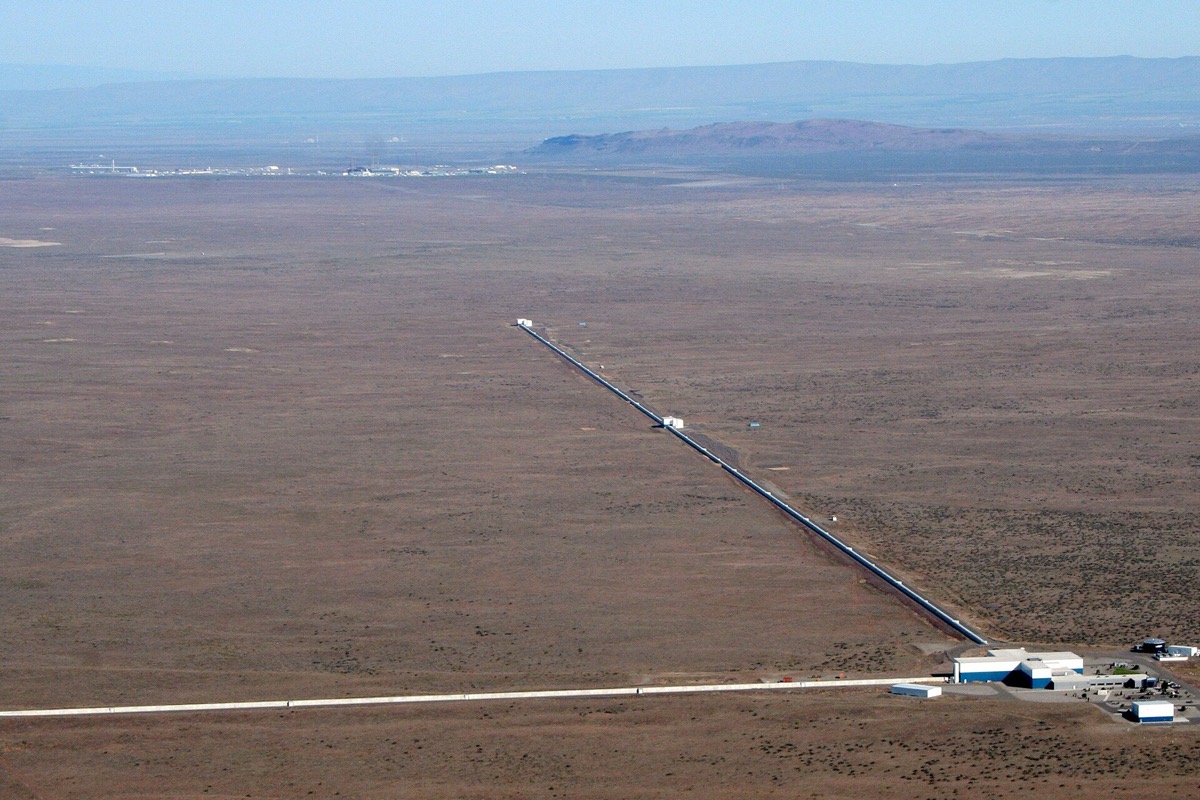
are stretches and squeezes of spacetime itself, predicted by Einstein decades before anything could measure one. On 14 September 2015, at 09:50:45 UTC, both detectors of the Laser Interferometer Gravitational-Wave Observatory caught a brief signal that swept upward in frequency. What makes a sound like that?
Two black holes spiralling into one. The signal climbed from 35 to 250 hertz with a peak strain of one part in ten to the twenty-first. It matches the waveform general relativity predicts for an inspiral, a merger and a ringdown. Black holes of about 36 and 29 solar masses became one of about 62, with three solar masses radiated away as waves.
For a century gravitational waves were a prediction nobody expected to confirm. Einstein published them in 1916 and judged them far too faint to detect, since the stretching they cause is a fraction of the width of a proton over kilometers of apparatus.
In September 2015 the recorded a transient signal within milliseconds of each other. The swept upward from 35 to 250 hertz, with a peak strain of about one part in ten to the twenty-first. That is the shape general relativity predicts for two massive bodies spiralling together.
The waveform carries the physics. It matches an inspiral, a merger, and the ringdown of the resulting single black hole. The initial masses were about 36 and 29 times the Sun and the final mass near 62, with roughly three solar masses converted into gravitational waves.
The statistics are what made it an announcement rather than a curiosity: a matched-filter signal-to-noise ratio of 24 and a below one event per 203,000 years. One detection proved binary stellar-mass black holes exist, and it took many more to begin measuring how common they are.
wat. LIGO saw no light. It measured space itself trembling for a fraction of a second.
wat wat
Astronomy had run on light and particles. This opened a second sense, one that registers events emitting no light at all, and it began multi-messenger astronomy.
How do we know?
Two widely separated detectors measured a minute change in the length of long laser arms at the same moment, and the signal was matched against general relativity waveform predictions for binary systems.
What is still unknown
A single event is not a census of the gravitational universe. Only an accumulation of detections supports conclusions about populations, rates and models.
Learn something?
Where to next
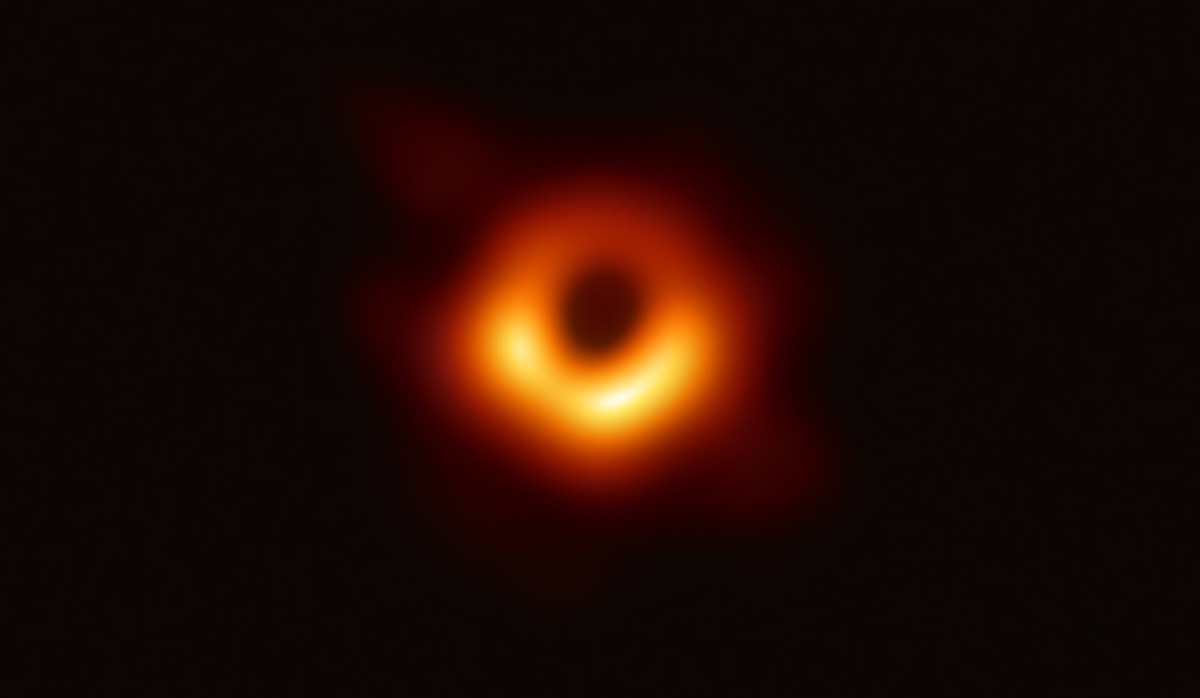 What does a photograph of a black hole actually show?relativity
 How do you show that time runs slow for a fast particle?relativity
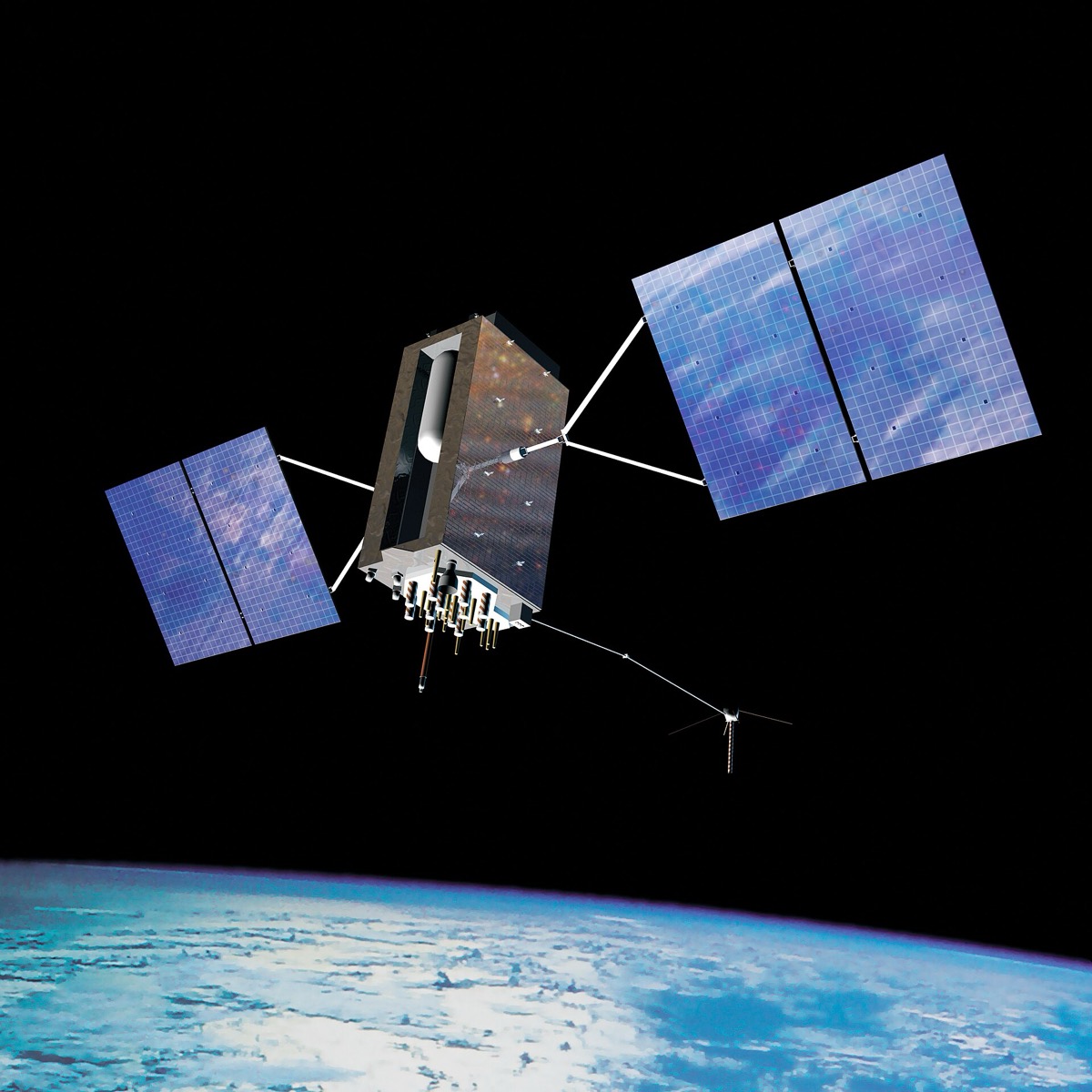 What would happen to the navigation on your phone without relativity?relativity