
A decade, not half a century. A special issue of Electronics asked Moore in 1965 to predict the next ten years. He observed that the number of components in had roughly doubled each year, and extrapolated that annual doubling forward. He estimated microcircuits of 1975 would hold sixty-five thousand components.
He revised it once. In 1975, as growth began to slow, Moore changed his time frame from one year to two. That was slightly pessimistic: over roughly fifty years from 1961 the transistor count doubled about every eighteen months. Magazines then began referring to the law as though it were inexorable, with the assurance of .
In 1965 a special issue of the journal Electronics asked Gordon Moore to predict developments over the coming decade. He observed that the total number of components in integrated circuits had roughly doubled each year, and, as Britannica puts it, blithely extrapolated this annual doubling to the next decade. The resulting estimate was that microcircuits of 1975 would contain an astounding sixty-five thousand components per chip.
He corrected himself once the data demanded it. In 1975, as the rate of growth began to slow, Moore revised his time frame from one year to two. That revision was a little pessimistic: over roughly fifty years from 1961, the number of transistors doubled approximately every eighteen months, sitting between his two figures.
What made the explosion in circuit complexity possible was the steadily . Dimensions measured in millimeters in the late nineteen forties were, by the early twenty-tens, more commonly expressed in tens of nanometers, a reduction factor of over a hundred thousand. Features measuring less than a micron were attained during the nineteen eighties.
The afterlife of the prediction is the strangest part. Magazines regularly referred to as though it were inexorable, a technological law with the assurance of Newton’s laws of motion. A ten-year extrapolation of an industry trend became something the industry planned against for decades. One caution: this is an encyclopedia entry, so its intervals are round figures summarizing long stretches.
wat. Moore predicted ten years ahead, and the industry treated it as a promise for fifty.
wat wat
It is an observation about an industry that got treated as a law of nature. Moore extrapolated ten years of data by a decade, and the result was read as a guarantee for generations.
How do we know?
Britannica’s entry on Moore’s law gives the original 1965 prediction and its occasion, the 1975 revision, the long-run doubling interval, and the shrinking transistor dimensions that made the growth possible.
What is still unknown
An encyclopedia entry rather than a technical history, so the doubling intervals are round approximations over long periods. It also reports the law as described in hindsight rather than tracking the revisions as they happened.
Learn something?
Where to next
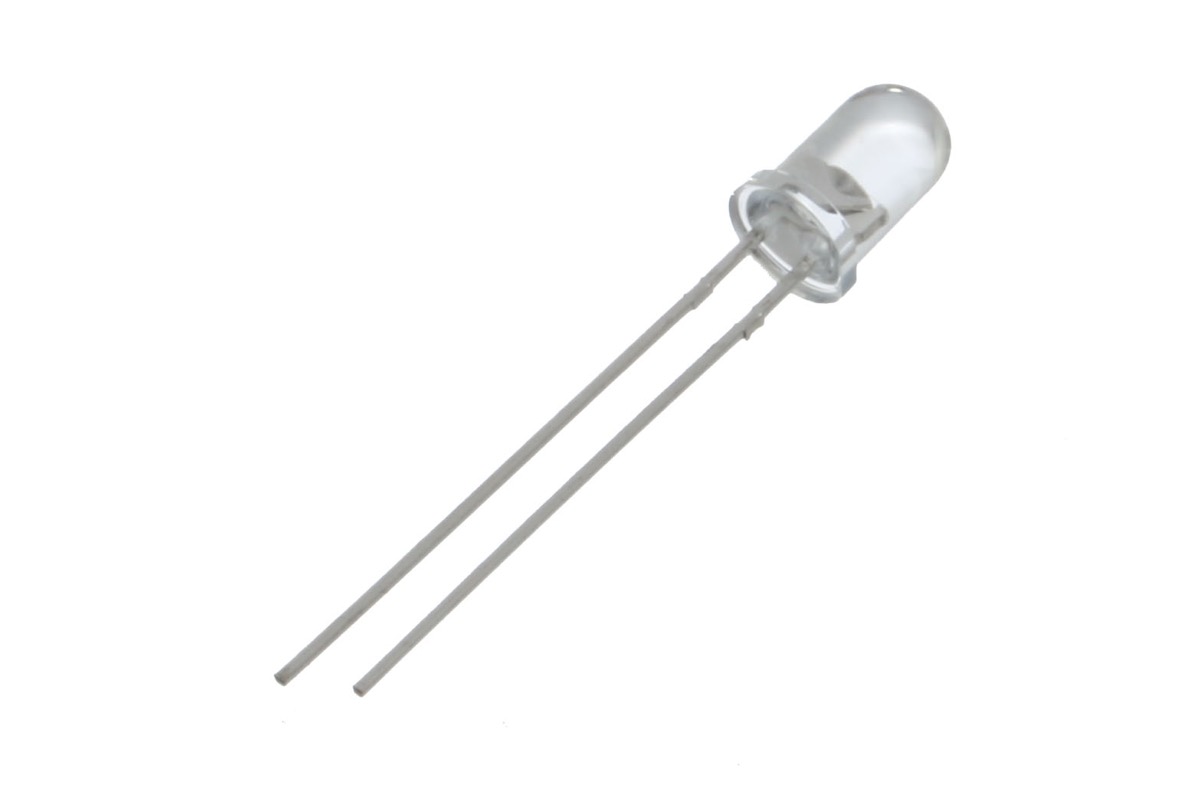 Why did a blue light take thirty years longer than a red one?semiconductors
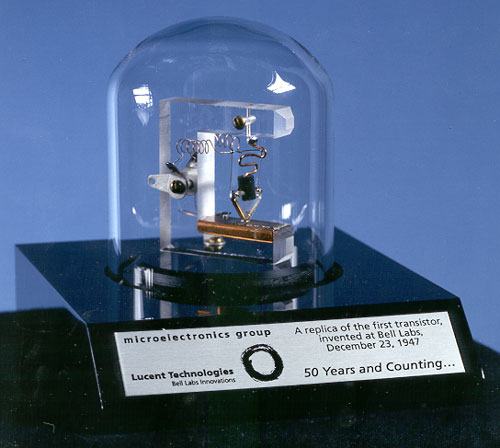 What did the physicists at Murray Hill actually find?semiconductors
 What did Douglas Engelbart show an audience in 1968?computing