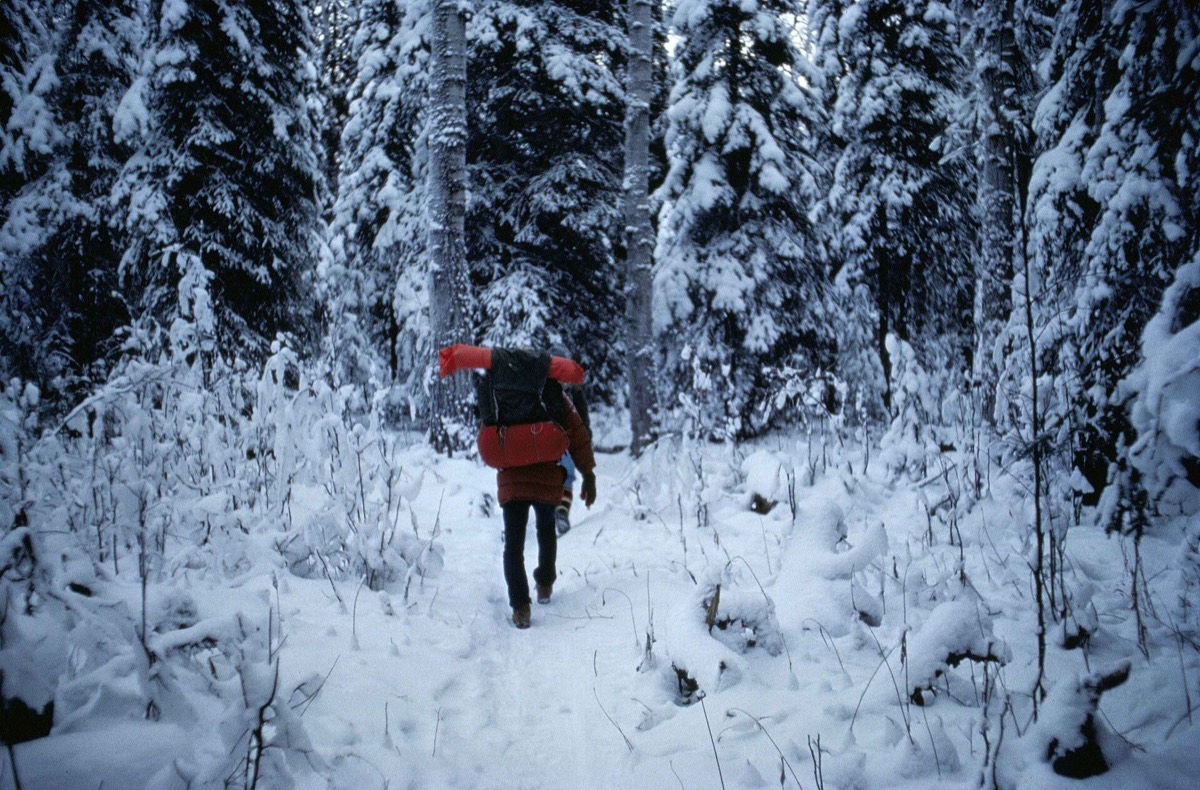
Nature is treated as the active ingredient in walking interventions, which makes the street the thing you settle for. Testing that needs a comparison nobody usually runs. So 104 university students with sleep difficulties were randomly allocated to walk mindfully for 35 minutes a day for a week, either in a natural setting or an one. Sleep, mood and mindfulness were rated four times. Did the trees add anything?
Both groups improved and the nature group improved no more. Sleep quality, and all moved significantly after the week, in the urban walkers as well as the nature walkers. in nature brought no additional mental health benefit relative to walking an urban environment. The walking and the attention appear to be doing the work that the setting is usually credited with.
Walking interventions are routinely sold on their setting. Nature connectedness is treated as the active ingredient, and an urban route as the version you fall back on when there is no park nearby. Checking that requires putting the two in a trial against each other, which is rarely done.
During the Covid-19 pandemic in the United Kingdom, 104 university students experiencing sleep difficulties were randomly allocated to a nature or an urban walking environment. Each walked independently for 35 minutes a day for seven days. The researchers recorded subjective sleep quality, total mood disturbance, trait mindfulness and nature connectedness at a baseline, before the intervention, after it, and at follow-up.
Both groups got better. Trait mindfulness, sleep quality and mood all showed significant improvement after the week, and that held for the urban walkers as much as for the nature walkers. The headline result is the comparison: mindful walking in nature brought no additional mental health benefit relative to the urban route.
The useful reading is about which component is carrying the effect. Walking daily with deliberate attention appears to be enough, and the setting looks like a preference rather than a mechanism. Note what the design cannot rule out, though. There was no non-walking control, so some of the shared improvement may be attention and expectation, and the sample is 104 students, 94 women, reporting on their own sleep over a single week.
wat. A week of mindful walking improved sleep and mood whether the route ran through woodland or through streets.
wat wat
A null on the ingredient everyone assumes is the active one is more useful than another demonstration that walking helps. It also puts the intervention within reach of anybody who has a pavement.
How do we know?
Ma and colleagues randomly allocated 104 students with sleep difficulties to a nature or an urban walking environment, each walking mindfully for 35 minutes daily for seven days, with measures at four time points.
What is still unknown
One hundred four students, 94 of them women, a single week, self-reported sleep and mood, and no non-walking control, so the shared improvement could include getting attention and expecting to feel better.
Learn something?
Where to next
 Does the full moon really keep people awake?sleep
 Why do two people walking toward each other almost never collide?walking
 Does REM sleep solve the problem, or only rearrange it?sleep