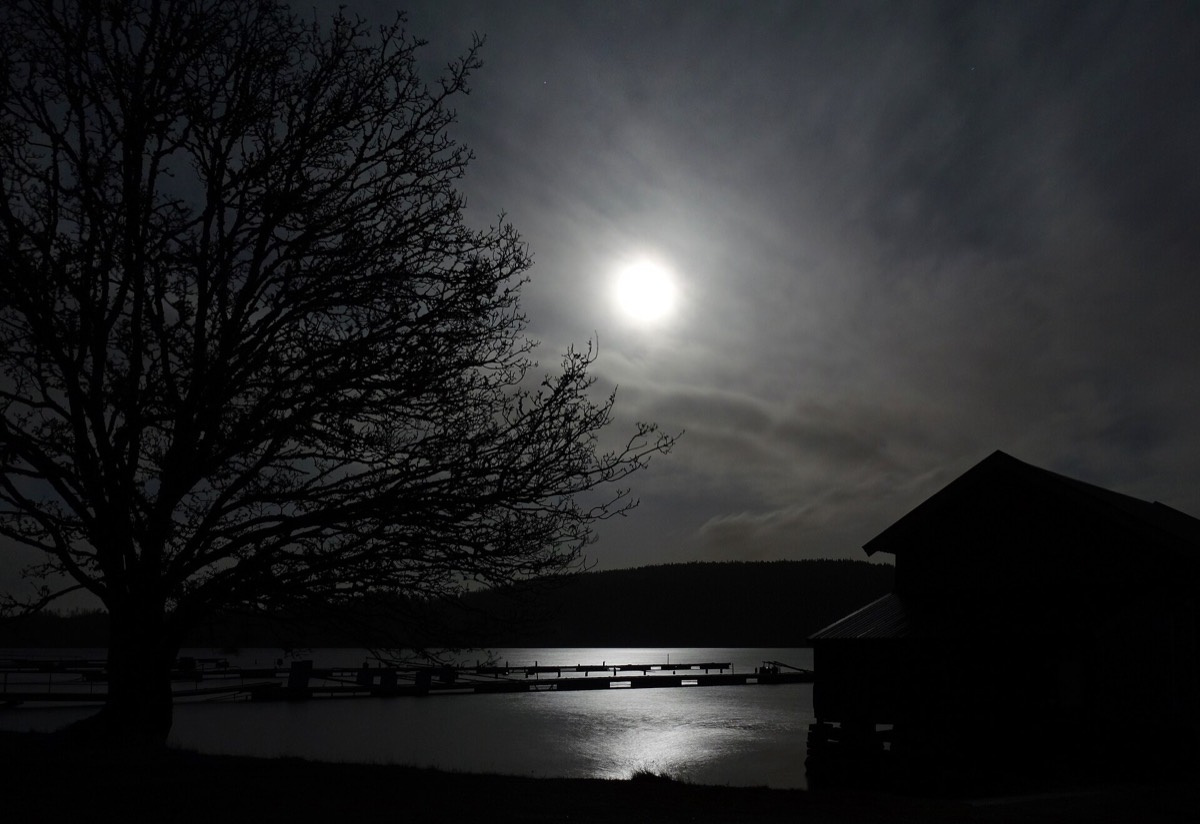
The belief is old and the evidence was thin. Then a laboratory study in two thousand and thirteen reported that nights around the full moon came with less total sleep, shallower deep sleep and longer latencies, all in light-controlled conditions. It looked like folk wisdom vindicated. Cordi and colleagues went to their own archives of sleep recordings. What came back?
Nothing. Re-analyzing three large sets of sleep recordings, they found no influence of on any objective sleep parameter. Then they went looking for other people’s unpublished results and found more of the same. Eight data sets covering over twenty-three thousand six hundred nights came out negative, against two data sets totaling about twelve hundred nights that reported an effect.
In two thousand and thirteen, Cajochen and colleagues reported something striking. In a analysis of sixty-four sleep nights from thirty-three healthy volunteers, nights around the full moon showed a twenty minute reduction in total sleep time. They also showed less time in the deepest sleep stage, and longer latencies both to sleep and to rapid eye movement sleep. Delta activity during non-REM sleep was about a third lower around full moon than around new moon, and the estimated effect sizes were medium to large.
Because it was recorded in a light-controlled sleep laboratory, the study looked like the first solid evidence for a folk belief. It also rested on a small number of participants, which is the standard reason to replicate rather than celebrate.
Cordi and colleagues had the data to try. They re-analyzed three large sets of sleep electroencephalography, defining lunar classes exactly as the original had, with the first class covering full moon give or take four nights and the third covering new moon. One archive alone held four hundred and seventy recordings from three hundred and sixty-six participants. They found no evidence of any influence of lunar class on objective sleep parameters.
Then they counted the literature, published and not, which is where the shows itself. Eight data sets with a cumulative total above twenty-three thousand six hundred nights produced negative results, against two data sets totaling one thousand two hundred and nine nights that reported lunar effects. Three of the negative studies, among them the two largest samples, had never appeared as full journal papers. The authors encourage others to report what they have, and note that only studies designed for the question, within-subjects and large, can settle it.
wat. Twenty-three thousand nights say no, twelve hundred say yes, and the difference is mostly which ones got written up.
wat wat
The imbalance is the point. Three of the negative studies, including the two largest samples, had never been published as full journal papers.
How do we know?
A correspondence piece in Current Biology re-analyzing three large archives of sleep electroencephalography, with lunar classes defined exactly as in the original study, and then collecting published and unpublished results from other groups.
What is still unknown
Retrospective analysis of data collected for other purposes, on both sides. The authors say a definite answer needs studies designed for the question, with a within-subjects design in large samples.
Learn something?
Where to next
 What is left of the claim that standing in a wide stance changes you?replication
 What happened when the Dunning-Kruger effect was run on random data?replication
 What was left of the marshmallow test when they ran it on ten times as many children?replication