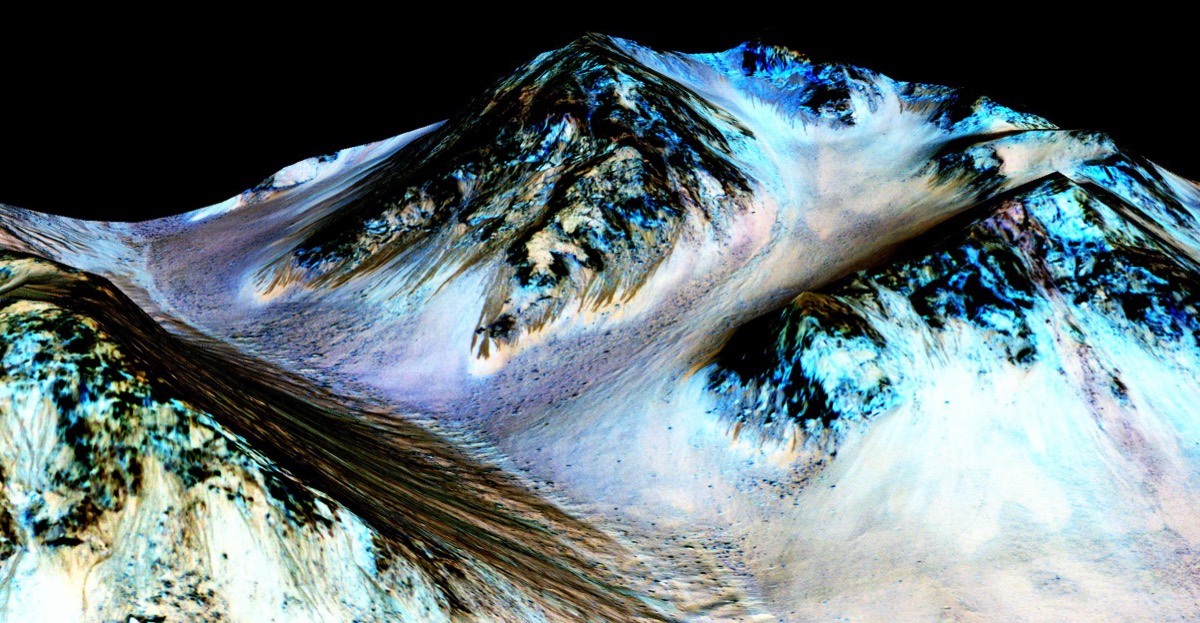
appear in summer on steep Martian slopes and fade afterwards, which made them a possible sign of liquid water. Researchers simulated the temperature and humidity in Hale crater. What did they find?
Drying, not wetting. The simulation showed that lose water precisely in the active season. That drying can weaken the grip between grains and start that exposes darker material. It is a possible mechanism rather than a final ruling that there is no water.
Recurring dark streaks appear in summer on steep Martian slopes and fade afterwards. That seasonality suggests an active process, which is why they were treated as a possible sign of liquid water.
The researchers built of the temperature and humidity in a particular crater across the year, and tested in the laboratory what salts in the soil do under exactly those conditions.
The result is the reverse of the intuition: the salts lose water precisely in the active season. Losing the water weakens the grip between the grains, and that alone is enough to start a dry avalanche.
The surface is lightened by dust, so any exposure of the material underneath looks dark, with no wetness at all. A mark that looks like a wet flow may form precisely as the ground loses the little water it holds. This is a possible mechanism fitting one crater rather than a final ruling, and the origin of all the recurring streaks is still disputed.
wat. Salts drying out can set off a dry dust avalanche and draw a dark streak down a Martian slope.
wat wat
A mark that looks like a wet flow may form precisely as the ground loses the little water it holds.
How do we know?
The work combined a model of the Martian atmosphere with laboratory experiments on salts under simulated temperature and humidity.
What is still unknown
The experiment offers a mechanism fitting one crater; the origin of all the recurring streaks on Mars is still disputed.
Learn something?
Where to next
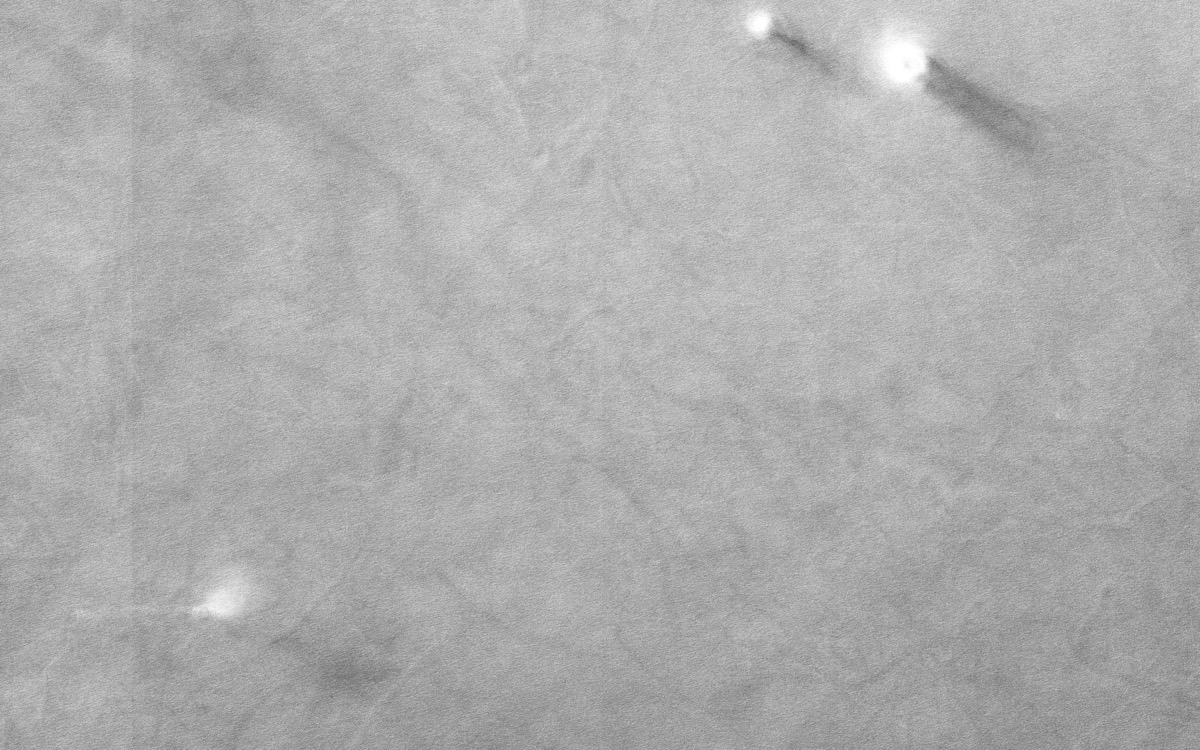 What does a dust devil on Mars sound like passing right over a microphone?Mars
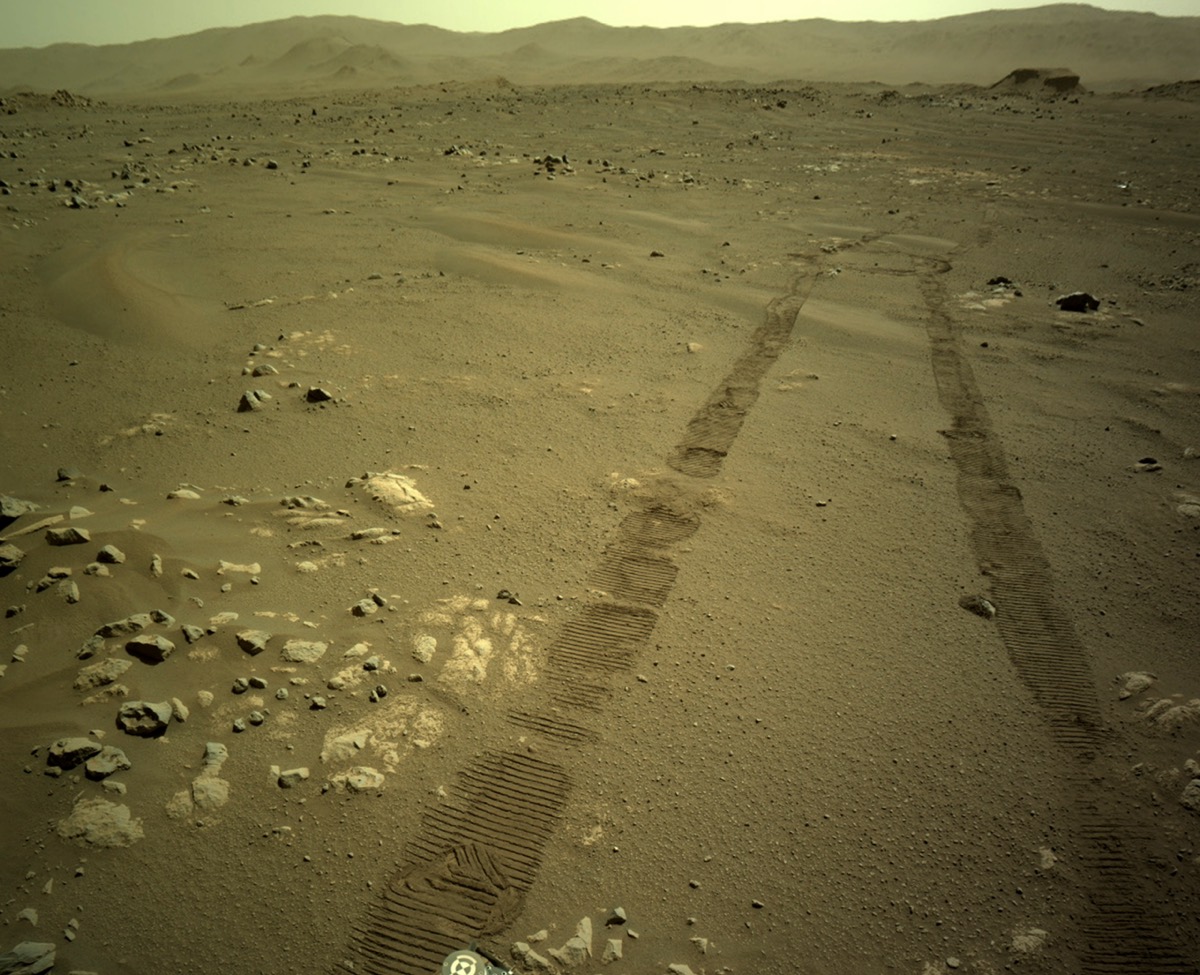 What did the water at Jezero crater do before it left?Mars
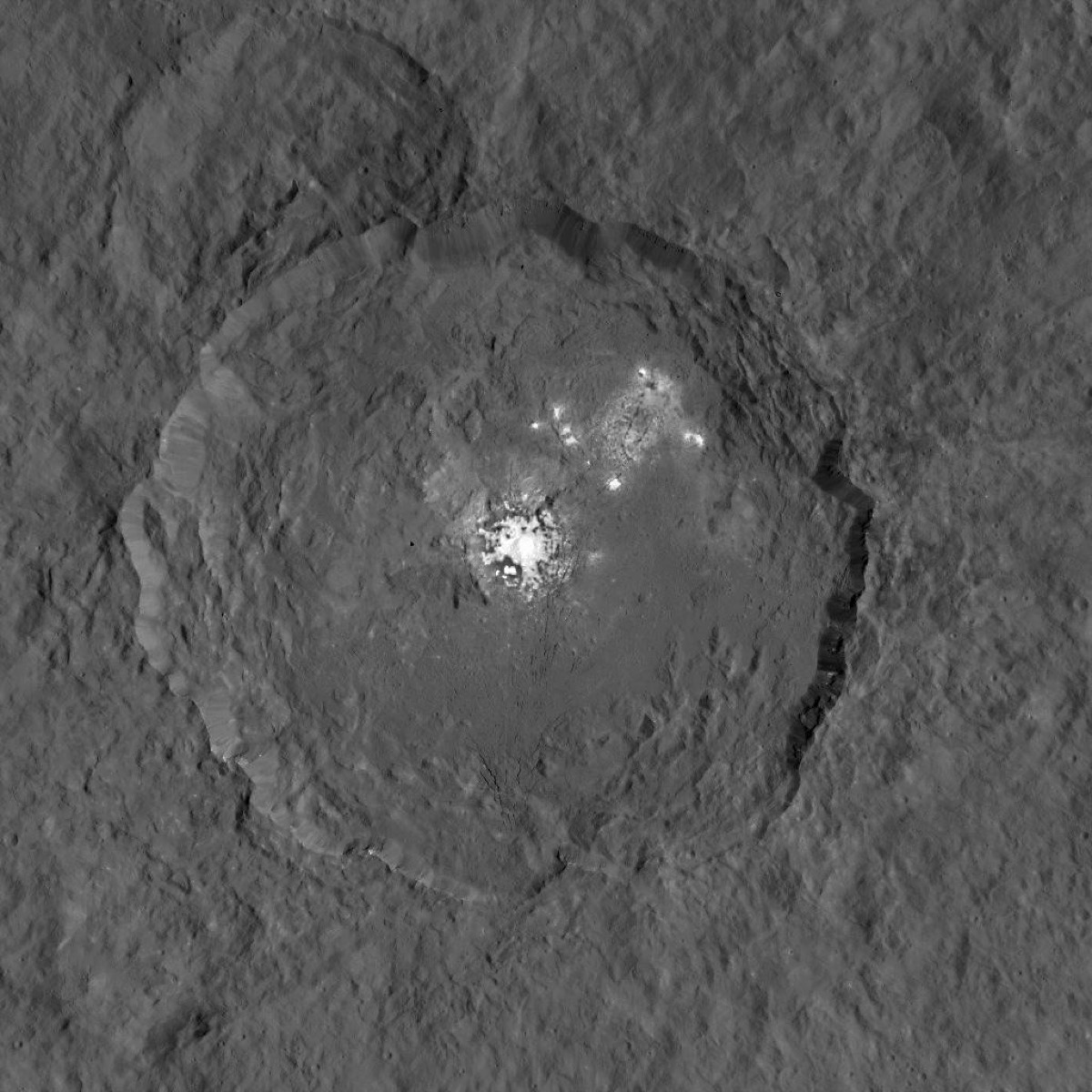 What are the brilliant white patches on the floor of a crater on Ceres?salts