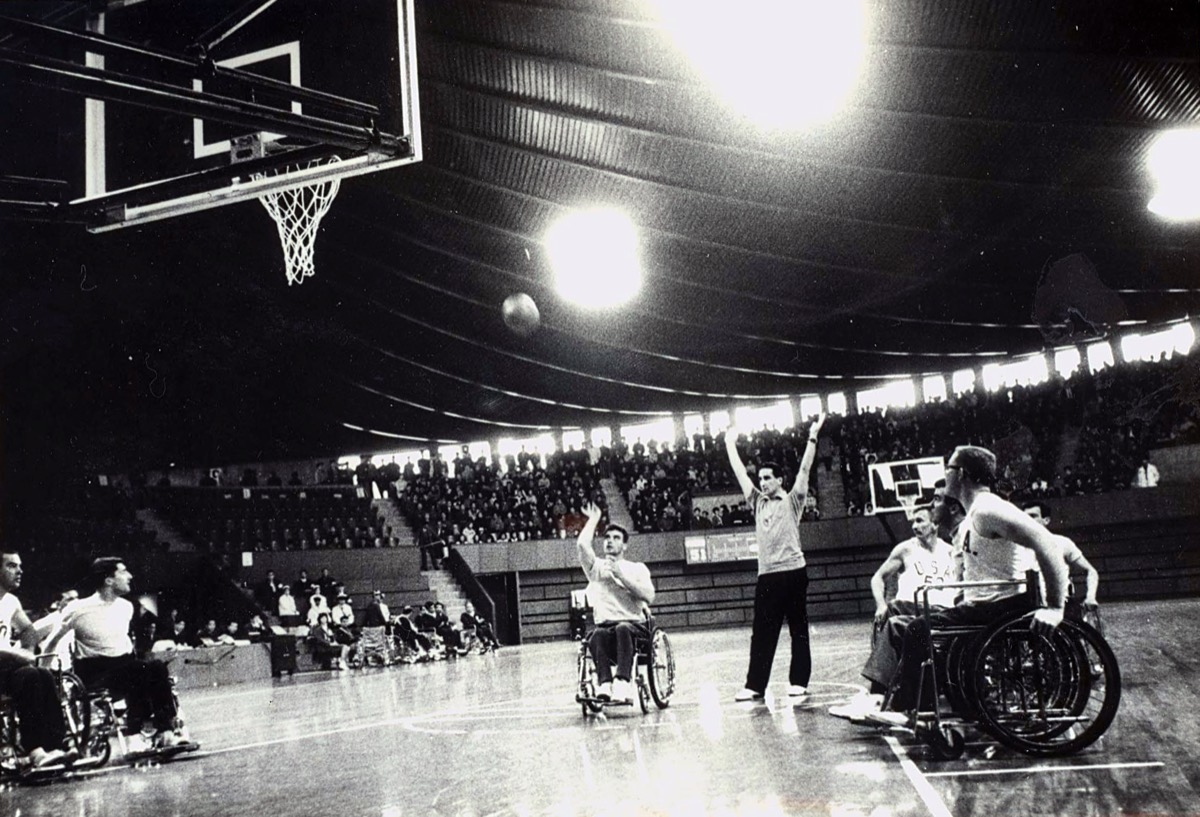
The hot hand fallacy is one of the best-known results in behavioral science: players and fans believe in streaks, and the found the belief unsupported in the data. The measure it used compares shots that follow a streak against the rest. That comparison turns out to have a property nobody noticed.
Then the conclusion flips. Miller and Sanjurjo prove that a subtle but substantial bias exists in that common measure of how present outcomes depend on streaks of past outcomes. Correcting for it reverses the longstanding conclusions of the canonical study, and the replications are vulnerable to the same bias.
The hot hand fallacy is one of the most widely cited results in the study of human judgment. Its canonical study examined whether a basketball shot is more likely to go in after a streak of made shots, and reported that the belief in streaks was not supported.
The measure doing the work deserves scrutiny. The authors prove that a subtle but substantial bias exists in a common measure of the of present outcomes on streaks of past outcomes in sequential data.
This has a shape. Its magnitude generally decreases as the sequence gets longer but increases in streak length, and it remains substantial for a range of sequence lengths often used in empirical work. The paper’s subtitle calls it a truth in the .
That is enough to overturn the literature it affects. The canonical study and its replications are vulnerable to the bias, and upon correcting for it the authors find that the longstanding conclusions of that study are reversed.
wat. The fans were not the ones getting the probability wrong.
wat wat
A result taught for decades as a lesson about human misperception turns out to rest on a mistake in the measurement.
How do we know?
Miller and Sanjurjo prove the bias mathematically in Econometrica, characterize how its magnitude behaves, and then re-examine the canonical hot hand study and its replications in the light of it.
What is still unknown
The correction overturns the canonical study rather than establishing how large any real hot hand is.
Learn something?
Where to next
 How many people does it take before two of them share a birthday?probability
 How can you estimate pi by dropping needles on a floor?probability
 Can three dice each beat the next one around the circle?probability