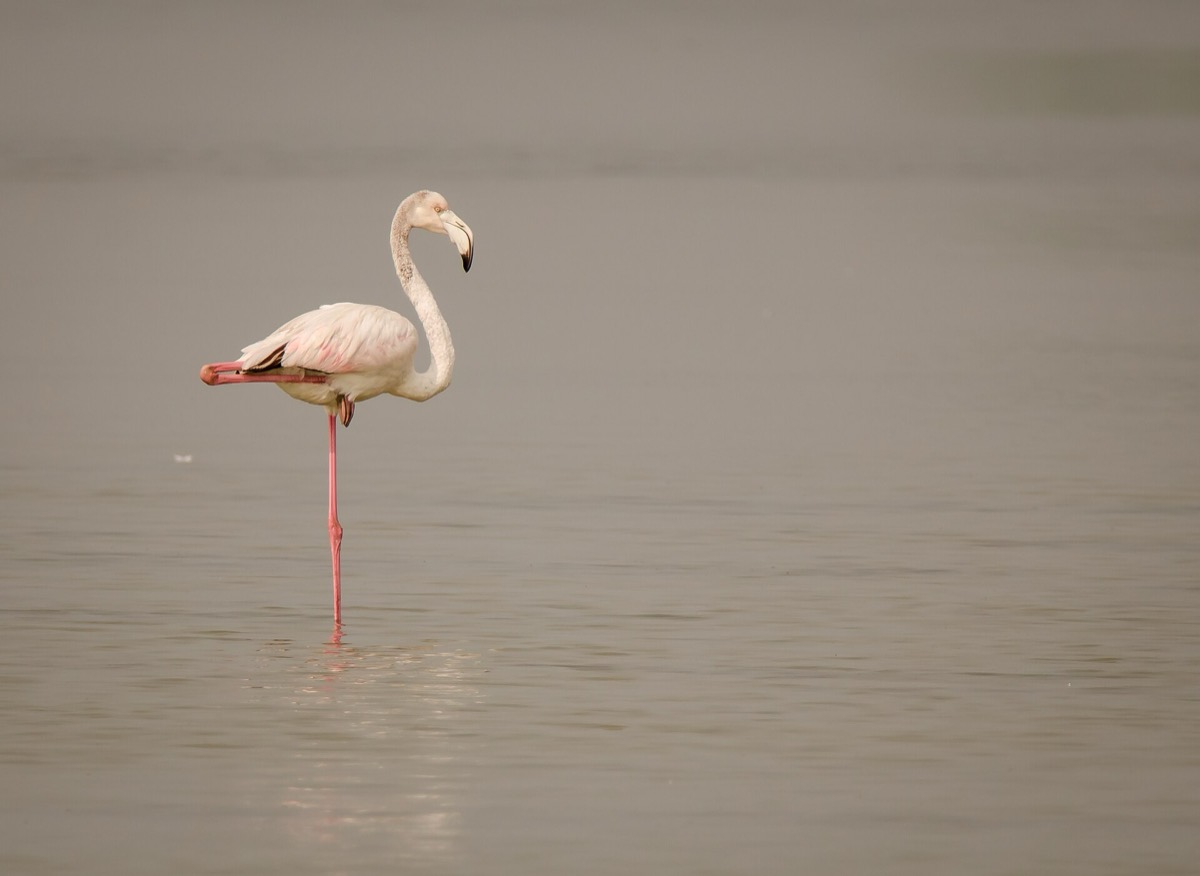
A flamingo will hold a one-legged stance for hours while asleep, and the obvious assumption is a great deal of quiet muscular work keeping the stack of joints in line. Chang and Ting put flamingo cadavers into the same pose, where no muscle can contribute anything, and separately measured in live birds. How much muscle does the pose need?
Hardly any. A flamingo cadaver held the one-legged pose on its own, settling into a stable joint posture much like the one live birds adopt, with no muscle activity available at all. On two legs the same cadaver could not be propped steady. Live birds asleep swayed far less than alert ones, with the point of force sitting right under the , which leaves almost no to produce.
A flamingo on one leg looks like an act of balance, and balance is expensive. Holding a column of joints over one narrow foot normally means constant small corrections, which means muscle, which means calories burned all night long.
Chang and Ting started from the far end. They posed flamingo cadavers, where no muscle can contribute anything whatever, and the one-legged stance held by itself: the joints settled into a stable posture resembling the one a live bird adopts. The same cadaver could not be propped steady on two legs.
That points to a high in the limb, engaged by gravity rather than by the bird. The weight of the body is what locks the joint, so the more heavily the leg is loaded the more securely it holds, and standing on one leg becomes the low-effort option.
The live half of the work fills in the rest. Body sway dropped markedly when the birds were quiescent rather than alert. The point of force application sat directly under the distal joint, which is where it has to be for joint torque to fall to almost nothing. Standing on two legs, oddly, looks like the pose that takes work.
wat. Gravity locks the leg instead of the muscles, which is why a sleeping flamingo pays almost nothing to hold the pose.
wat wat
A posture that costs almost nothing explains why flamingos keep it up for so long, and it moves the puzzle from endurance to anatomy.
How do we know?
Chang and Ting posed flamingo cadavers on one leg and on two, then recorded body sway and the point of force application in live flamingos standing quietly and standing alert.
What is still unknown
A cadaver shows what the skeleton allows rather than what a living bird does, and muscle force during real one-legged sleep was never recorded directly.
Learn something?
Where to next
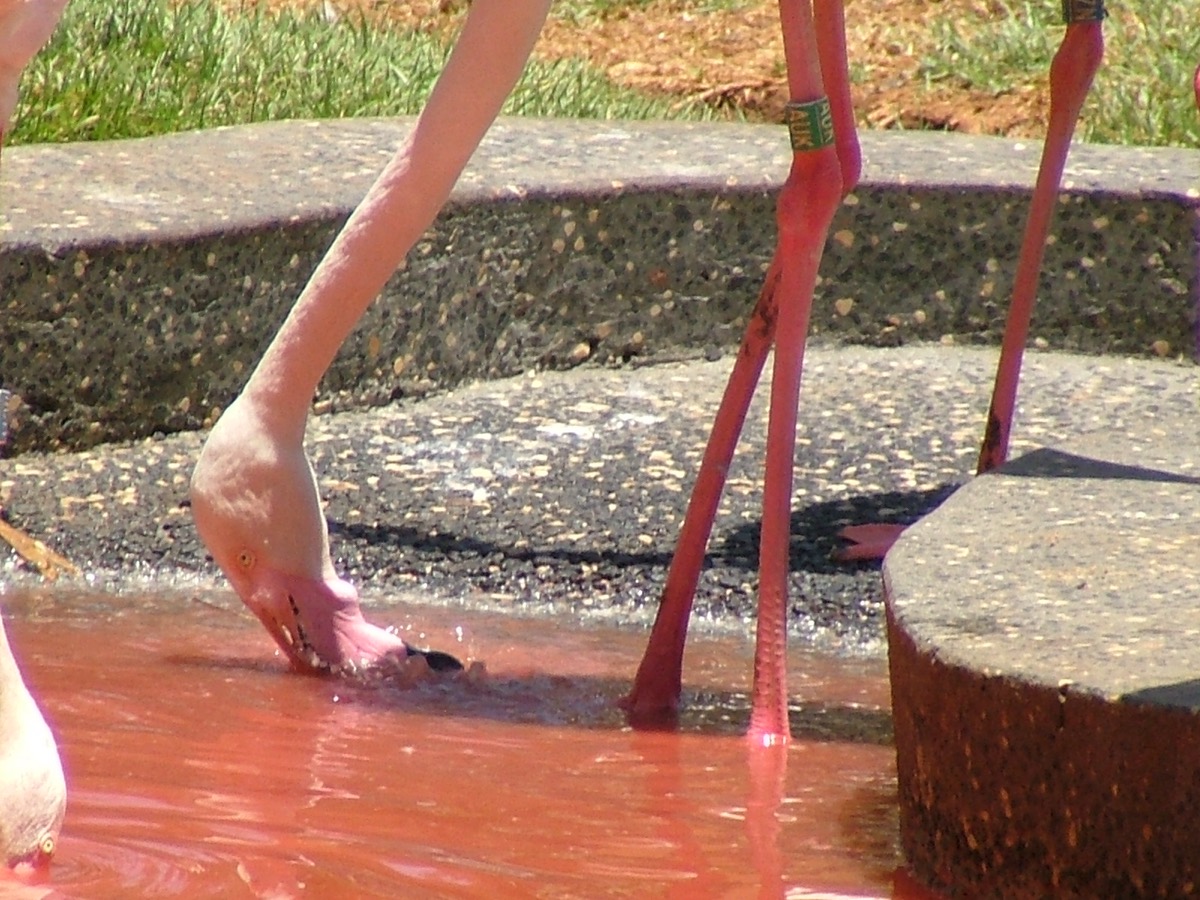 How does a flamingo catch brine shrimp that swim faster than it does?flamingos
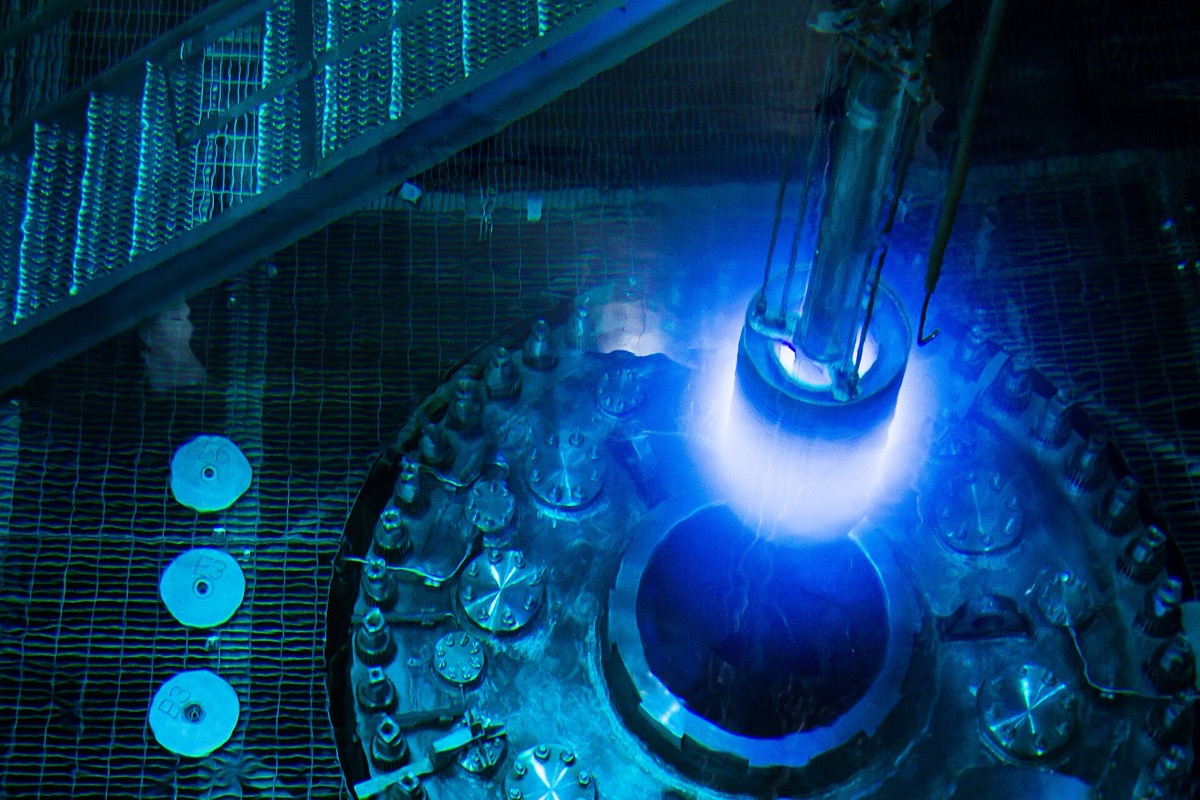 Why does a reactor that has already been shut down still need cooling?energy
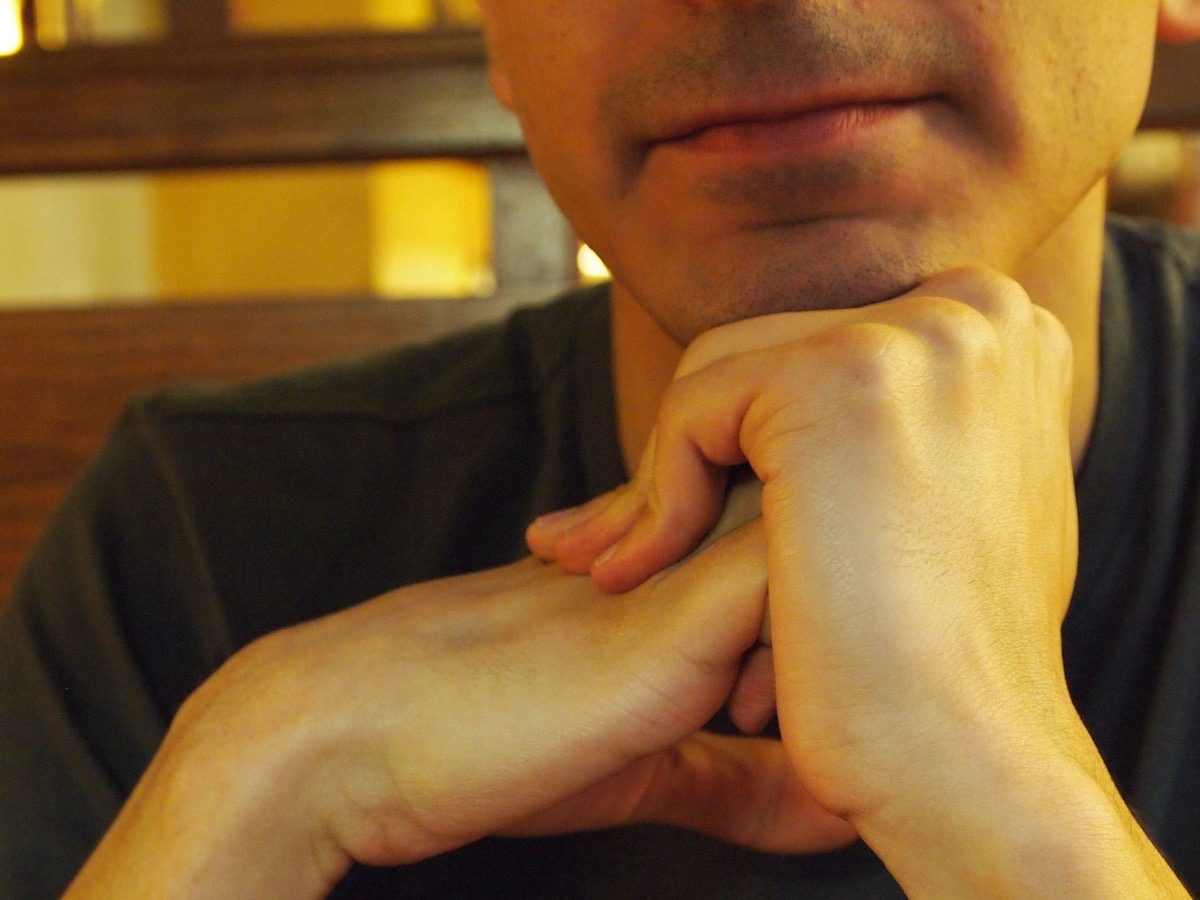 You were told cracking your knuckles causes arthritis. What did they find?joints