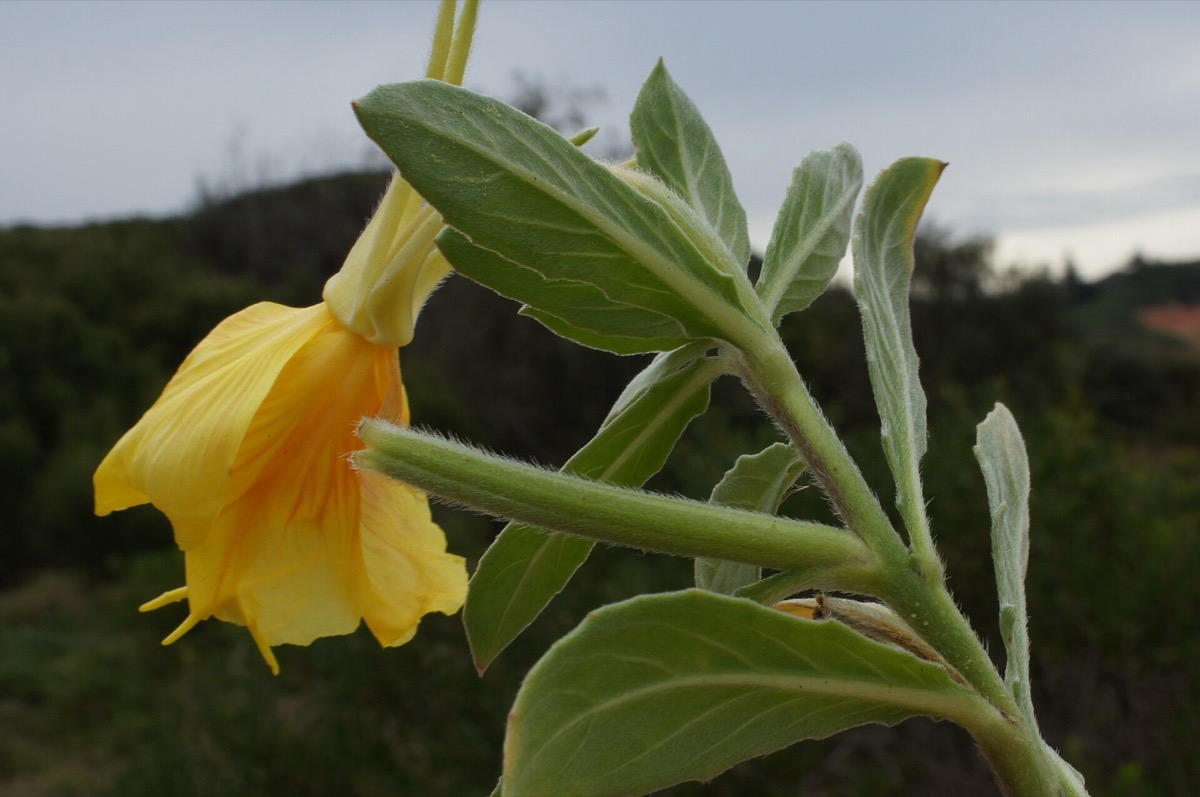
Flowers have no ears, no nerves and no brain, so the sound of an approaching bee ought to pass straight through them. A lab in Tel Aviv played a recording of a flying bee to open blooms, then sampled the sugar in their minutes later. Did anything in the flower change?
Sweeter nectar, within three minutes. Blooms exposed to a recording of a flying bee, or to synthetic tones at the same frequencies, raised the sugar concentration of their nectar. The petals themselves vibrated when the sound arrived, and the response was frequency specific: pollinator frequencies worked, higher ones did not. The flower behaves like an , with no nerve anywhere in it.
Beach evening primrose grows on dunes and opens at dusk, which is when its pollinators arrive. A flower has no ear and no nerve, so the obvious assumption is that an insect sound means nothing to it.
The lab played the recorded sound of a flying bee to open blooms, and separately played synthetic tones at the same frequencies. The petals vibrated mechanically in step with the playback. Higher frequencies produced neither the vibration nor any response, which rules out a flower simply shaking in whatever air passes it.
Within about three minutes of the sound, the nectar came out sweeter. That is fast for a plant. It points at a mechanism in which the flower itself serves as an auditory sensory organ, converting air pressure into a cue that shifts how the plant spends its sugar.
Sweeter nectar at the moment a pollinator is nearby would raise the odds of , which is the whole reason a plant makes a reward in the first place. The result also opens a less comfortable question. If a bloom responds to a wingbeat, it may respond to a highway too.
wat. A bloom with no nerve anywhere in it registered a wingbeat and sweetened itself in about the time it takes to boil a kettle.
wat wat
If flowers register airborne sound, then traffic noise and machinery are reaching plants that nobody thought had any way to notice them.
How do we know?
Veits and colleagues played bee recordings and synthetic tones to Oenothera drummondii flowers, sampled the nectar for sugar, and tracked how the petals moved.
What is still unknown
One species, under playback in controlled conditions. Whether real bees actually visit the sweetened flowers more often is a separate question, and this work does not answer it.
Learn something?
Where to next
 What can a bumblebee learn but never invent on its own?bees
 Does a bee see the world differently once it starts moving?bees
 Does a dolphin have anything like a name?sound