Lamoreaux measured it. Between two closely spaced there is a , arising because the surfaces modify the of the electromagnetic field between them. His experiment showed the force conclusively over separations from under a micrometer to a few micrometers, and the measurement agreed with theory to within five percent.
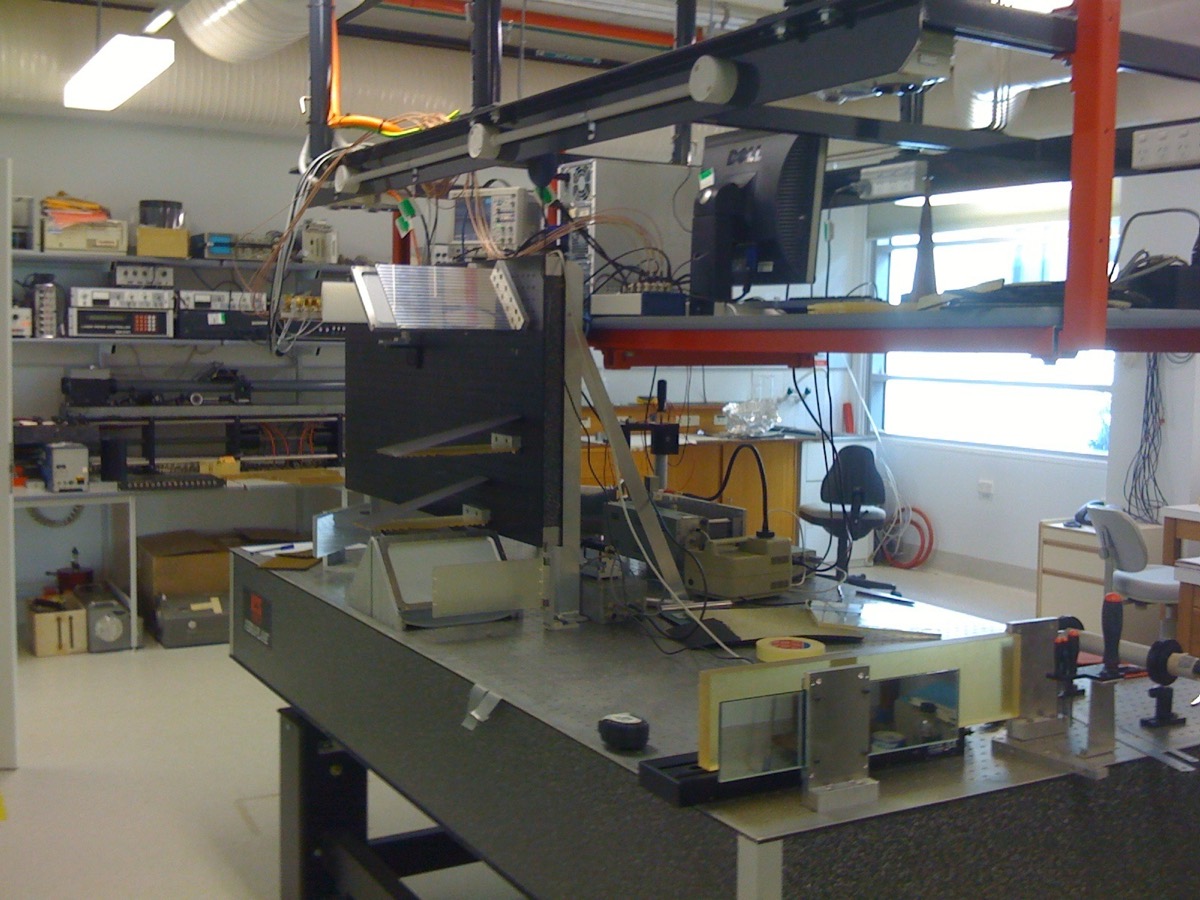
The apparatus was mechanical and old-fashioned: an electromechanical system built around a , which turns a tiny force into a measurable twist. Nothing is between the plates. The force exists because the plates restrict which fluctuations of the field can fit in the gap, and a restricted vacuum has a different energy from an unrestricted one.
The Casimir effect is one of those predictions that sounds like a misunderstanding. Two closely spaced conducting surfaces attract each other, not because of charge or gravity or any material between them, but because of the vacuum. The surfaces modify the zero-point fluctuations of the electromagnetic field in the gap, and that modification has an energy that depends on the separation.
Lamoreaux set out to show it conclusively, over separations running from under a micrometer up to a few micrometers. The method was an electromechanical system based on a torsion pendulum. A pendulum of that kind converts a very small sideways force into a twist that can be read off, which is why versions of it have been doing precision gravity work since the eighteenth century.
The result was agreement with theory at the level of five percent. For a force this small, measured across a gap this narrow, that is a strong result, and the paper is generally treated as the first conclusive modern measurement of the effect.
The publication history is worth knowing. The paper carries a published erratum, and it drew a comment from Lambrecht and Reynaud with a reply from Lamoreaux, all in the same journal. That exchange is normal for a hard measurement near the edge of what instruments can do. It is also a reason to treat the five percent figure as one careful experiment’s claim rather than a settled constant.
wat. Put two plates close enough together and the emptiness between them pulls.
wat wat
Zero-point fluctuations are easy to dismiss as bookkeeping in a theory. A torsion pendulum twisting by a measurable amount is harder to dismiss.
How do we know?
An electromechanical system based on a torsion pendulum measured the attraction between closely spaced conducting surfaces, and the result was compared against the theoretical prediction.
What is still unknown
A single measurement agreeing with theory at the five percent level, and the paper carried a published erratum and drew a comment and reply in the same journal. The precision of early Casimir measurements was genuinely contested.
Learn something?
Where to next
 A chain pours from a cup to the floor. Why does it rise into the air first?forces
 Why does a reactor that has already been shut down still need cooling?physics
 Why does the cheese in a cacio e pepe sometimes seize into one lump?physics