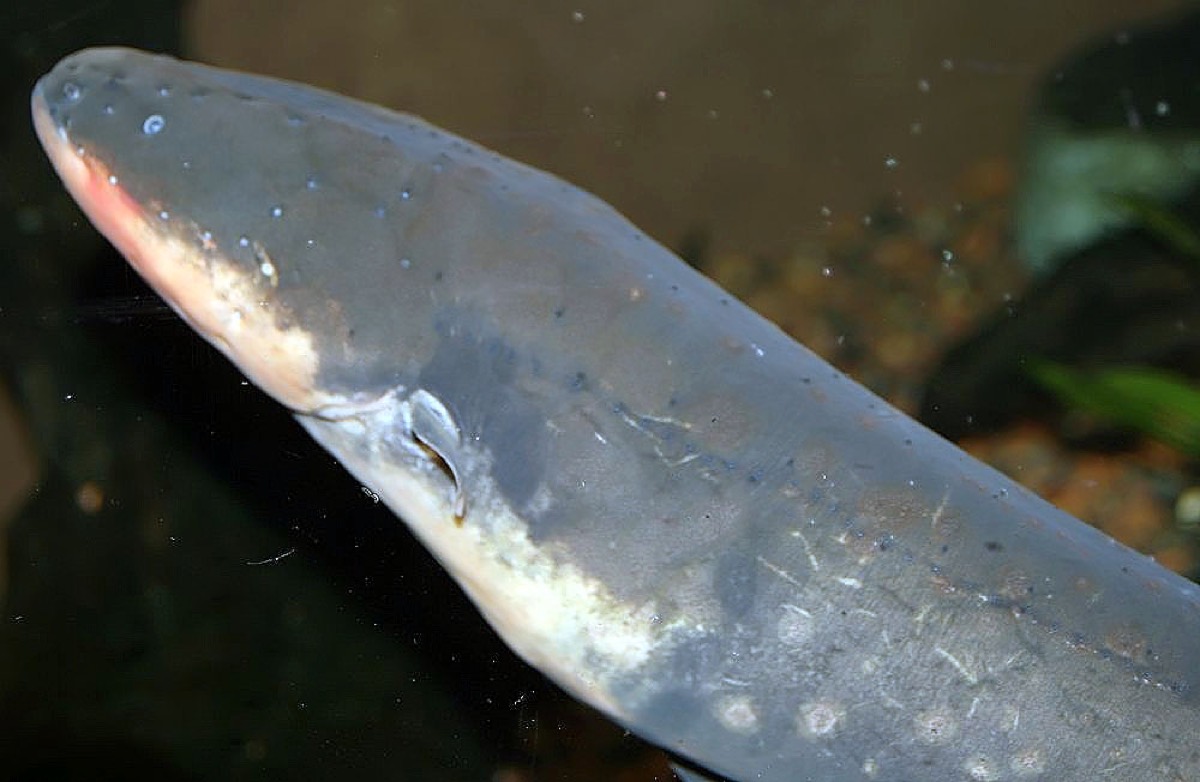
An electric eel discharging underwater is sharing its current with the whole river, and any one target standing in the shallows receives a fraction of it. A cornered eel does something stranger: it rises out of the water and presses the underside of its head against the threat. Catania measured the circuit that forms at that moment, with a human subject taking the strike. What does leaving the water buy the eel?
A far better circuit, and a great deal of pain. Measuring the and the during a leap let every term be pinned down, and the current through the human target peaked at forty to fifty milliamps. That is well above the threshold for activation described in both people and horses. The subject felt no involuntary , and the unpleasant sensation stayed in the affected arm.
An electric eel discharging underwater is in a poor position for hurting anything. The water conducts, so the current spreads out through it, and only a fraction passes through any one animal standing in the river.
The leaping attack fixes that. A cornered eel rises out of the water and presses the underside of its head against the threat, something earlier accounts describe against horses and against people, which converts a diffuse discharge into direct contact. What nobody had measured is the circuit that forms at that instant.
Catania determined the electromotive force and the circuit resistances during a leap, then measured the current through a human subject taking the strike. With those values every term in the equivalent circuit could be estimated, which also lets the result be scaled up to the much larger eels somebody might meet in the wild.
Even from a comparatively small animal, the current in the target peaked at forty to fifty milliamps, far above the threshold for nociceptor activation described in both humans and horses. The subject felt no involuntary tetanus, and the aversive sensation stayed in the affected limb. The leap reads as a deterrent built around brief intense pain rather than an attempt to disable anything.
wat. Out of the water the eel stops sharing its discharge with the river and routes the whole thing through whatever it is touching.
wat wat
It explains a behavior that looks reckless. Leaving the water costs the eel its cover and buys it a circuit that genuinely hurts whatever it touches.
How do we know?
Catania determined the electromotive force and the circuit resistances during an eel’s leaping attack, then measured the current passing through a human subject who took the strike.
What is still unknown
One eel, comparatively small, and one human subject. The figures quoted for larger wild eels are extrapolations from the measured circuit rather than measurements of their own.
Learn something?
Where to next
 How do penguins decide who has to stand on the cold outside?behavior
 Why does a wombat go to the trouble of leaving its mark up high?behavior
 A scorpion gave up its tail to escape. How does it live on with no anus?defense