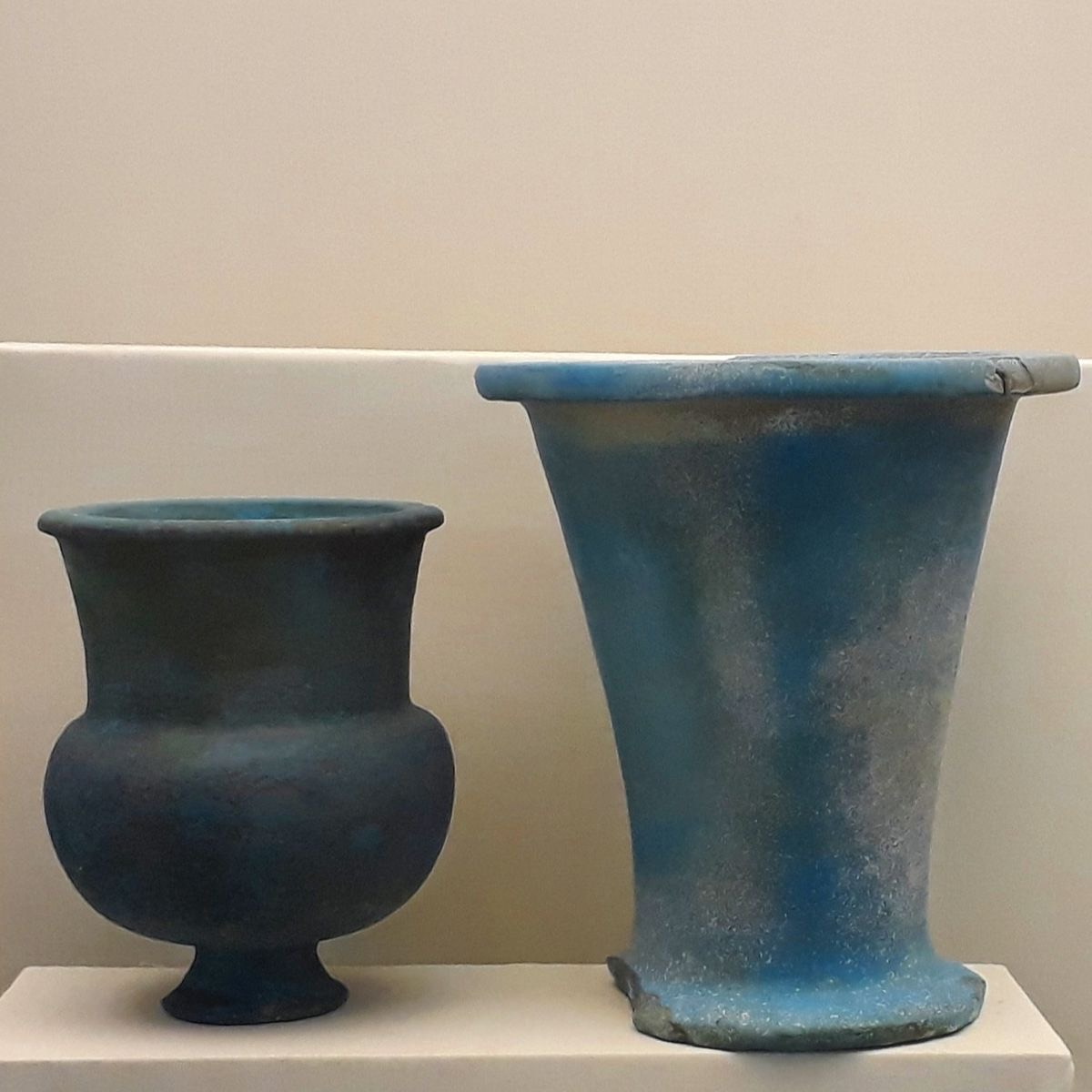
Flinders Petrie excavated painted limestone reliefs from the Palace of Apries between 1908 and 1910, and the fragments kept their color. A battery of modern methods went over them to map which pigments sit where. Nobody had ever reported two of the yellows from ancient Egypt at all.
and . Both appear here for the first time in ancient Egyptian painting, and these are the earliest known examples of either pigment anywhere in the world. Alongside them sat , which is the yellow this period is known for, plus atacamite, gypsum and . A painter had several yellows and used more than one.
Flinders Petrie excavated these painted limestone relief fragments from the Palace of Apries between 1908 and 1910. They went through visible-induced luminescence imaging, micro X-ray fluorescence, laser ablation inductively coupled plasma mass spectrometry, micro X-ray powder diffraction and Fourier transform infrared spectrometry.
The point of that many techniques is coverage. Each one answers a different question about a pigment, from which elements are present to how the crystal is arranged, and together they let the pigments be mapped across the surface rather than merely listed.
The pigments detected are mainly lead-antimonate yellow, lead-tin yellow, orpiment, atacamite, gypsum or anhydrite, and Egyptian blue. The first two are the news: this is the first time either has been identified in ancient Egyptian painting.
The claim goes further than Egypt. These are the earliest examples known of both of these yellow pigments in the world, which makes a set of century-old museum fragments the current earliest evidence for two pieces of pigment chemistry.
wat. Two lead-based yellows on Egyptian reliefs are the oldest examples of those pigments known anywhere.
wat wat
A pigment is a technology, so the earliest known use of one moves the date on a piece of chemical know-how.
How do we know?
Hedegaard and colleagues used visible-induced luminescence imaging, micro X-ray fluorescence, laser ablation mass spectrometry, micro X-ray powder diffraction and infrared spectrometry, then mapped the pigments across the fragments.
What is still unknown
Earliest known means earliest identified, and the fragments come from one palace excavated more than a century ago.
Learn something?
Where to next
 Was pharaoh Ahmose’s great storm the eruption of Santorini?ancient Egypt
 What was hiding inside animal mummies from ancient Egypt?ancient EgyptHow do you find a color that has worn away?pigments