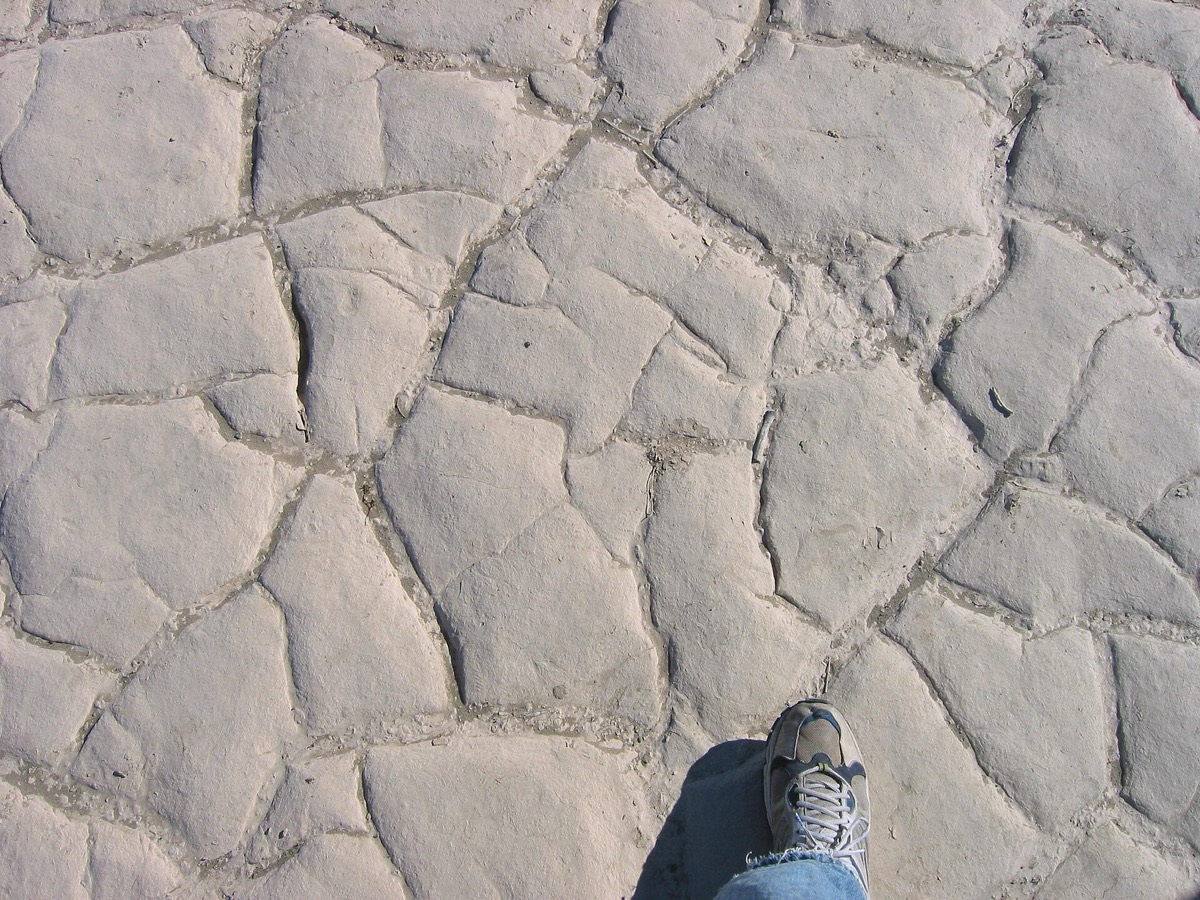
Because of the order in which they opened. When cracks form in a thin contracting layer they break it sequentially into smaller and smaller pieces, and a later crack tends to meet an earlier one at a right angle. Goehring’s point is that the rectilinear pattern therefore records its own history, while a has had that history erased.
Hexagonal patterns have every angle at a vertex near a hundred and twenty degrees, and they turn up only under particular conditions. One is a crack network that . Another is one advancing into a thick layer by many intermittent steps. The same forces produce both patterns. What differs is how many cycles the network has been through.
A thin layer that contracts has to break, and it breaks in stages. Cracks sequentially divide the layer into smaller and smaller pieces, and each new crack encounters a landscape already partly broken. When it reaches an existing crack it tends to intersect it at a right angle, because the earlier crack is a free surface that the stress field has to meet squarely.
That is why a encodes information about the order of crack formation. The pattern is not only a shape but a sequence, and a right-angled junction tells you which of the two cracks was there first. Most dried mud looks like this.
Hexagonal patterns are the other case, with all the angles at a vertex near a hundred and twenty degrees. Goehring notes they are typically only seen when a crack network opens and heals repeatedly in a thin layer, or when it advances by many intermittent steps into a thick layer. The forces are identical; the difference is how much repetition the network has seen.
The mechanism of the change is a small freedom repeated often. Cracks in each cycle are guided by the positions of the cracks in the previous cycle, but they can vary their position slightly and the order in which they open. Over many cycles the network relaxes from rectilinear toward hexagonal. The paper compares this account with patterns in dried mud, polygonal terrain, and eroding gypsum-sand cements. One caution: it synthesizes and outlines rather than measuring any one case.
wat. A right angle means one crack got there first.
wat wat
The angle at a junction is a clock. A right angle says one crack arrived after the other, and a hexagonal junction says the pattern has been reopened enough times to forget which came first.
How do we know?
A review paper sets out how a rectilinear crack pattern evolves toward a hexagonal one under repeated opening cycles. It compares that account against observed patterns in dried mud, polygonal terrain, columnar joints and eroding gypsum-sand cements.
What is still unknown
A review and synthesis rather than new measurement, arguing that one mechanism accounts for several natural patterns. It outlines the general features of the evolution without quantifying how many cycles any particular setting requires.
Learn something?
Where to next
 Why does a magnetic liquid grow spikes when you bring a magnet near it?patterns
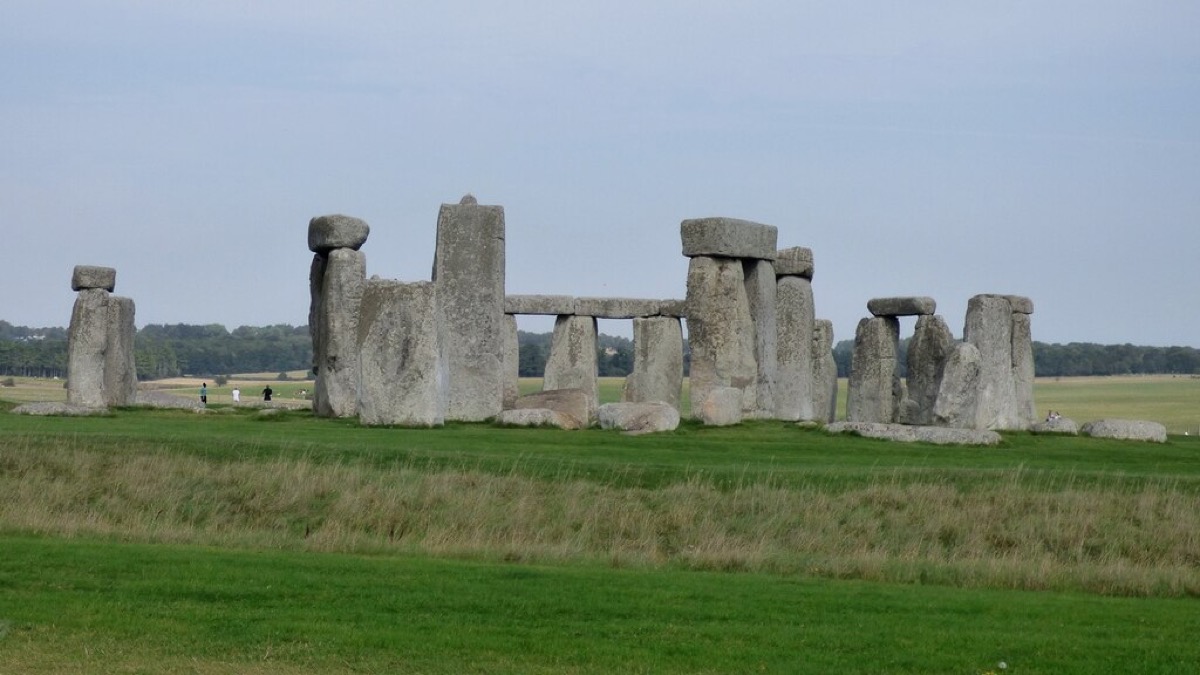 Where did the stone at the center of Stonehenge come from?geology
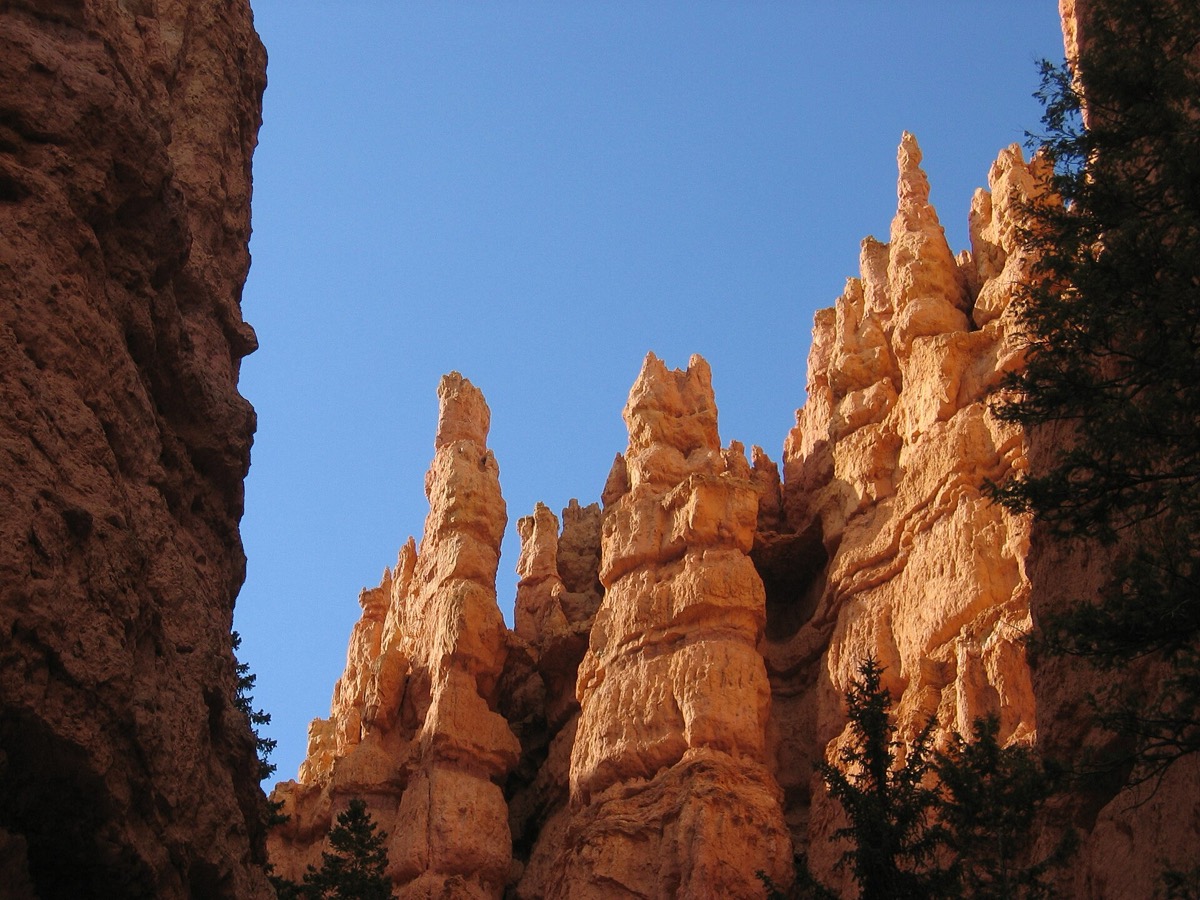 What carves a canyon into thousands of stone spires?geology