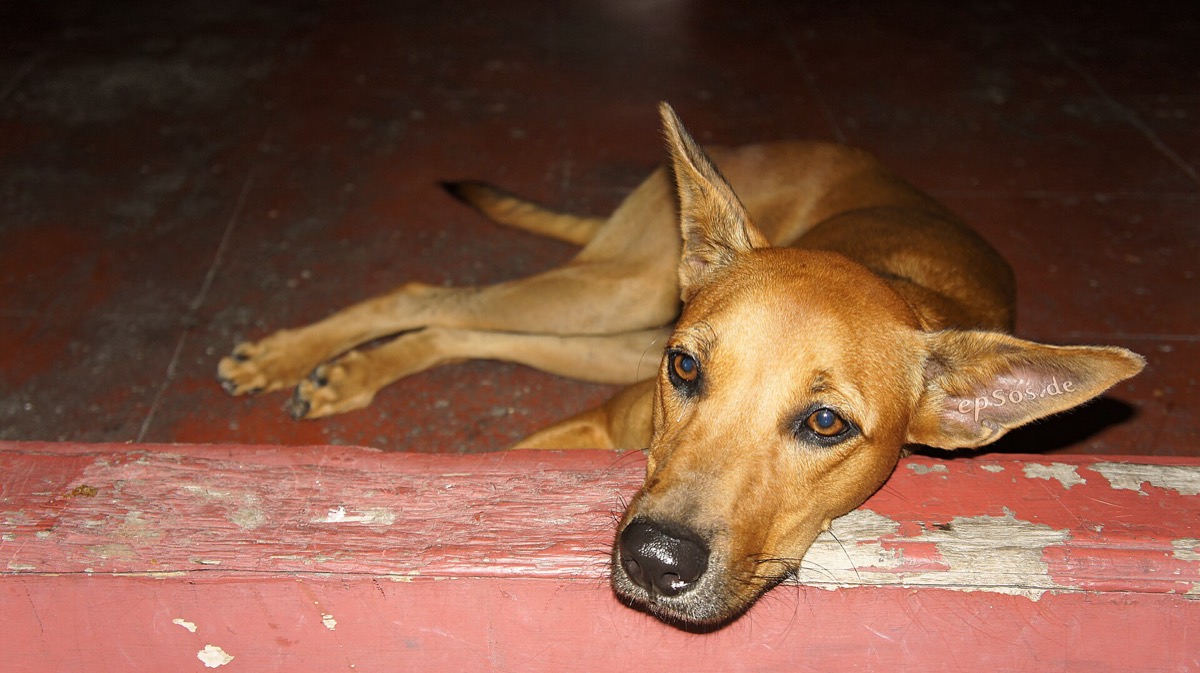
Dogs raise the inner corner of the eyebrow in a way that reliably gets a reaction out of people. Wolves, who are the same animal a few tens of thousands of years back, mostly do not. That might be training. It might also be anatomy. Kaminski and colleagues dissected dog and wolf heads and separately scored the eyebrow movement in living animals of both. Is the difference in the muscle?
It is in the muscle. The , which raises the inner eyebrow sharply, is uniformly present in dogs and absent in wolves. The behavior follows the anatomy: dogs produce the movement far more often than wolves and push it harder, and the most intense versions came only from dogs. Roughly thirty-three thousand years of did this.
Wolves became dogs in roughly thirty-three thousand years, and the usual account of what changed is behavioral: tolerance, attention to people, a long adolescence that never quite ends. Anatomy gets mentioned for ears and skulls and coats.
Kaminski and colleagues went to the face. Dissections of dog and wolf heads turned up a muscle in one and not the other. The levator anguli oculi medialis, which raises the inner eyebrow intensely, was uniformly present across the dogs and absent from the wolves. A muscle for , in other words.
Behavior collected from living animals lines up with the dissections. Dogs produce the eyebrow movement significantly more often than wolves do and at higher intensity, and the highest-intensity versions were produced exclusively by dogs. An anatomical difference and a behavioral one, pointing the same way.
Why it would be selected is the interesting part. The movement increases and resembles an expression people produce when sad, so a dog making it may trigger a nurturing response in whoever is looking. The authors propose that dogs with expressive eyebrows had an advantage, which makes puppy dog eyes a product of human preference rather than of dog intention.
wat. We did not teach dogs the look. We bred the muscle that makes it, without ever intending to.
wat wat
Domestication is usually described as behavioral change. Here it reaches into the anatomy of the face, and the thing being selected is an expression that works on us.
How do we know?
Kaminski and colleagues dissected the facial muscles of dog and wolf heads, then scored how often and how intensely living dogs and wolves produced the inner eyebrow movement.
What is still unknown
The selection story is a hypothesis built on top of the anatomy. Nobody has shown that dogs with the muscle were favored, only that the muscle is there and the movement follows it.
Learn something?
Where to next
 Was the dog tamed once, or did two separate peoples do it?dogs
 Why do cicadas come out every 13 or 17 years exactly?evolution
 Do zebra stripes put a fly off from far away, or only up close?evolution