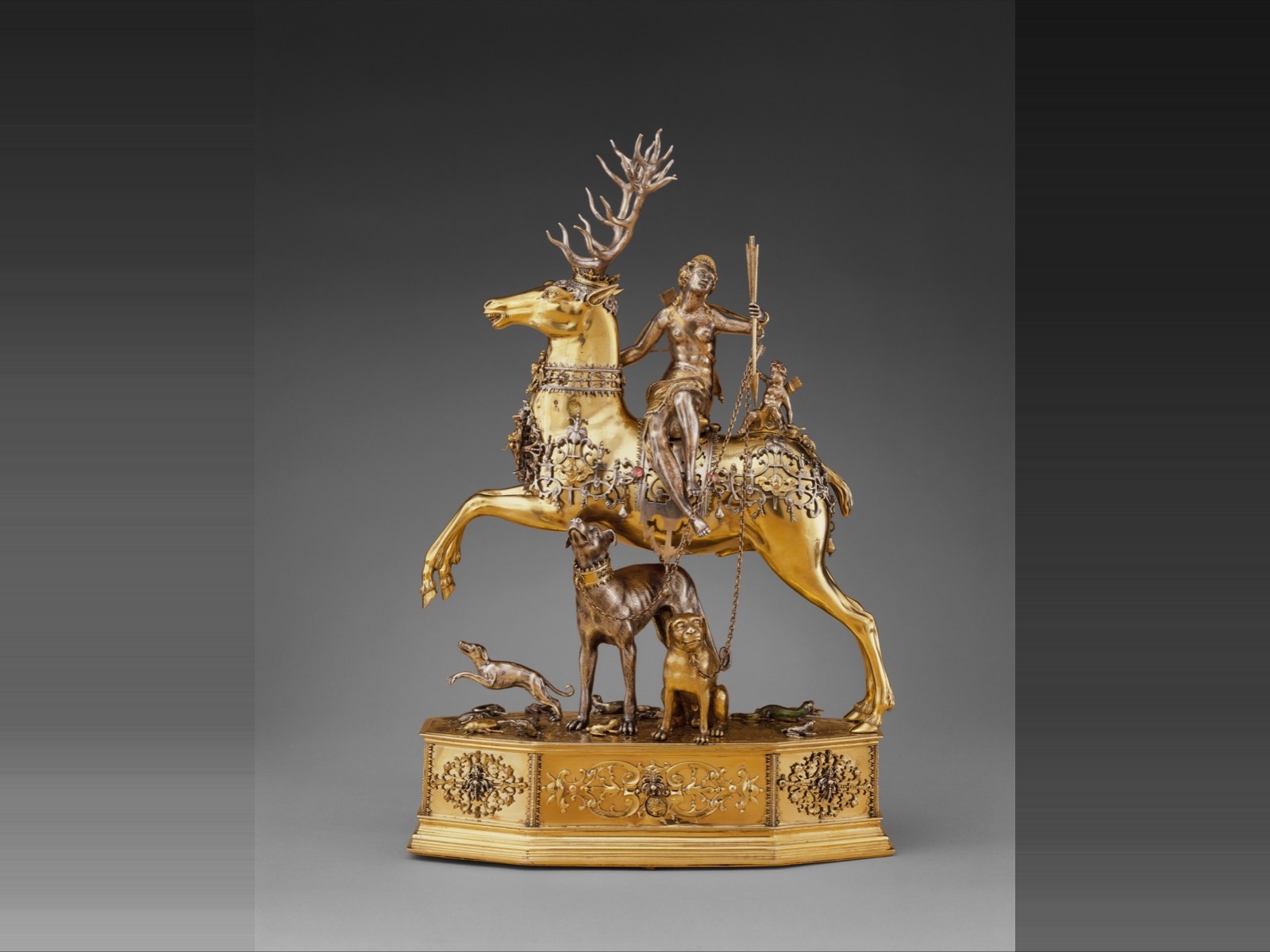
To decide who drank next. and the , made by Joachim Friess in around 1620, is a clockwork table ornament that ran across a tabletop under its own power. The stag’s body is hollow and holds the drink. These were used in drinking games at princely festivities, and the machine, not the host, chose the victim.
A companion piece at Yale shows the other version of the game. Diana rides a chariot drawn by two leopards, her animals animated and her eyes moving back and forth in time with the clock built into her throne. When the chariot stopped she shot her arrow, and the guest it pointed at was obliged to finish their drink, to the delight of everyone else at the table.
Silver sculptures of Diana were popular among European nobility for a reason that has little to do with mythology. Hunting was a feudal privilege and a primary pastime of European rulers, so an image of the goddess of the hunt was an image of the owner’s own rank. Two such automata survive, one at The Met and one at the Yale University Art Gallery, and both depict Diana as the figure who commands wild animals.
The free city of Augsburg made them. It was known for silver objects, particularly those used as amusements in the courtly rituals of drinking and dining, and it was a center of clockmaking as well. Its artisans specialized in automata designed to move across and around a tabletop, which is a very specific craft serving a very specific social occasion.
The Yale Diana drives a chariot pulled by two leopards. Her animal companions are animated, and her eyes move back and forth in time with the ticking of the clock incorporated into her throne. After the chariot stopped, she shot her arrow, and the guest in front of whom it landed was obliged to finish their drink, much to the other guests’ delight.
The Met’s version makes the object itself the vessel. Diana is perched atop a large stag whose body is hollow and holds the drink. The piece ran across the table and stopped, and the drinking followed from where it stopped. One caution about all of this: the entry describes the objects and says they were likely used in drinking games, which is a reading of their design rather than a record of any particular evening.
wat. The stag crossed the table, stopped, and whoever it stopped at had to drink.
wat wat
It is an early case of a machine being given social authority. Nobody has to nominate anyone, because the automaton decides, and that is precisely what made the game work.
How do we know?
The Metropolitan Museum’s catalogue entry for object 17.190.746 describes both automata, the mechanism in each, the use of the stag’s hollow body, and the role the pieces played in courtly drinking rituals.
What is still unknown
A museum catalogue entry rather than a study of the objects in use. It says both automata were likely used as part of drinking games, which is an inference from their design and from what is known of court practice.
Learn something?
Where to next
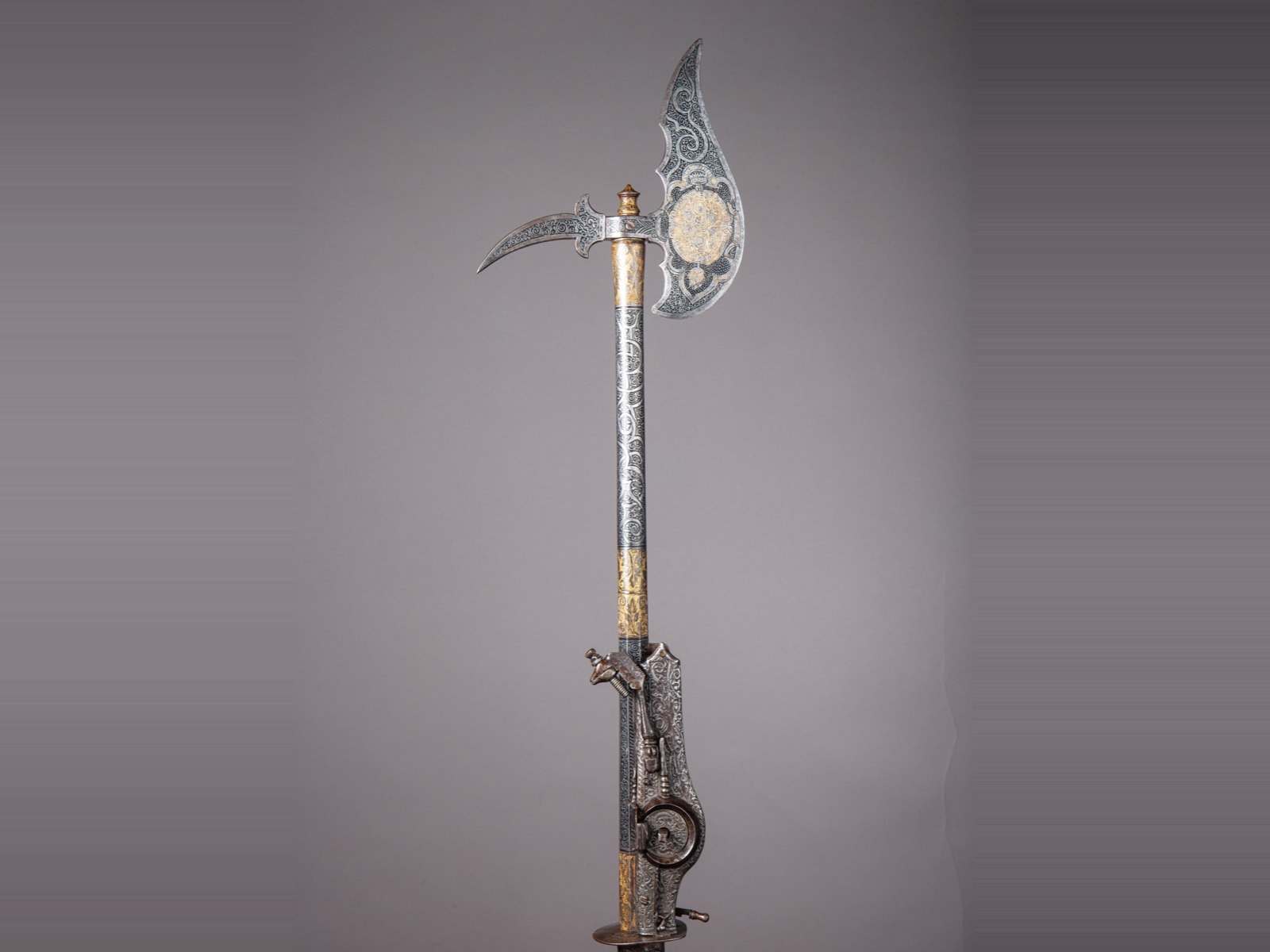 Who carried an axe with a gun built into the handle?renaissance
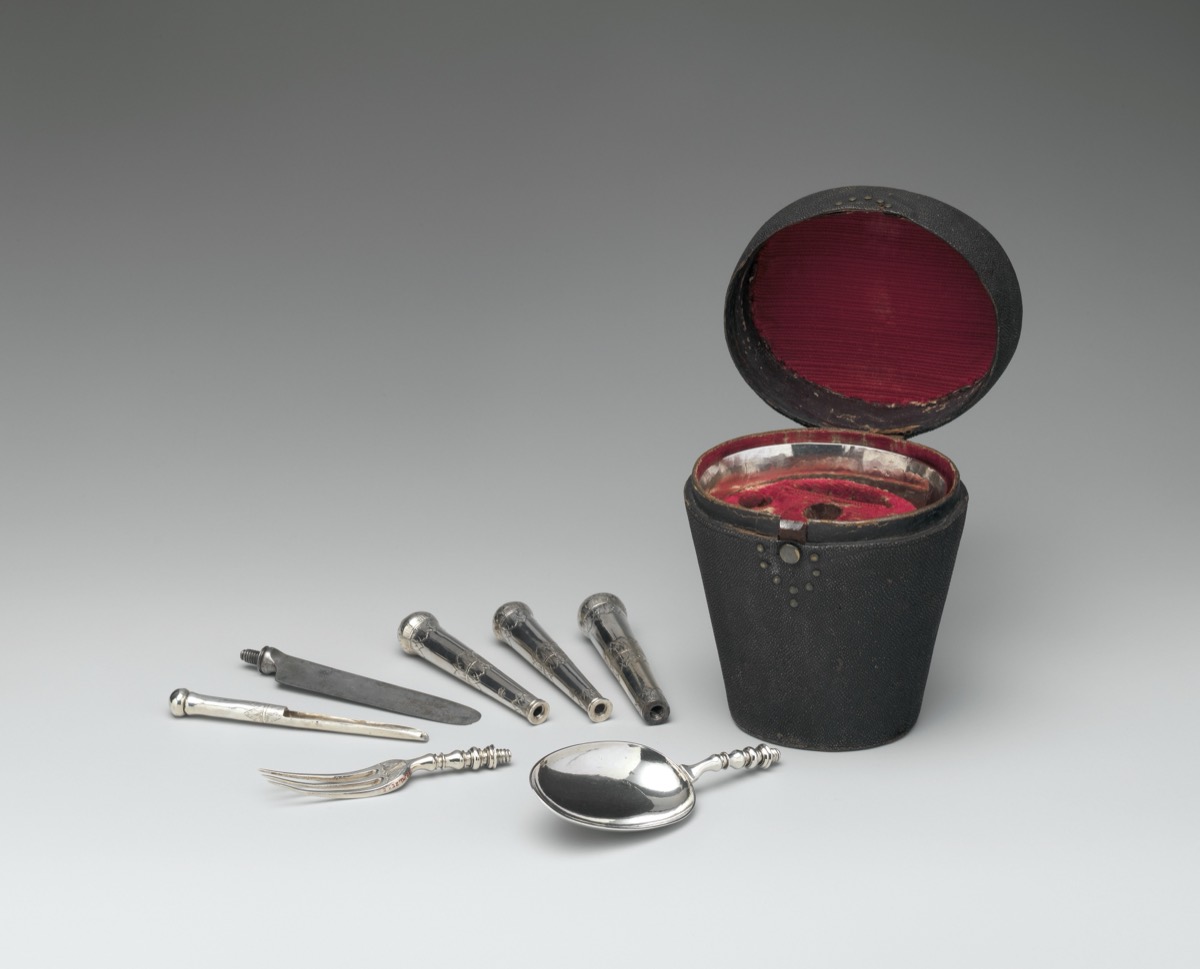 How did you pack a full place setting for a hunt in 1709?silver