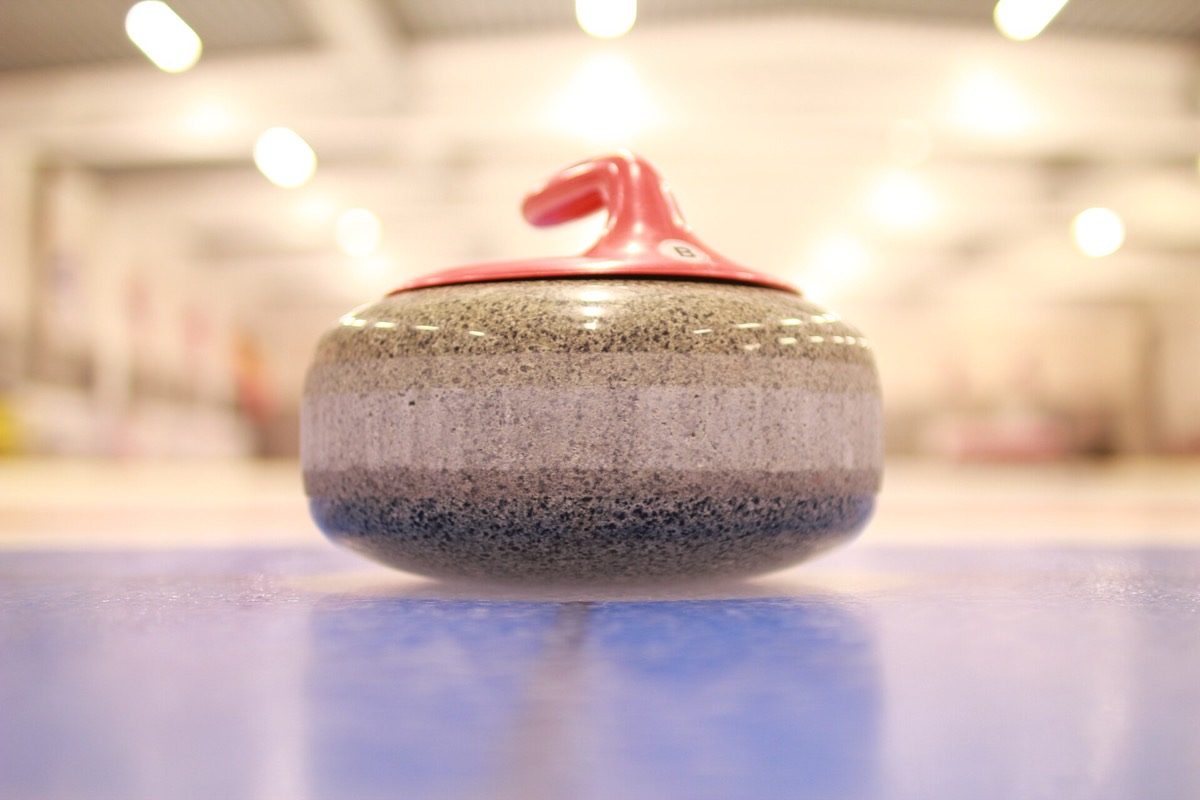
You would expect a stone spinning right to drift left, like a spinning ball in the air. In curling the opposite happens: the stone drifts the way it is turning. The stone rests on nothing but a narrow ring. What is going on down there?
It follows its own marks. As the stone slides and turns, the front of scratches into the ice. A moment later the back of the ring crosses them at an angle, and that crossing contact is not symmetrical, so appears. Each meeting is negligible, and over the length of the track they add up to meters.
A curling stone spinning right drifts right, and that is not obvious: a spinning cylinder rolling on a surface tends to drift the other way.
The stone rests not on its whole underside but on a narrow contact ring, so all the weight is concentrated in a small area. As it slides and turns, the leading part of the ring cuts tiny grooves into the ice.
A moment later the trailing part crosses them at an angle. That crossing contact is not symmetrical, so a small sideways force appears.
Each such meeting is negligible, and along the track they add up to a drift of meters. The researchers scanned the ice with before and after slides and measured the angles of the scratches. Ice conditions vary, and other mechanisms may operate in the final seconds.
wat. A curling stone curls because its trailing edge is steered, again and again, into the grooves its leading edge cut.
wat wat
The finding ties microscopic marks in ice to the drift of a stone of some 20 kilograms along a whole track.
How do we know?
The researchers scanned the ice surface with a white-light interferometer before and after slides, measured the angles of the scratches, and compared them against the path of the stone.
What is still unknown
The work supports the scratch-guiding mechanism through most of the slide, and ice conditions vary, and other mechanisms may operate in the final seconds.
Learn something?
Where to next
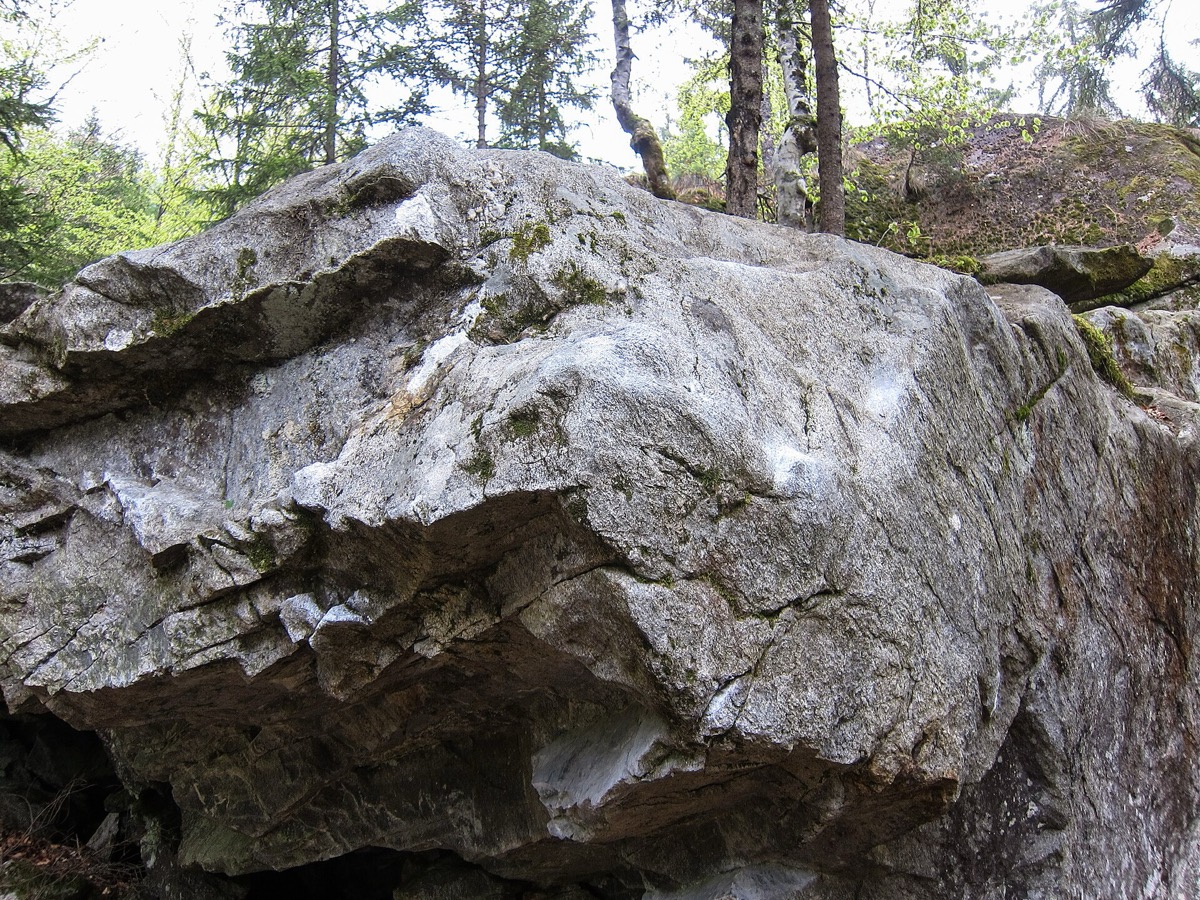 Does climbing chalk really help you hold on to rock?friction
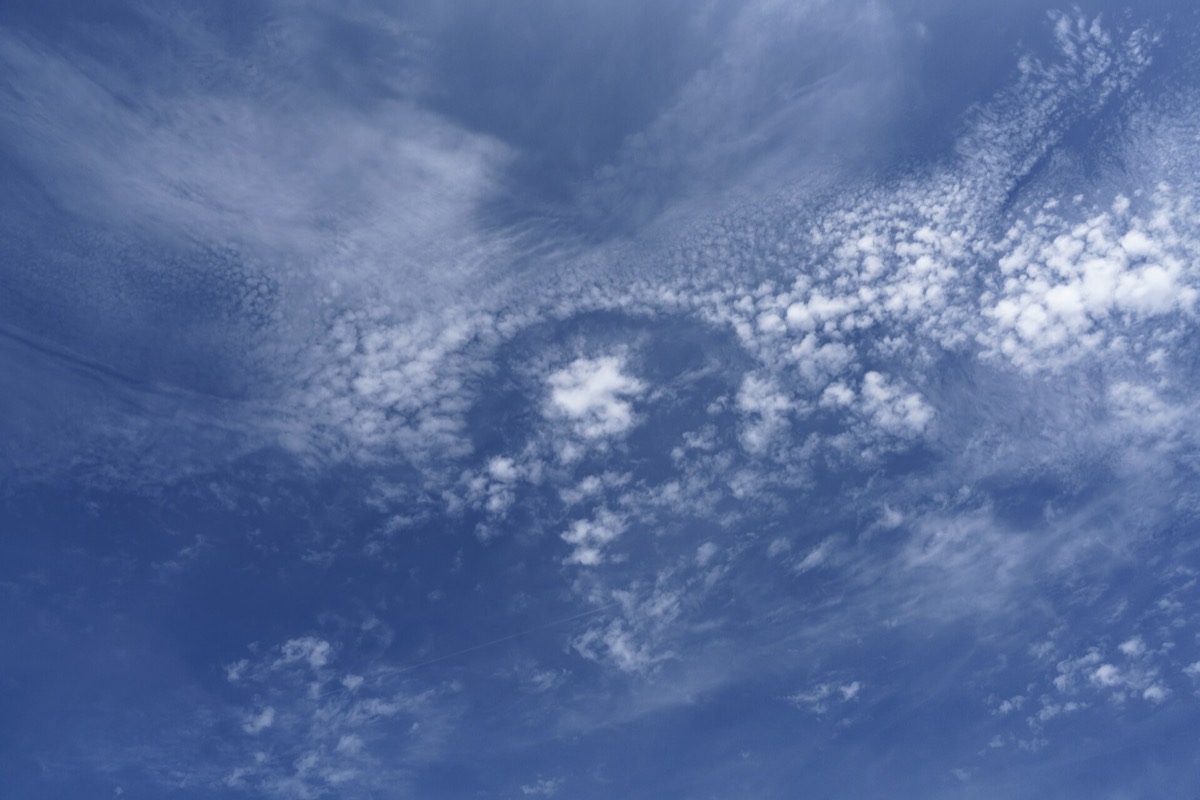 Who punches an almost perfect circle through a layer of cloud?ice
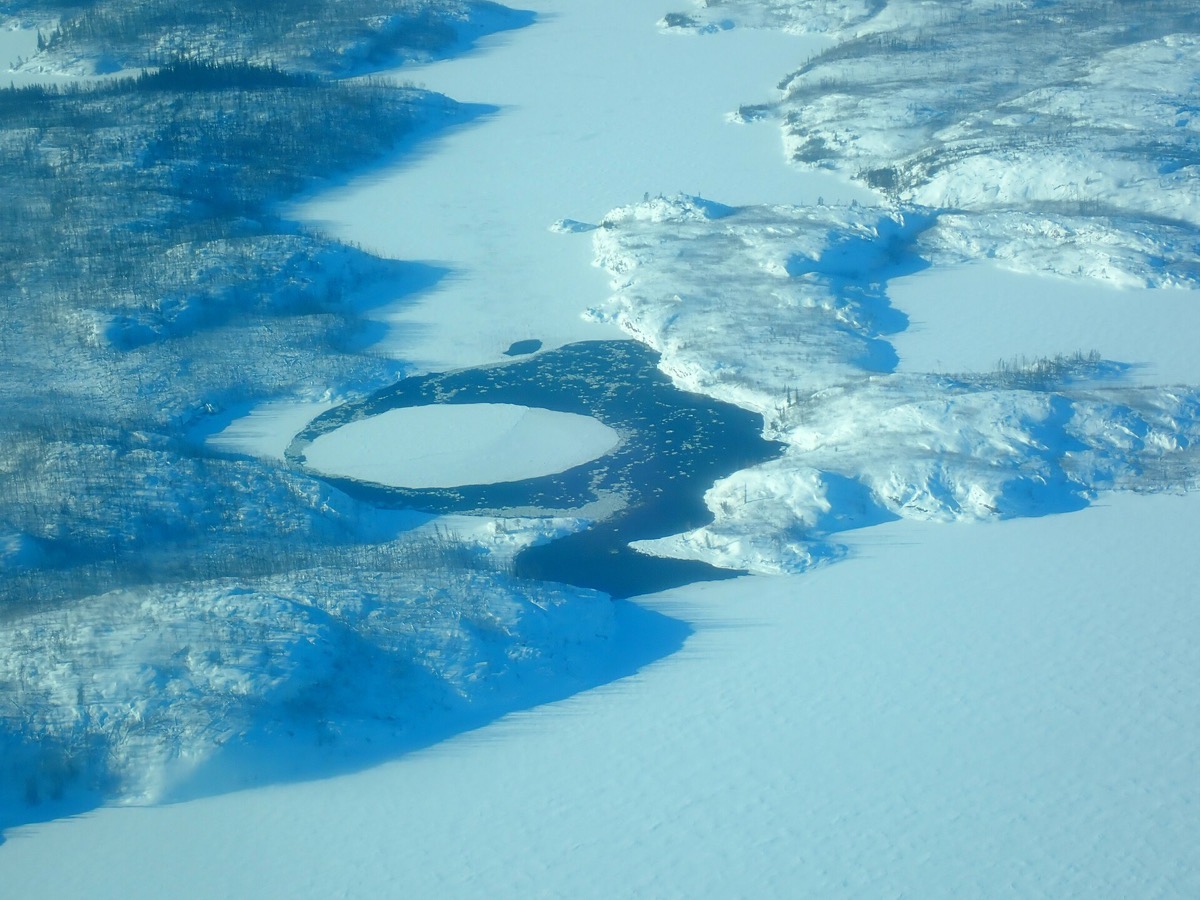 How does a round disk of ice start turning on still water?ice