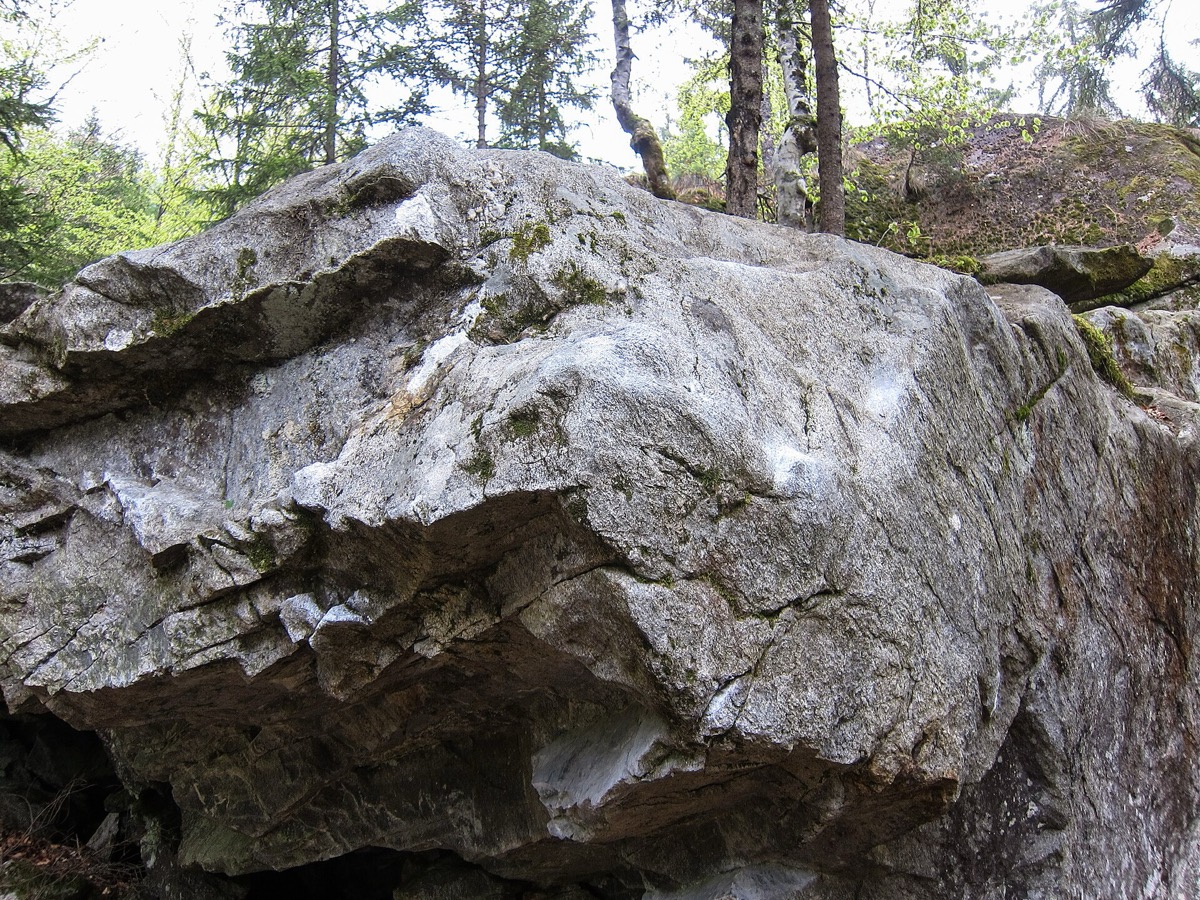
Climbers spread white on their palms so they slip less, and everybody does it without checking. To measure it, experienced climbers gripped a rig whose angle rose gradually until the hand slipped, on and on . What came out?
About a fifth more friction. Eleven experienced climbers took part, and with chalk the was about 18.7% higher on limestone and about 21.6% higher on sandstone. The sandstone gave more friction even without chalk, so the powder does not explain everything. The test supports this particular use, and it does not say that any amount of chalk helps on any route.
The claim that chalk helps a grip sounds self-evident, and friction depends on skin moisture, on the structure of the rock and on how much powder remains between the finger and the surface.
Eleven climbers took part in 42 test rounds. They gripped two kinds of stone on a rig that tilted gradually until the moment of slipping.
Compared with a bare hand, the friction coefficient rose by about 18.7% on limestone and about 21.6% on sandstone. The kind of rock mattered too: the sandstone gave a better hold.
This is a test of grip under controlled conditions, not an examination of a real route with changing sweat and fatigue. Studies in other conditions may find a different result.
wat. Magnesium chalk improved friction on both kinds of rock tested, and the rock itself still changed the grip.
wat wat
Even a familiar sporting habit should be tested on the surface it is used on; an effect on grip is not only a feeling.
How do we know?
42 test rounds with 11 climbers compared the slipping angle on two rock holds, with chalk and without it.
What is still unknown
The experiment involved few climbers and only two kinds of rock. It measured friction on a rig, not success on a full climb or injuries.
Learn something?
Where to next
 Why does a curling stone turning right also drift right?friction
 Does tightening a pressure cuff before training really improve performance?sport
 What changed in football when the stands emptied?sport