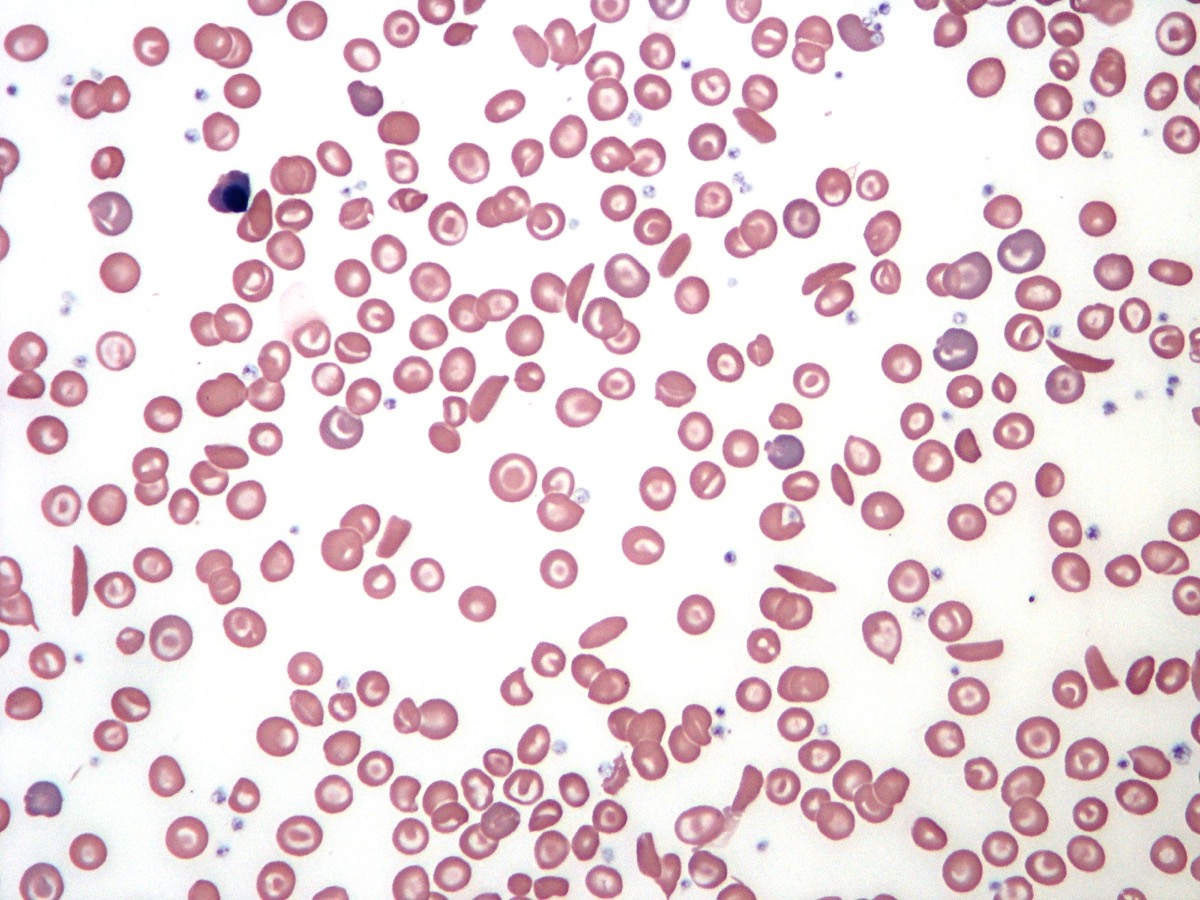
Sickle cell disease and transfusion-dependent beta-thalassemia both come from mutations in one gene, the hemoglobin beta subunit. Repairing that gene in a patient is hard. But a fetus makes a different hemoglobin, and a transcription factor called is what shuts that production down after birth. Frangoul and colleagues went after the switch instead of the gene.
They disabled the off switch. Blood stem cells taken from each patient were edited with CRISPR and Cas9 to disrupt the of BCL11A, then given back after . More than a year later both patients, one with thalassemia and one with sickle cell disease, had high levels of editing, raised fetal hemoglobin spread across cells, and independence from transfusion.
Both diseases are monogenic and severe, with potentially life-threatening manifestations, and both come from mutations in the hemoglobin beta subunit gene. In thalassemia the mutations reduce or abolish beta-globin synthesis, leaving the globin chains unbalanced and red cell production ineffective. Sickle hemoglobin comes from a point mutation that swaps one amino acid for another, and the polymerization of the deoxygenated result deforms the cell.
The route around the problem is developmental. A fetus makes a different hemoglobin, and BCL11A is the transcription factor that represses gamma-globin expression and fetal hemoglobin in erythroid cells after birth. Disrupting the repressor should let the fetal form return, and the fetal form does not sickle.
The groundwork was done on donor cells. The team electroporated CD34 positive hematopoietic stem and progenitor cells from healthy donors with CRISPR and Cas9 targeting the erythroid-specific enhancer of BCL11A. Roughly eighty percent of the alleles at that locus were modified, with no evidence of off-target editing.
Then two patients, one with transfusion-dependent beta-thalassemia and one with sickle cell disease. Myeloablation cleared their marrow, and each received back their own cells edited at the same enhancer. More than a year later both had high levels of allelic editing in bone marrow and blood. Fetal hemoglobin was raised across their red cells rather than in a few of them, and neither needed transfusion any more. In the patient with sickle cell disease, episodes were gone.
wat. The broken gene was left alone. They switched the fetal version back on, and both patients came off transfusions.
wat wat
The patient with sickle cell disease stopped having vaso-occlusive episodes, which are the painful crises that define the illness as it is lived.
How do we know?
A brief report in the New England Journal of Medicine. Donor cell work modified about eighty percent of alleles at the target locus with no evidence of off-target editing, and two patients then received their own edited cells.
What is still unknown
Two patients, each their own case, reported about a year out. Nothing at this size speaks to how long the effect lasts or to rare harms from myeloablation or editing.
Learn something?
Where to next
 Where did the tool for rewriting genes come from?crispr
 How do you test a pig organ in a human body before any patient can consent?gene editing
 Why is a harmful blood mutation common exactly where malaria is worst?sickle cell