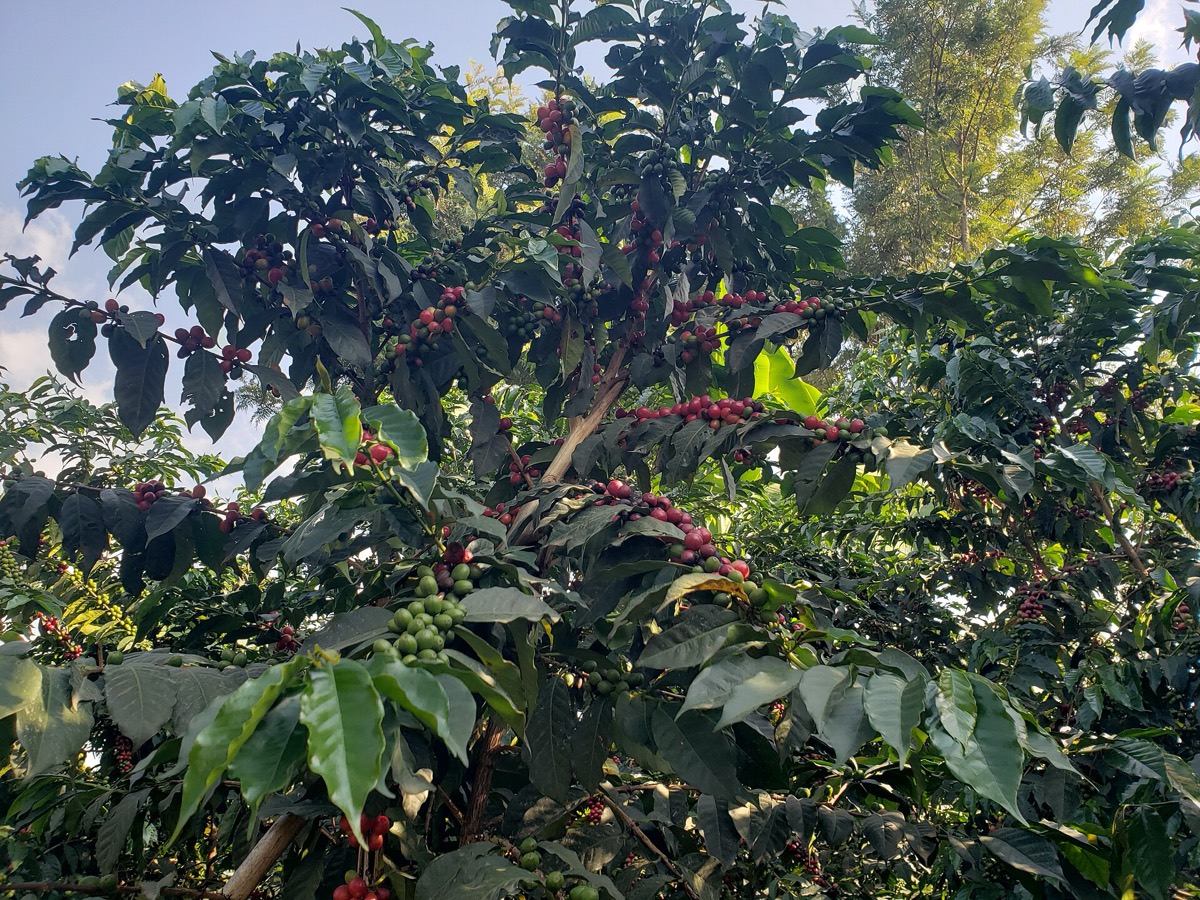
Specialty buyers pay a premium for high-grown coffee, and the reason usually offered is cooler air and slower ripening on the tree. That skips the fermentation tank, where microbes rather than weather rework the bean. A group sampled Arabica from four elevations, sequenced what grew during , and had the roasts cupped. Where does altitude actually act?
Altitude reaches the cup through the microbes. Higher farms earned a higher , and the top elevation drew the fullest description: long aftertaste, mellow body, high sweetness, nutty and flowery. Fermentation swung the dominant bacteria from Sphingomonas and Pleomorphomonas to Weissella and Lactobacillus, and each elevation ended up with its own set of shifted compounds. Dozens of separated the highest site from the lowest.
Coffee graded as specialty almost always comes from high ground, and the stock explanation is temperature: cooler air slows ripening, the cherry takes longer, the bean comes out denser. That is a plausible story about the tree. It says nothing at all about what happens after picking.
Shen and colleagues took Arabica from four elevations, from a thousand meters up to sixteen hundred, and followed it through wet processing. They measured the before and after fermentation, ran the chemistry on the de-pulped and the roasted beans, and sent the roasts to a panel.
Fermentation turned the tank over. Sphingomonas and Pleomorphomonas dominated the bacteria going in, Weissella and Lactobacillus dominated coming out, while Cladosporium and Fusarium held the fungal side throughout. How many compounds shifted differed by elevation, and so did which ones.
The cupping score rose with altitude, and the highest site drew the fullest description a panel can give. Dozens of volatile compounds separated it from the lowest. Altitude, on this reading, works partly by setting who ferments the coffee, which makes the tank a place a farmer could deliberately steer.
wat. Cooler air at elevation is only the start. What the height really changes is which bacteria take over the fermentation tank.
wat wat
It turns an origin label into a mechanism, and a mechanism can be managed: a grower lower down could in principle steer the tank rather than the mountain.
How do we know?
Shen and colleagues sampled Coffea arabica from four elevations, sequenced the microbes before and after fermentation, profiled the compounds in green and roasted beans, and had the roasts cupped.
What is still unknown
One region, one processing method, four elevations and a single season, so the effect of altitude and the effect of the local microbial community cannot be fully separated.
Learn something?
Where to next
 Does a plant under stress make any sound you could pick up?agriculture
 A drop of coffee dried on the table. Why is most of the stain at the rim?coffee
 Can a rice field be left to dry out without losing the harvest?agriculture