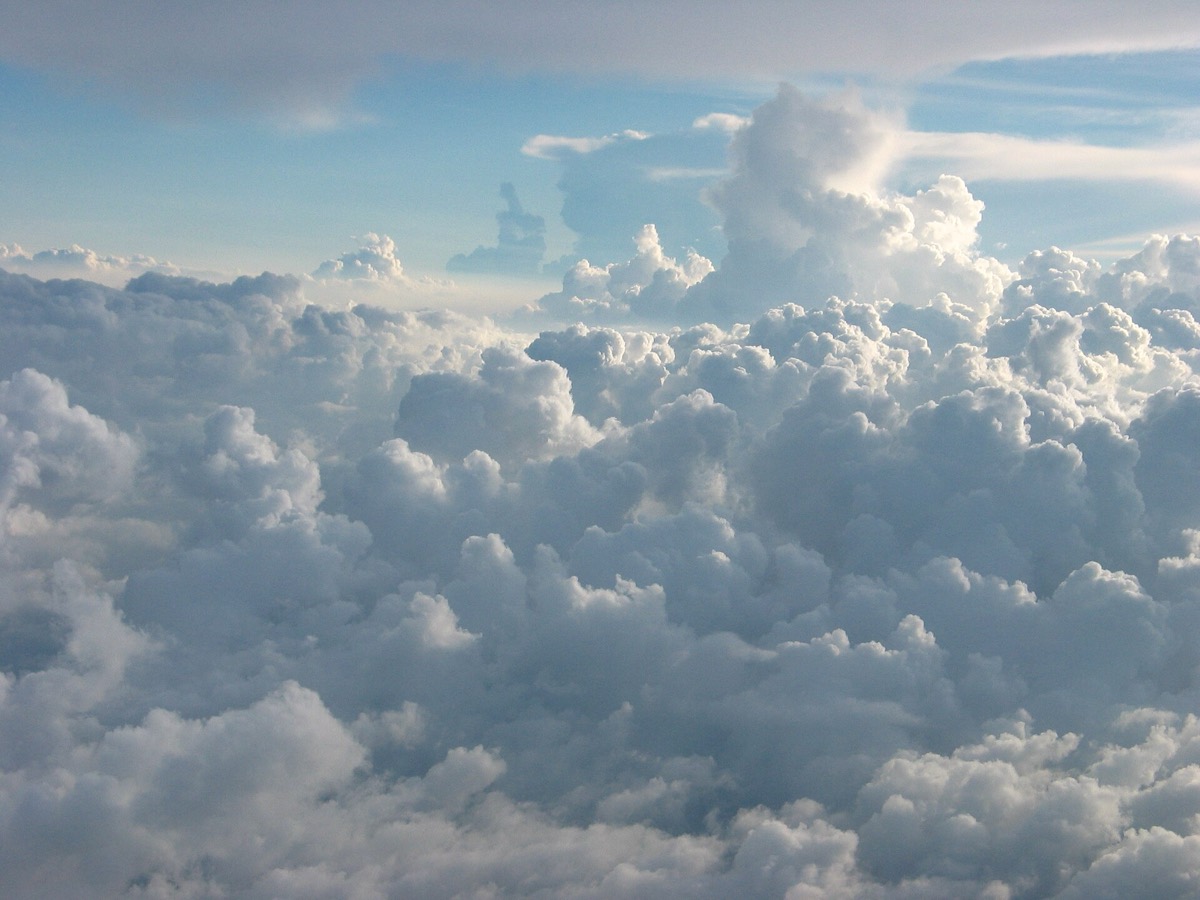
Cloud seeding scatters particles, usually silver iodide, to supply for droplets to form around, and physically the idea is entirely reasonable. The trouble is that proving it worked means knowing : how much rain that same cloud would have given without the seeding. How do you even test that?
With great difficulty. Reviews report added precipitation in the range of zero to twenty percent in suitable conditions, and a range starting at zero is itself a statement. in rainfall is ten to a hundred times larger than the expected addition, so the signal drowns in the noise. Settling it needs randomized trials over years, with control areas, and those are rare and expensive.
The idea is entirely reasonable physically. A water droplet does not appear in the air out of nothing; it needs a nucleus to take hold of. So scattering suitable particles in a cloud may increase the water that falls out of it.
Estimates in the literature talk about added precipitation in the range of zero to twenty percent in suitable conditions. That range, starting at zero, is itself a statement: sometimes it works, and sometimes nothing can be shown to have happened.
The reason for the difficulty is not physical but a matter of measurement. The same day cannot be run twice, so nobody will ever know how much rain that same cloud would have given without the seeding. And when natural variability in rainfall is ten to a hundred times the expected addition, the signal drowns in the noise.
What it takes to settle is a randomized controlled trial over years: seed some of the suitable clouds at random, and compare against those left alone, across a large number of cases. Trials like that are expensive and rare. And the bind in any case: seeding works only where a suitable, moist cloud is already present, so it makes no rain out of nothing and is no answer to a deep drought. Governments spend considerable sums on it, which makes it worth knowing exactly what is being bought.
wat. The reported range starts at zero, and a range that starts at zero is itself a finding.
wat wat
Governments spend considerable sums on cloud seeding as an answer to drought, so it matters to know what can be expected and what has not been shown.
How do we know?
The gold standard is a randomized controlled trial, in which some suitable clouds are seeded and some are not, with the comparison made across a large number of cases over years.
What is still unknown
Seeding can only work when a cloud of the right kind, with enough moisture, is already there. It does not make rain out of nothing, so it is no answer to a deep drought.
Learn something?
Where to next
 Why does rain sometimes stop halfway to the ground?weather
 What rolls a field of snow into doughnuts overnight?weather
 How much of the atmosphere is the part we live in?weather