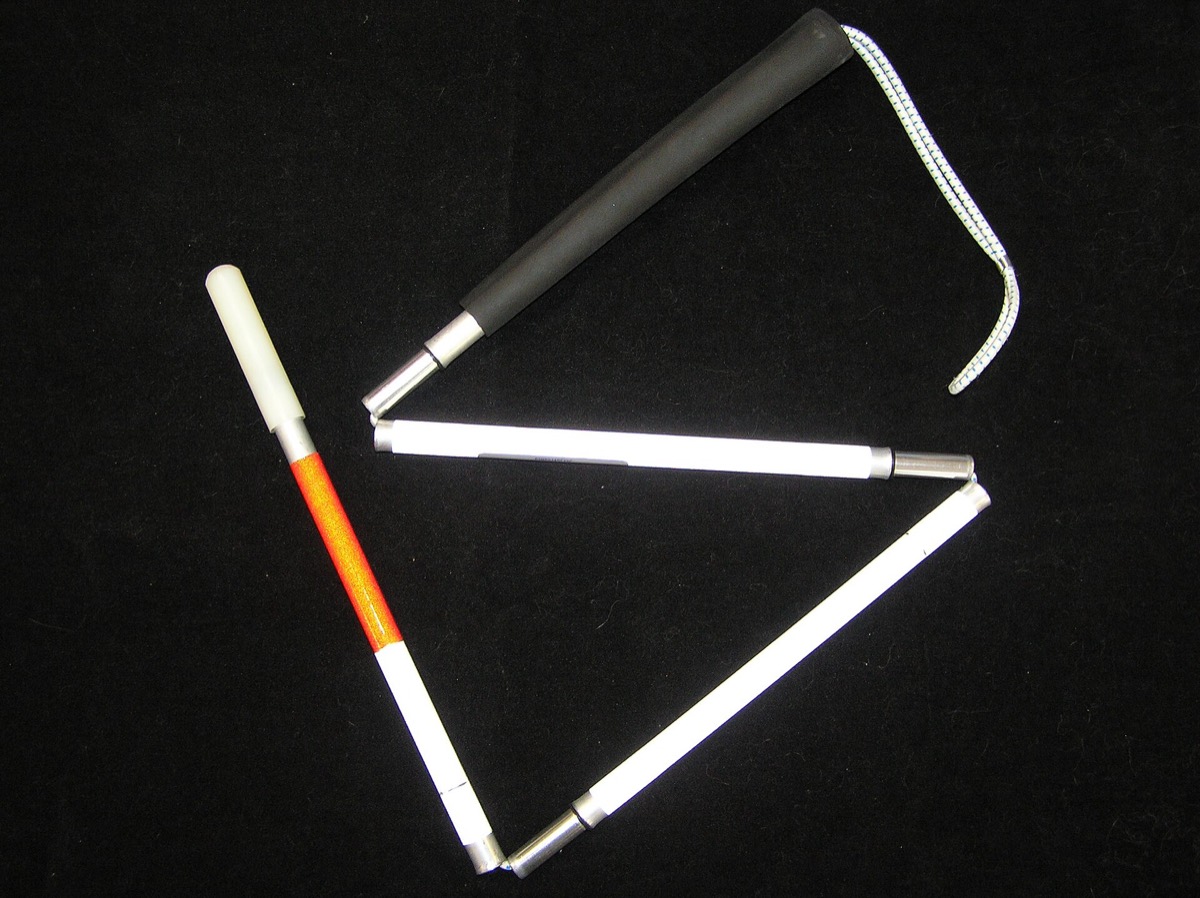
Some blind people navigate by clicking their tongue and reading the echoes, and the assumption attached to it is that this needs a brain shaped by early blindness. If true, it would be useless to anyone losing sight later. So blind and sighted participants aged twenty-one to seventy-nine trained for 20 sessions over 10 weeks in practical and virtual navigation tasks. Did age or blindness set a ceiling?
Neither did. Both sighted and blind participants improved considerably on all measures, and in some cases finished performing comparably to expert echolocators. Sighted people did better on some tasks, which the analyses suggest reflects their younger age or better rather than their sight. Crucially, neither age nor blindness limited the , or the ability to apply the skill to .
Understanding what determines whether somebody can learn a new sensory skill matters for how the brain adapts and for how people with sensory loss are supported. is a good test case, because it is genuinely novel, genuinely useful and demonstrably learnable by some people.
The assumption in the way was that it depends on a brain reorganized by early blindness. That would make it a skill reserved for people blind since childhood, and useless to the much larger group who lose sight as adults. So this training study varied both blindness and age deliberately.
Blind and sighted participants aged twenty-one to seventy-nine trained across 20 sessions over 10 weeks, in a mix of practical and virtual navigation tasks. Both groups improved considerably on all measures, and in some cases ended up performing comparably to expert echolocators.
Sighted participants outperformed blind participants on some tasks, which initially looks backwards. The analyses point instead at the sighted group being younger, or having better binaural hearing, which declines with age. The important results are the two negatives: neither age nor blindness limited the rate of learning, or the ability to apply echolocation to novel untrained tasks. In the three-month follow up, all the blind participants reported improved mobility and 83 percent reported better independence and wellbeing, which is self-report after a course they knew they had taken.
wat. Twenty training sessions improved click echolocation in people of every age and both sighted and blind, with age setting no limit on the rate of learning.
wat wat
It removes the main reason not to offer this training. Someone who loses their sight at sixty was assumed to have missed the window, and the learning rates here say they have not.
How do we know?
Norman, Dodsworth, Foresteire and Thaler trained blind and sighted participants aged twenty-one to seventy-nine across 20 sessions over 10 weeks in practical and virtual navigation tasks, with a three-month follow-up survey of the blind participants.
What is still unknown
A training study without a control group, and the real-life outcomes come from participants reporting on themselves after a course they knew they had taken. Performance in trained tasks is not the same as navigating a street.
Learn something?
Where to next
 Who decides which of today’s memories you still have tomorrow?learning
 Can a board game really teach somebody a health habit?learning
 Does treating hearing loss slow cognitive decline?hearing