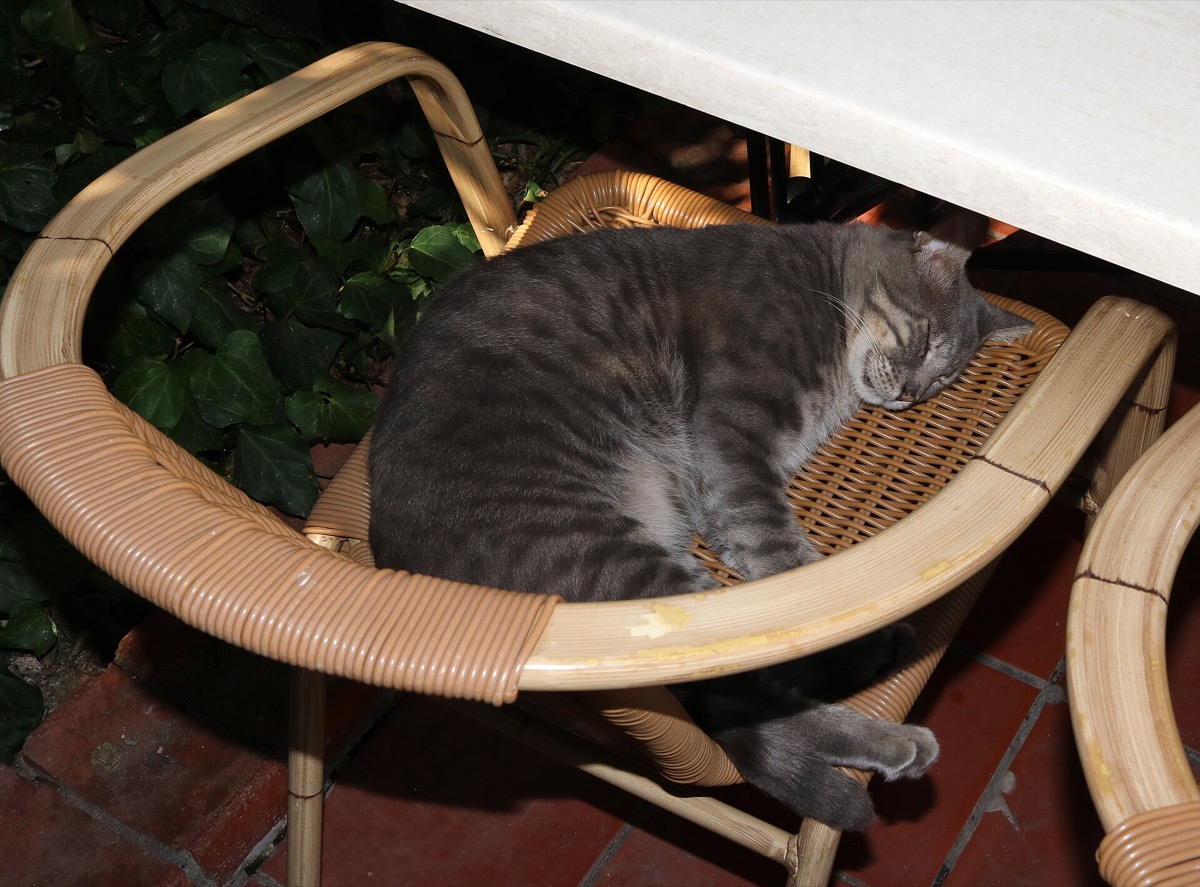
Cats have lived alongside people for ten thousand years, and how much they take in of us has barely been tested. One lab played 20 domestic cats three strangers’ voices in a row, each calling the cat by its own name, with the owner out of sight. Then came the owner’s voice. Ten scored the magnitude of every reaction. Does anything register?
They knew, and declined to do anything about it. Fifteen of the 20 cats responded less to the third stranger than to the first, which is ordinary , and then rebounded significantly when the owner’s voice arrived. The response was rather than communicative: ears and head moved, while vocalizing and tail movement did not. Being called by their owner changed nothing about that.
Ten thousand years of cohabitation have left surprisingly little research on what cats pick up from us. Dogs have been tested exhaustively, partly because dogs cooperate. A cat that has registered something has no particular reason to show you, which is a methodological problem rather than an absence of ability.
This study got around it with a design. With the owner out of sight, 20 domestic cats heard three different strangers in turn, each calling the cat by name, and then heard the owner doing the same. Ten naive raters scored the magnitude of every reaction, sorted into six behavioral categories.
The cats did respond to human voices, but not in the way a dog would. Communicative behaviors, meaning vocalizing and tail movement, stayed flat. What moved was orienting: ears and head turning toward the sound. And that stayed true even when the voice calling them belonged to their own owner.
The recognition shows up in the pattern rather than in the size of any single response. Fifteen of the 20 cats responded less to the third voice than to the first, the signature of habituation, and those same cats showed a significant rebound when the owner spoke. Cats can therefore tell humans apart from voice alone. Hold the scale in mind: twenty animals, five of which never habituated, and a conclusion resting on small movements of an ear.
wat. The ears turned at the owner’s voice and nothing else did, which was enough to show the cat could tell who was calling.
wat wat
Recognizing someone and responding to them are separate questions. This measures the first by exploiting the second, which is how you test an animal that will not perform for you on request.
How do we know?
Saito and Shinozuka used a habituation-dishabituation design on 20 domestic cats, playing three strangers’ voices and then the owner’s, with ten naive raters scoring reactions across six behavioral categories.
What is still unknown
Twenty cats, five of which never habituated at all, with recognition inferred from a rebound in ear and head movement. A small study on a famously uncooperative subject.
Learn something?
Where to next
 The cat does not come when called. Does it at least know its name?cats
 Wasps in a nest look alike. How does one tell who it is facing?recognition
 Can a goat tell a smiling face from an angry one?domestication