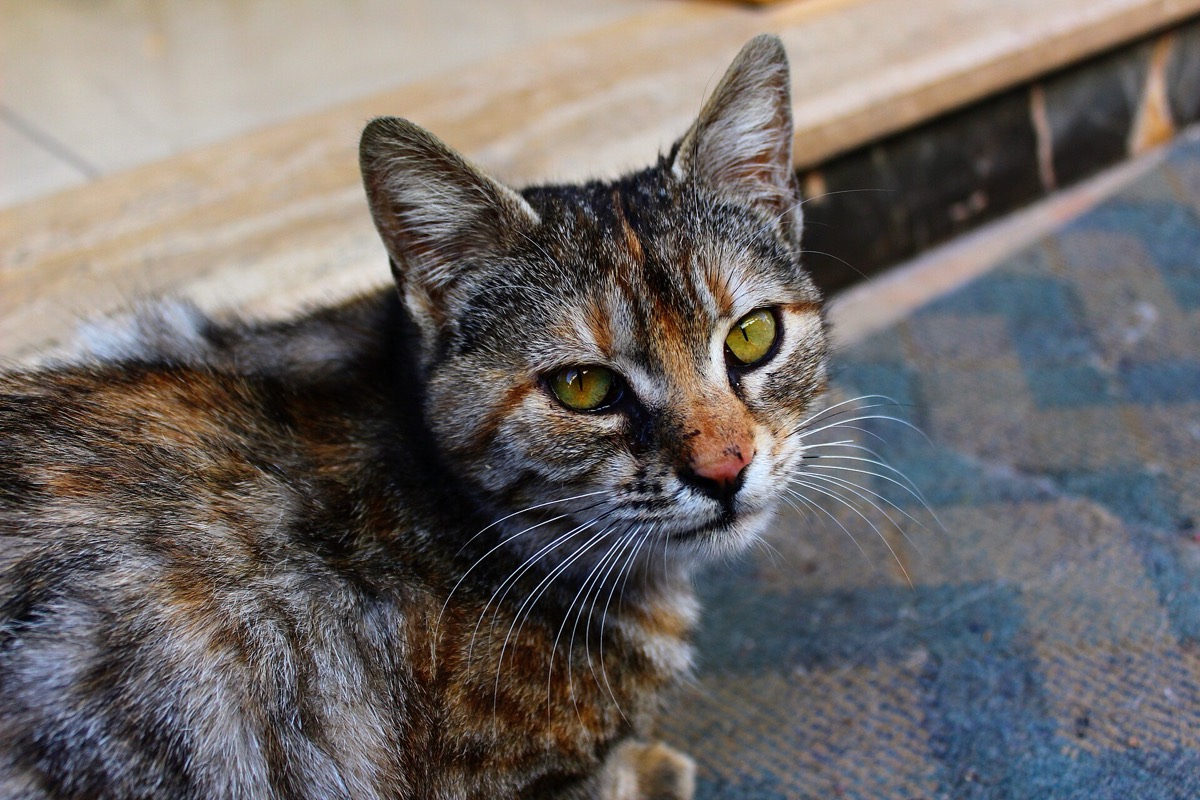
Nearly every mammal sound comes from tissue in the larynx set oscillating by airflow, with no nerve firing on every cycle. A purr was long held to be the exception, driven by laryngeal muscles contracting in bursts twenty to thirty times a second under neural command. Direct evidence for that was thin. Herbst and colleagues blew air through eight excised cat larynges, with no nerves attached. Does anything purr?
All eight of them did. Every produced self-sustaining oscillation at typical purring rates, twenty-five to thirty hertz, with no neural input and no muscle contracting. Histology turned up connective tissue masses up to four millimeters across embedded in the , a specialization that looks like what allows frequencies that low. The purr need not be driven beat by beat after all.
Most mammal vocalization follows the principle. Muscles set the larynx up, air flows through, and the tissue oscillates on its own, hundreds of times a second, with no nerve firing on each cycle.
The purr was treated as an exception. The standard account has driving it, with electromyographic bursts at twenty to thirty hertz chopping the airflow directly, which would make it unlike nearly every other sound a mammal makes. Direct evidence for the mechanism was always sparse.
That account carries a sharp prediction: with no nerves, there should be no purr. Herbst and colleagues tested it the obvious way, driving air through larynges excised from eight domestic cats. All eight produced self-sustaining oscillation at ordinary purring rates, around twenty-five to thirty hertz.
Histology showed why so low a frequency is reachable. The vocal fold carries embedded masses of connective tissue, up to four millimeters across, which add the mass a slow oscillation needs. The authors stop short of rejecting active muscle contractions entirely, and suggest instead that the purr works like other cat sounds, potentially augmented by muscle rather than created by it.
wat. A pad of tissue in the vocal fold lets the larynx oscillate that slowly on airflow alone, with nothing telling it to.
wat wat
It moves the purr from a special mechanism unique to cats back into the ordinary way vertebrates make sound, which is a simpler and stranger answer.
How do we know?
Herbst and colleagues drove airflow through larynges excised from eight domestic cats, measured the frequencies produced, and examined the vocal fold tissue histologically.
What is still unknown
An excised larynx shows what the tissue can do, not what a living cat does. The authors are explicit that this does not fully reject active muscle contraction, which may still augment the purr.
Learn something?
Where to next
 Can a flower hear a bee coming?sound
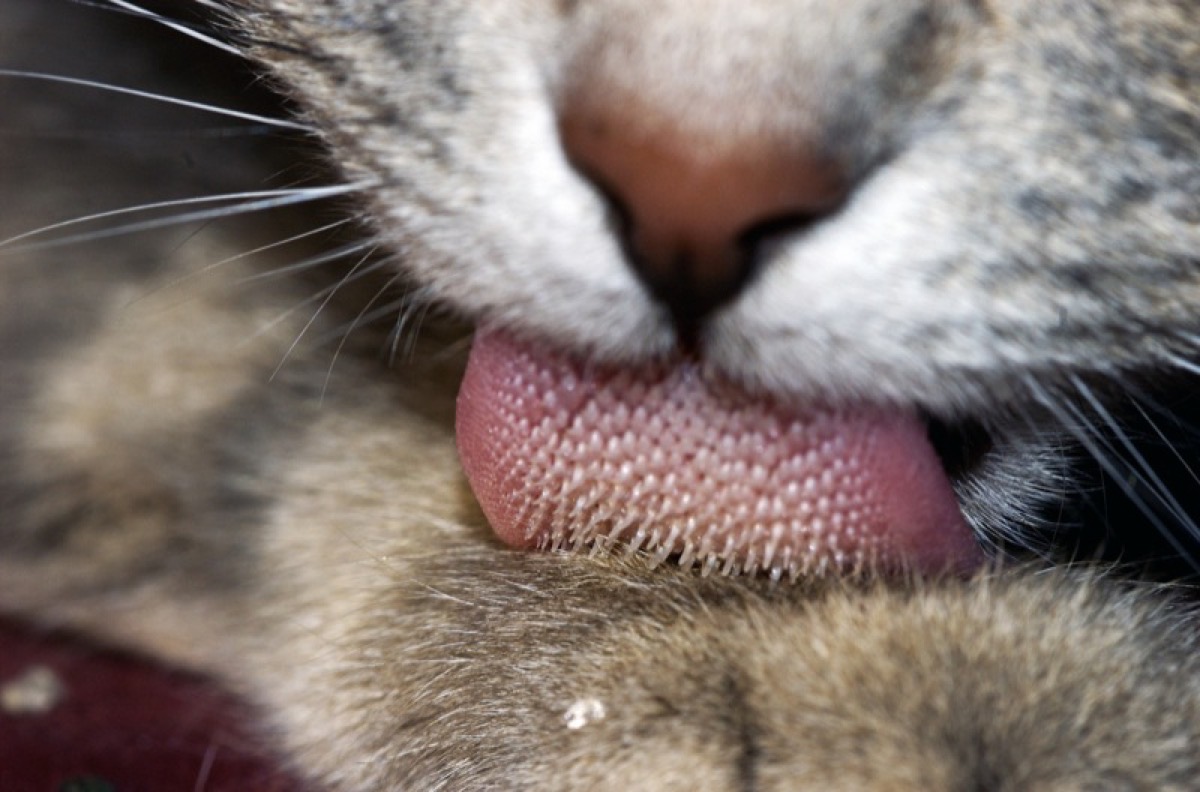 What is a cat's tongue actually doing when it grooms?cats
 Does a dolphin have anything like a name?sound