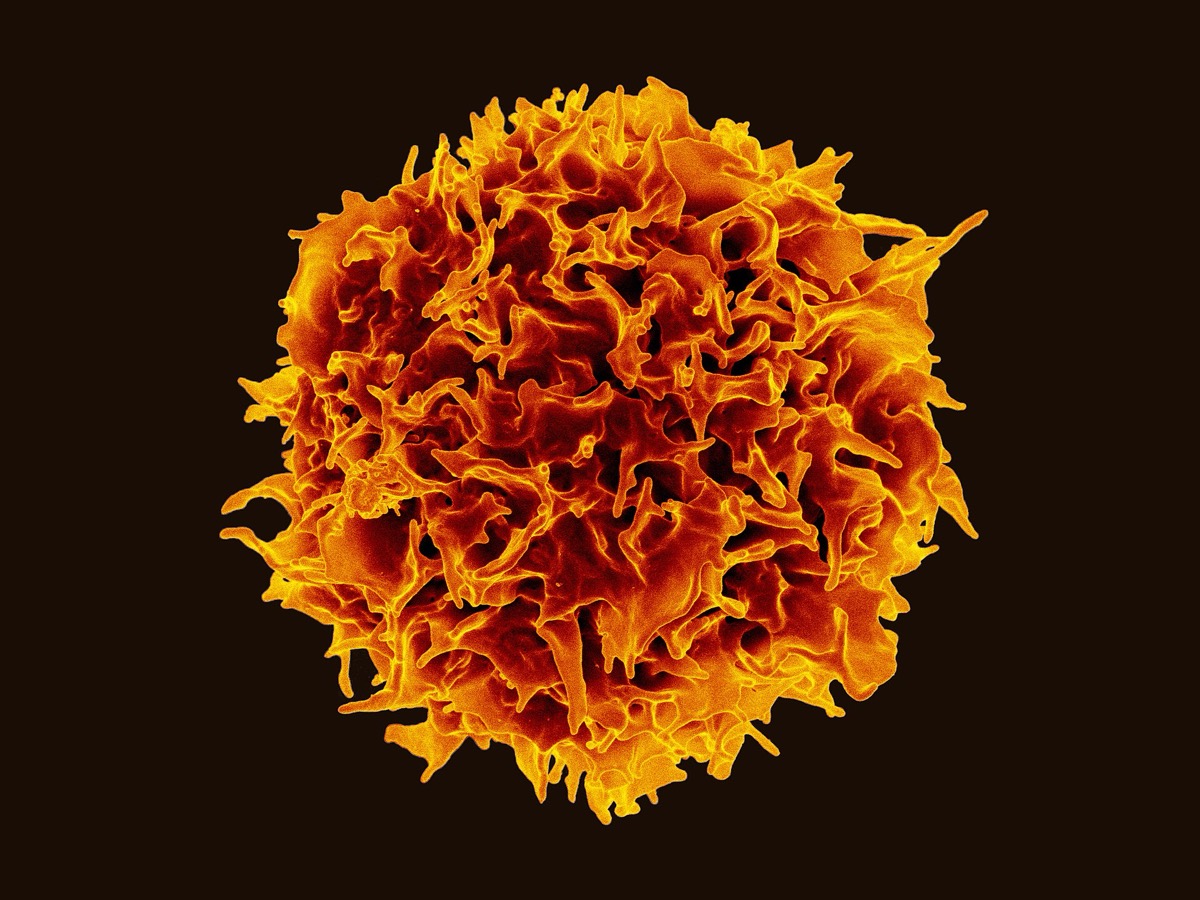
Severe lupus, inflammatory myositis and systemic sclerosis are all managed the same way: suppress the immune system and keep suppressing it. The alternative idea is to strip out the B cells deeply enough that the autoimmunity has to start over. CD19 CAR T cells do exactly that in blood cancers. So 15 patients with these three diseases received a single infusion. What happened to their medication?
Every patient came off immunosuppression entirely. All eight lupus patients reached , all three myositis patients had a major clinical response on the ACR-EULAR criteria, and all four scleroderma patients dropped on the EUSTAR activity index. B cells stayed absent for a mean of 112 days before returning. Median follow-up was 15 months, running from four months out to twenty-nine.
Systemic lupus erythematosus, idiopathic inflammatory myositis and systemic sclerosis are different diseases with a shared treatment logic: suppress the immune system, indefinitely, and accept the cost. Resetting the autoimmunity instead, by depleting B cells deeply enough that the system has to rebuild, has long been the more attractive idea and the harder one to deliver.
T cells deplete B cells about as thoroughly as anything in medicine, which is why they work in B-cell cancers. Fifteen patients, eight with severe lupus, three with myositis and four with systemic sclerosis, received a single infusion after preconditioning with fludarabine and cyclophosphamide.
The efficacy results were uniform. All the lupus patients achieved DORIS remission. All the myositis patients had an ACR-EULAR major clinical response. All the scleroderma patients had a decrease on the EUSTAR activity index. Immunosuppressive therapy was stopped completely in every patient, and lasted a mean of 112 days before the cells returned.
Safety was tolerable rather than trivial. Grade 1 occurred in ten patients, with one case each of grade 2 cytokine release syndrome, grade 1 neurotoxicity, and a pneumonia that put someone in hospital. Then read the design honestly. This is a case series of fifteen people, median follow-up 15 months, with no control group at all, which the authors say plainly provides a rationale for controlled clinical trials rather than an answer.
wat. Fifteen patients with three different autoimmune diseases got one infusion, and every one of them stopped taking immunosuppressants.
wat wat
The goal is not better suppression but drug-free remission, which nothing in rheumatology currently delivers. Deep B-cell depletion appears to let an immune system rebuild without the autoimmunity it had before.
How do we know?
Müller and colleagues gave 15 patients with severe lupus, myositis or systemic sclerosis one infusion of CD19 CAR T cells, after preconditioning with fludarabine and cyclophosphamide. Disease activity and safety were tracked for up to two years.
What is still unknown
This is a case series of 15 patients with no control group and no randomization, so the response rate cannot be compared against anything. The authors present it as a rationale for controlled trials rather than as evidence of efficacy.
Learn something?
Where to next
 What is the appendix actually for?immune system
 How do immune cells trained in the gut end up protecting the brain?immune system
 What is the immune system doing while you are asleep?immune system