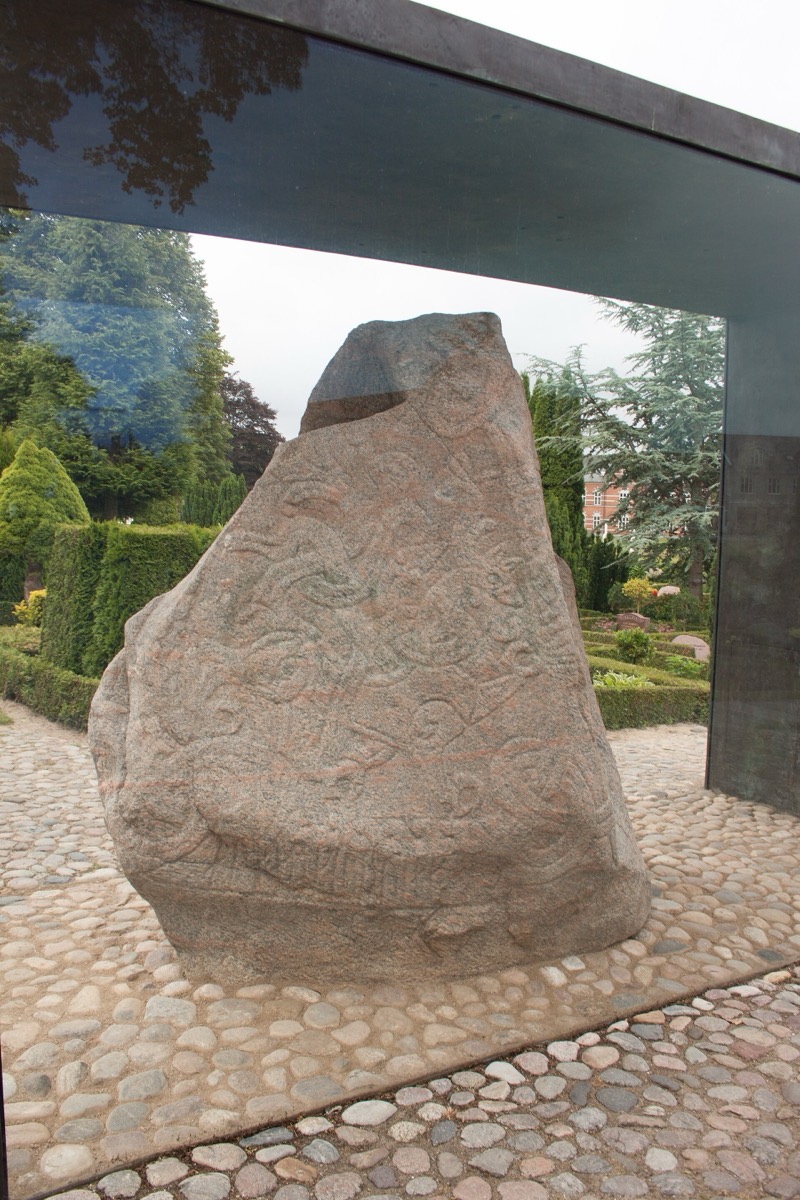
Bluetooth is not an acronym and does not stand for anything, which is unusual for a technical standard. It also does not sound like one. The Bluetooth special interest group tells the story itself. It runs through a tenth-century Scandinavian king, a meeting of three companies in 1996, and a placeholder nobody managed to replace in time.
It was a temporary that escaped. united Denmark and Norway in 958 and had a dead tooth of a dark blue-gray color, which earned him the nickname Bluetooth. At a 1996 meeting of Intel, Ericsson and Nokia on standardizing short-range radio, Jim Kardach of Intel proposed Bluetooth as a placeholder until marketing found something better. The replacements fell through and the name had already spread.
For a technology this widely used, the name is strange. Bluetooth is not an acronym and does not stand for anything, and it does not sound like a wireless standard. The explanation given by the organization behind it reaches back more than a millennium.
King Harald Gormsson was known for two things. He united Denmark and Norway in 958 and he had a dead tooth, dark blue or gray in color, which earned him the nickname Bluetooth. That combination is the whole of the connection: one half is a metaphor and the other half is the word.
In 1996 three industry leaders, Intel, Ericsson and Nokia, met to plan the standardization of a short-range radio technology that would support connectivity between different products and industries. During that meeting Jim Kardach of Intel suggested Bluetooth as a temporary code name. He was later quoted saying that King Harald Bluetooth was famous for uniting Scandinavia just as they intended to unite the PC and cellular industries with a short-range wireless link.
It was only ever meant as a placeholder until marketing produced something better. When the time came, the candidates were and PAN, for Personal Area Networking. PAN was the front runner until an exhaustive search found it already had tens of thousands of hits across the internet. A full trademark search on RadioWire could not be completed in time for launch. Bluetooth was the only choice, and it had already spread through the industry. The logo is a merging the Younger Futhark runes Hagall and Bjarkan, Harald’s initials.
wat. A placeholder named after a Viking king’s dead blue tooth outlived both of the serious names meant to replace it.
wat wat
Kardach’s analogy was the point rather than a joke. A king who united Scandinavia stood in for uniting the PC and cellular industries with a short-range wireless link, which is a fair description of what the standard set out to do.
How do we know?
The Bluetooth special interest group’s own account of the name gives the king, the 1996 standardization meeting, Kardach’s suggestion and quotation, the two candidate replacements and why each failed, and the construction of the logo.
What is still unknown
This is the organization’s own origin story on its own website, so it is a primary source for the company history and not an independent one. Nothing here is checked against outside records.
Learn something?
Where to next
 Was the keyboard really laid out to stop people typing too fast?history of technology
 Where did the silk in a Viking grave come from?vikings