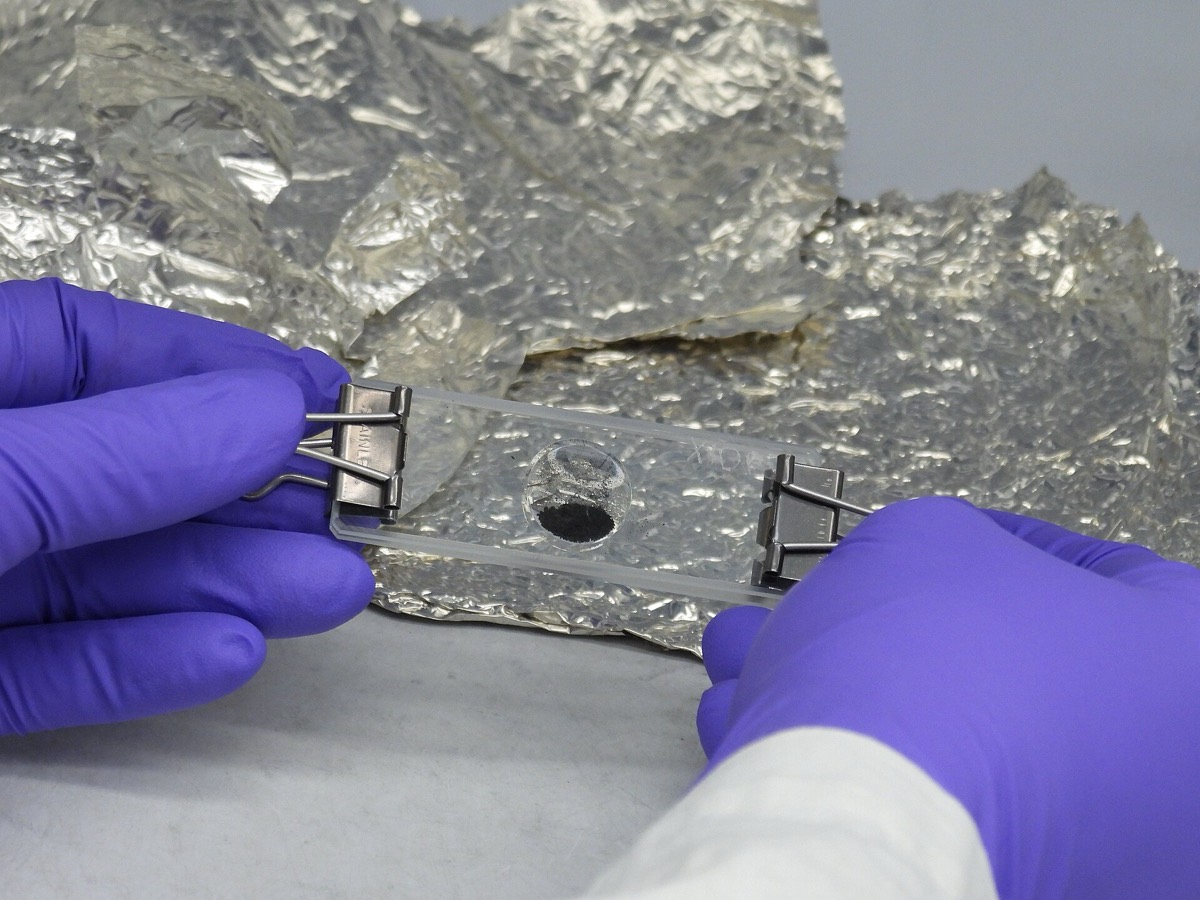
Meteorites carry organic matter, and they also land in a field, sit in the weather and pick up whatever is around them, so nobody can be sure what arrived with the rock. OSIRIS-REx collected material from the asteroid Bennu and sealed it in space. Laboratories then opened it under contamination control. What was in there?
A far richer chemistry than expected. The samples are volatile rich, with more carbon, nitrogen and ammonia than samples from Ryugu or most meteorites, and around 10,000 nitrogen-bearing species in all. Among them are , including 14 of the 20 that terrestrial biology uses, and all five nucleobases found in DNA and RNA. These are ingredients that life uses, and they form without it.
Organic matter in meteorites is the usual window onto early Solar System chemistry, and it comes with a permanent asterisk. A rock that fell to Earth has been exposed to air, water and life, so a molecule found in it may have arrived from space or from the soil it landed in.
OSIRIS-REx closes that gap. The from the B-type asteroid Bennu was sealed in space and opened under contamination control. What came back is volatile rich, carrying more carbon, nitrogen and ammonia than samples from Ryugu and than most meteorites.
The inventory is remarkable. Amino acids including 14 of the 20 used by terrestrial biology, amines, formaldehyde, carboxylic acids, polycyclic aromatic hydrocarbons, and nitrogen heterocycles including all five nucleobases of DNA and RNA, among roughly 10,000 nitrogen-bearing species.
Two results reach further than the list. enrichment places the formation of the ammonia and related molecules in a cold molecular cloud or the outer disk, so Bennu’s parent body accreted ices from a reservoir where ammonia ice was stable. And the chiral non-protein amino acids are , which removes delivery by impact as an explanation for why life on Earth is left-handed.
wat. Bennu held amino acids and every nucleobase of DNA and RNA, and no evidence whatever that anything lived there.
wat wat
It lets the early chemistry of the Solar System be examined directly, rather than inferred from rocks that have been lying in a desert or a glacier for millennia.
How do we know?
Glavin and colleagues analyzed samples returned by the OSIRIS-REx mission from the B-type asteroid Bennu, which reached the laboratory without uncontrolled exposure to Earth’s biosphere.
What is still unknown
Molecules that life uses are not evidence of life, on Bennu or anywhere else. The samples say what chemistry was available, not what was ever done with it.
Learn something?
Where to next
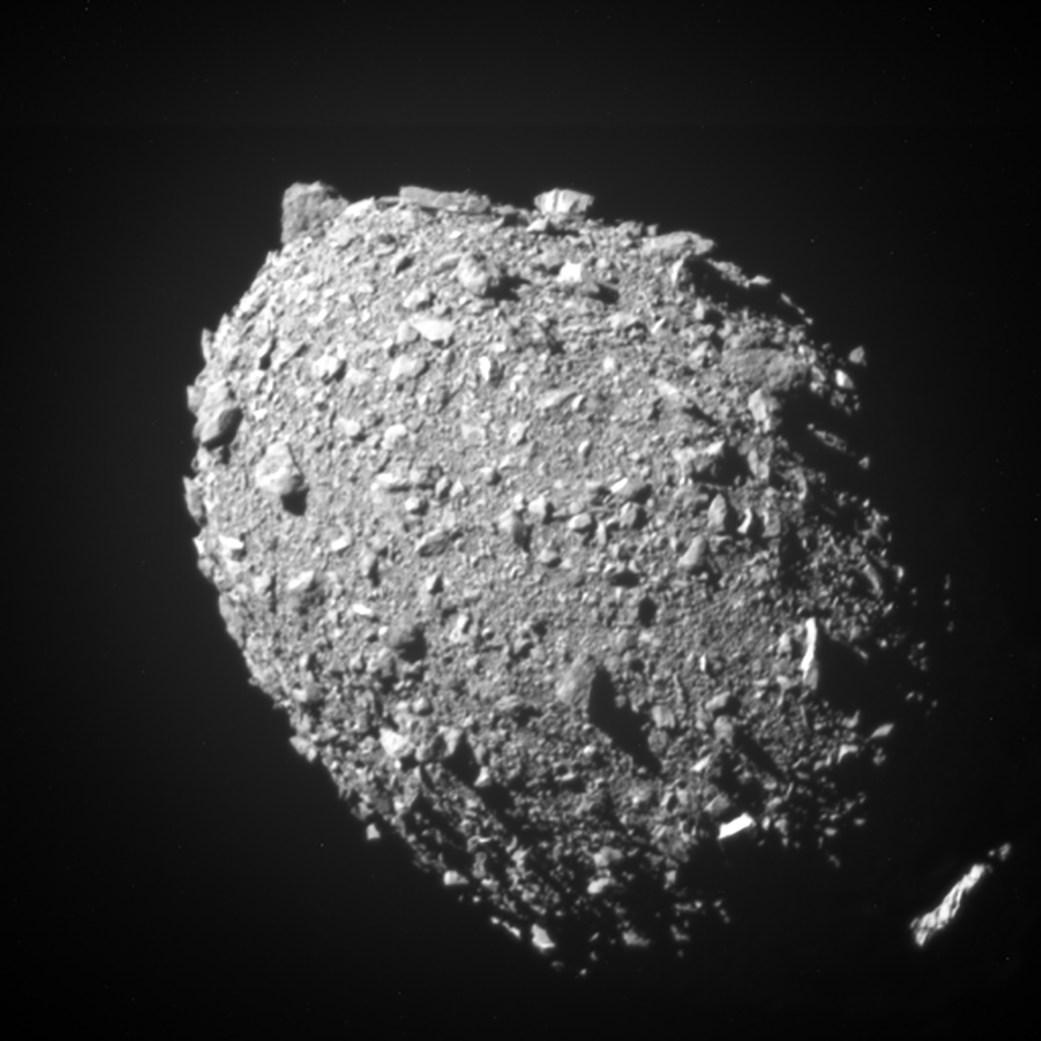 What does it take to move an asteroid off its course?asteroids
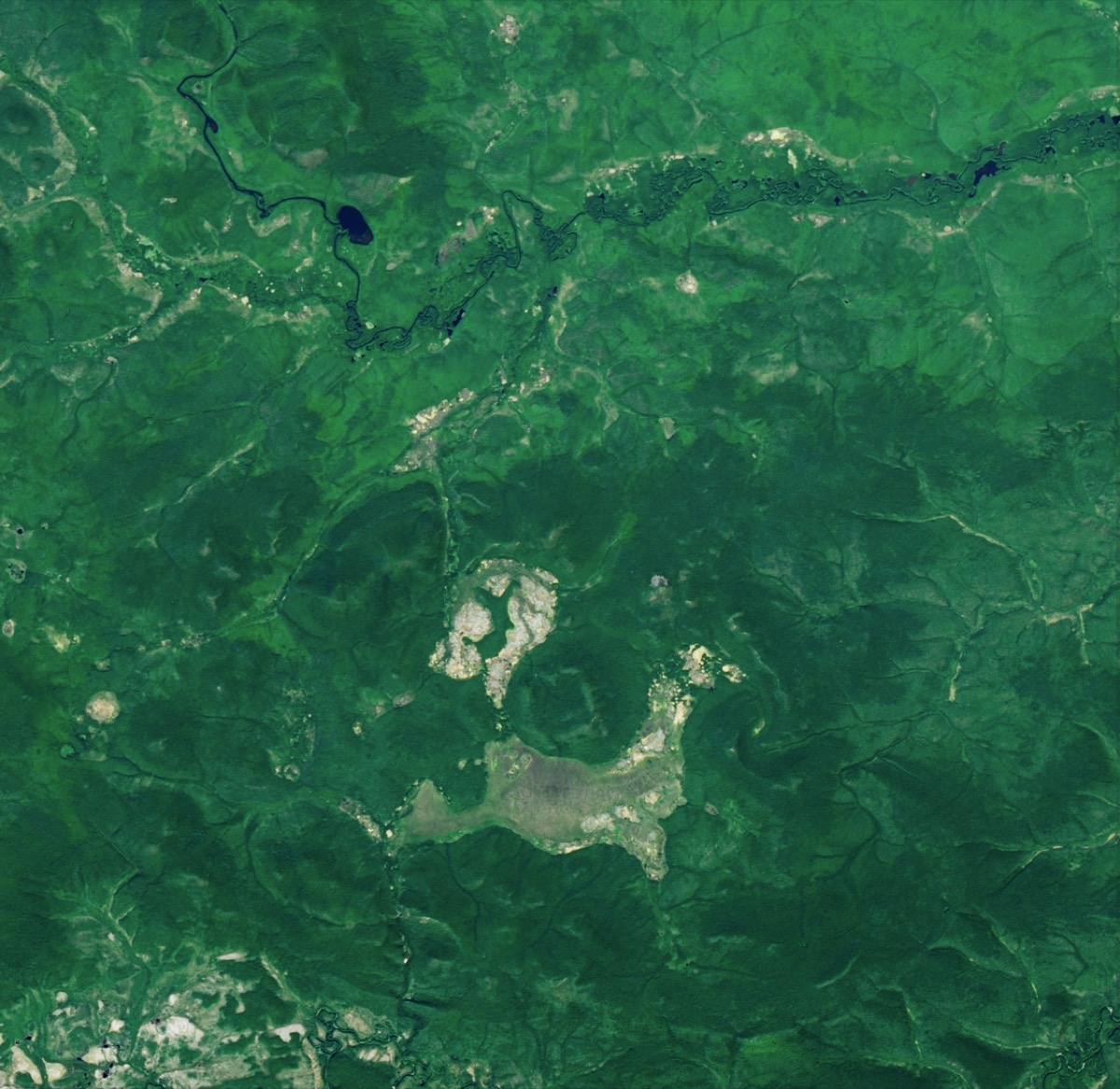 What flattens two thousand square kilometers of forest and leaves no crater?asteroids