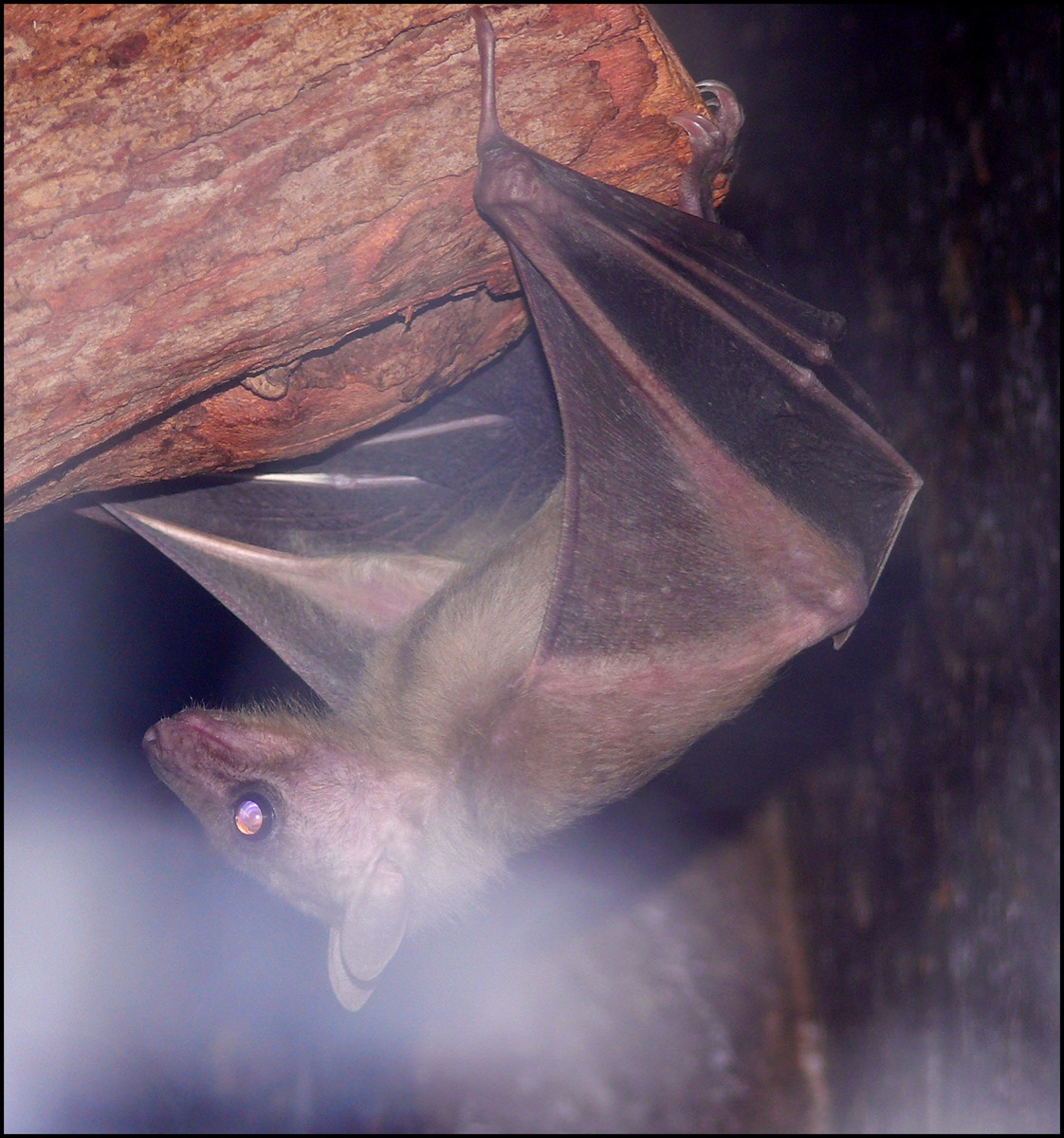
Finding your way along a path you have flown before needs only memory of that path. Working out a new route between two places, without having flown it, needs something else: a representation of how the whole area fits together. Whether any animal besides us holds one has been argued for decades, mostly because it is so hard to show outside a laboratory. Toledo and colleagues built a tracking system to follow wild . What do the flight paths show?
A map, by the standard the debate set. The navigational strategies of this species meet the requirements for using a of their environment, which is what lets be turned into a route nobody has flown. Two studies on Egyptian fruit bats, by Harten and colleagues and by Toledo and colleagues, arrive at the same conclusion together. The capacity is therefore not confined to humans.
Navigating a route you have traveled before is a memory problem. Deriving a new route between two places you know, without ever having flown it, is a different problem. Solving it requires a representation of how the area is laid out rather than a stored sequence of turns.
That representation is a cognitive map, and whether non-human animals hold one has been debated for a long time. The obstacle has been practical: demonstrating the qualifying components of a map needs an animal with real space to move in, and laboratory arenas are too small to offer a genuinely novel route.
Toledo and colleagues addressed it with a new system, following wild Egyptian fruit bats at a resolution that shows what each animal actually chose on each flight. A companion study by Harten and colleagues approached the same species from another direction.
Together the two show that the navigational strategies of this bat meet the requirements for the use of a cognitive map of their environment. That confirms the skill occurs outside humans, which is what the decades of argument were about. It moves the question from whether animals have maps to which ones do, and how they build them.
wat. It is not retracing the way it came. It is working out a way it has never flown, which takes a map.
wat wat
The argument stalled for years on the difficulty of testing it in the wild, where an animal has room to take a route it has never taken. A tracking system fine enough to see that is what moved it.
How do we know?
Toledo and colleagues developed a high-throughput tracking system to follow the flights of wild Egyptian fruit bats, and tested whether their navigation meets the criteria for cognitive map use.
What is still unknown
Meeting the formal requirements for cognitive map use is a behavioral criterion, not a look inside the animal. One species, however well tracked, does not settle the question for others.
Learn something?
Where to next
 What can a bumblebee learn but never invent on its own?cognition
 How did a small fish pass a mirror test that was thought to be almost human?cognition
 Do any other animals babble the way human babies do?bats